

Have you ever trusted a stock advisory service expecting quick profits and accurate market guidance? That search sometimes leads them to Nifty Pro Trading Research, a SEBI-registered Research Analyst (RA) firm.
At first glance, the firm looks legitimate. And in some ways, it is; it holds a valid SEBI registration number. But a SEBI registration alone doesn’t tell the whole story.
Multiple investors have come forward with serious complaints. SEBI has issued not one but two enforcement actions. Real user reviews paint a picture that any trader must read before engaging.
In this blog, we bring together Nifty Pro reviews, SEBI’s findings, the arbitration outcome, and what you can do if you’ve been affected.
Nifty Pro Details
If you are wondering, is Niftypro Trading Research SEBI registered?
The answer is yes, according to publicly available SEBI registration records.
Nifty Pro Trading Research, operated by Sameer Pande, positions itself as a seasoned SEBI registered research analyst based out of Nagpur, Maharashtra.
His registration number INH000009649 confirms active status as of recent lists, meaning he meets basic qualifications like net worth deposits and compliance undertakings.
Before we get into regulatory actions, let’s hear directly from the people who matter most, the investors themselves.
Nifty Pro User Reviews
Nifty Pro Trading Research has drawn a consistent pattern of negative feedback across Google and other review platforms. The reviews are not vague.
Each one points to a specific problem.
Let’s look at each one closely:
1. Misleading Practices and Pressure After Initial Profits
This review goes beyond general dissatisfaction.
The reviewer calls out specific employees by name, accuses the firm of deliberately misleading clients, and explicitly requests SEBI to blacklist the company.
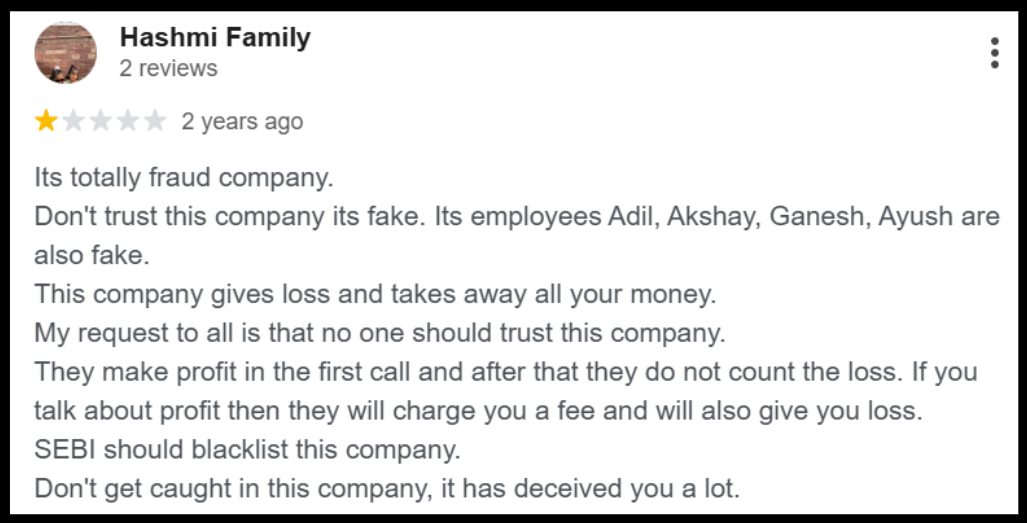
The reviewer also highlights a pattern many others have echoed: the firm shows profits in the beginning, and once you’re invested emotionally and financially, they stop counting losses and charge you even more.
The request to SEBI to blacklist this firm wasn’t random; it reflects a level of frustration that goes beyond a single bad trade. When someone takes the time to name employees and call out a pattern publicly, that’s a signal worth taking seriously.
2. Premium Package Upselling
Another user lost ₹1.5 lakh within 7 days of joining. He says 60% of his capital was wiped out in a few trades because the firm pushed him to take large quantities.
What’s more troubling is the upsell pattern he describes. When he was deep in losses on a basic package, the firm approached him to buy a more expensive premium package, with the promise that it would recover his losses.
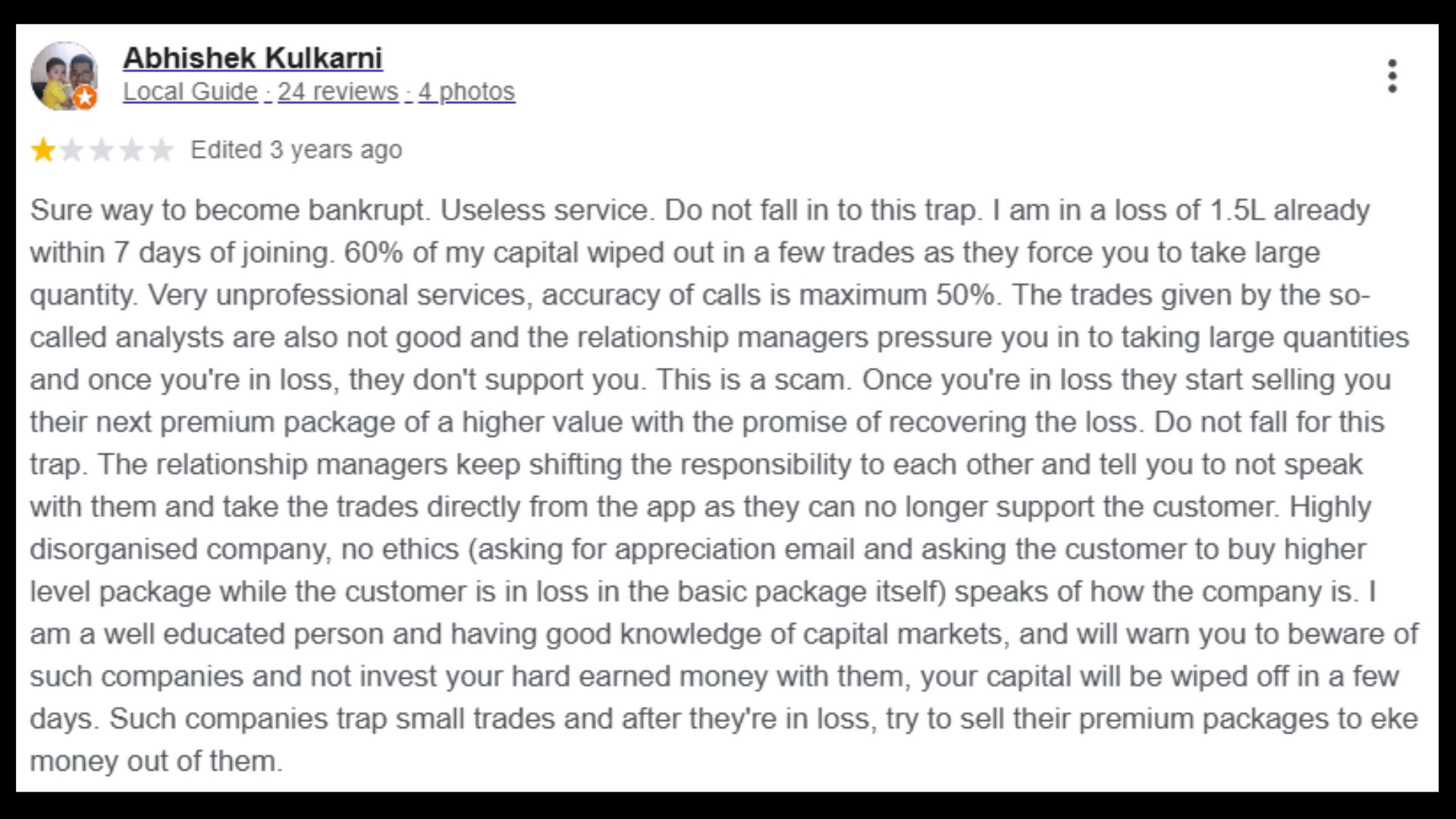
This is a classic high-pressure sales tactic that SEBI’s own regulations explicitly prohibit.
He ends his review with a strong warning: such companies trap small traders and, once in loss, try to sell them more expensive packages to extract additional money.
3. No Stop-Loss, No Risk Management
Amit is a SEBI-registered entity himself who verifies this point: the firm is SEBI-registered, but that doesn’t guarantee ethical conduct.
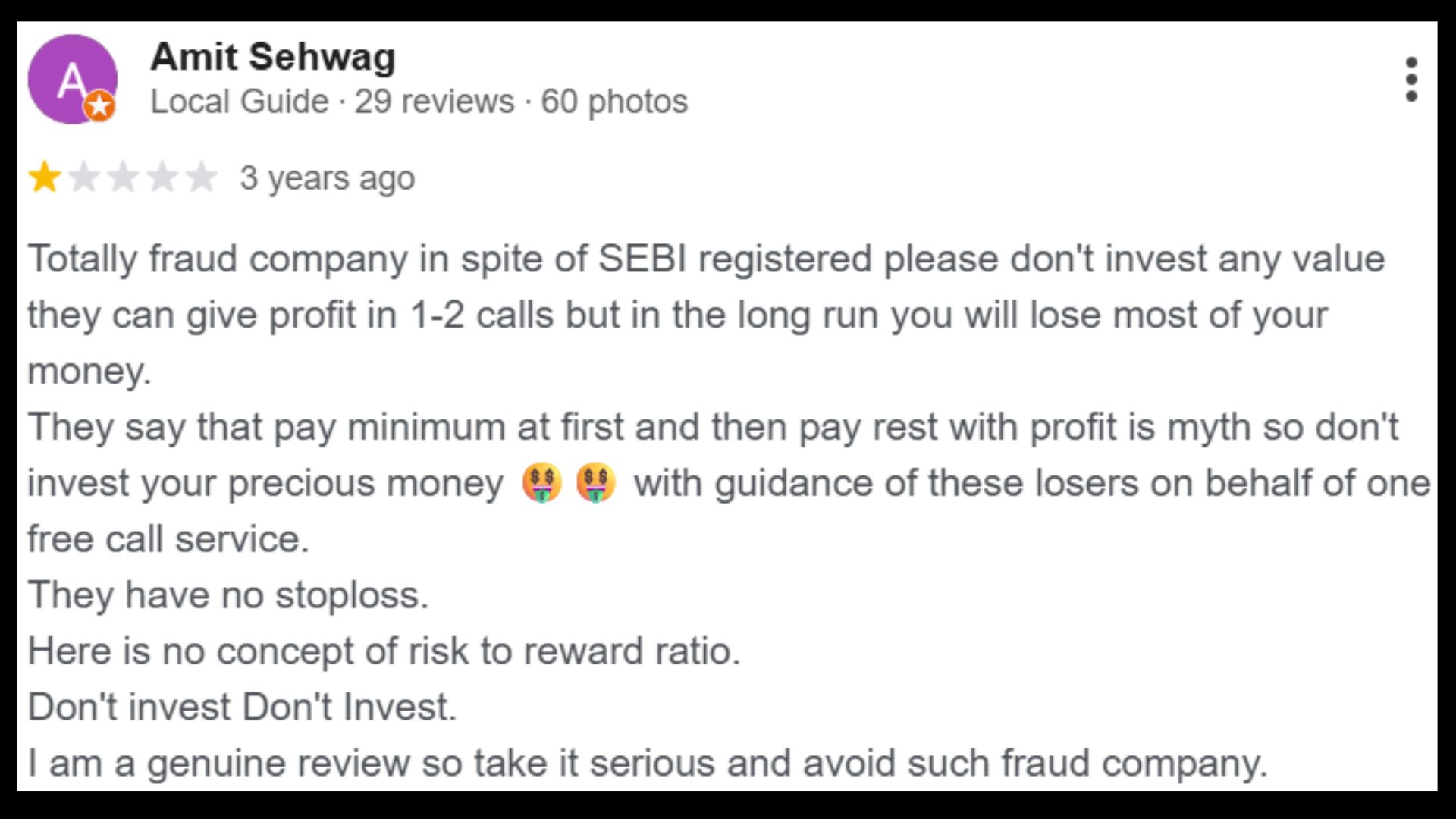
He explicitly says that despite the registration, investors end up losing most of their money in the long run.
The most alarming part of his review: no stop-loss. In stock market trading, a stop-loss is the most basic risk management tool.
Without it, a single bad trade can wipe out an investor’s entire capital. Amit also calls out the “pay minimum now, pay the rest from profits” pitch as a myth, because the profits never come.
4. Deliberate Loss-Making Trades
This review is perhaps the most serious of all. Gautam doesn’t just say the trades were bad; he alleges a deliberate strategy where the firm benefits from the client’s loss.
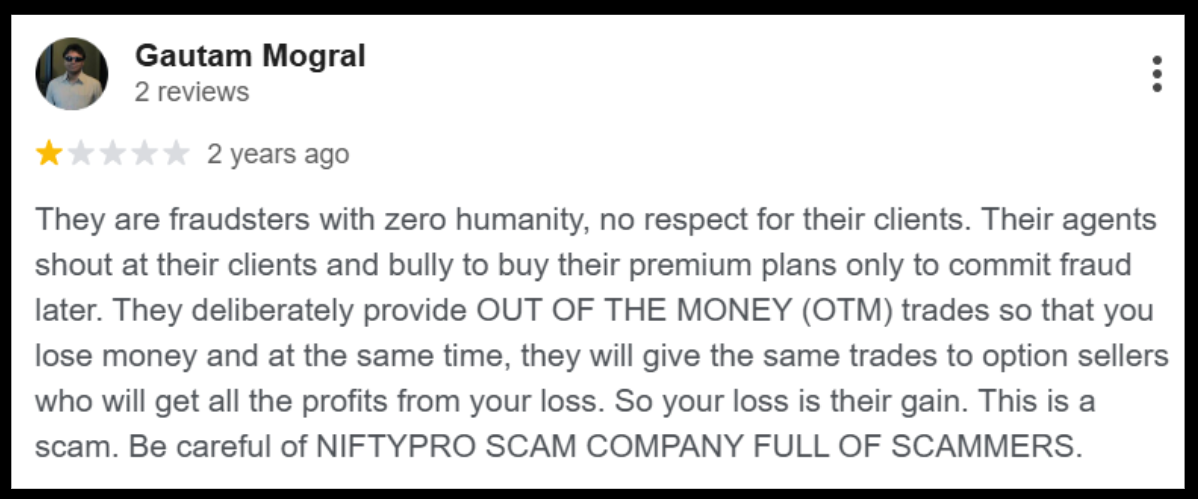
He describes a scenario where the same trade is given to buyers and sellers simultaneously, ensuring one side profits while the other loses.
He also mentions that agents shouted at clients and bullied them into buying premium plans. This kind of behaviour directly violates SEBI’s code of conduct for research analysts, which requires them to treat clients fairly and ethically.
5. Profit Sharing Demands
Saravana’s experience is brief but telling. After one profitable trade, the firm asked for a 50% profit share. He paid. The very next trade resulted in a complete loss.
The pattern is familiar: a single profitable call to build trust, followed by an arrangement that ends in the investor losing everything.
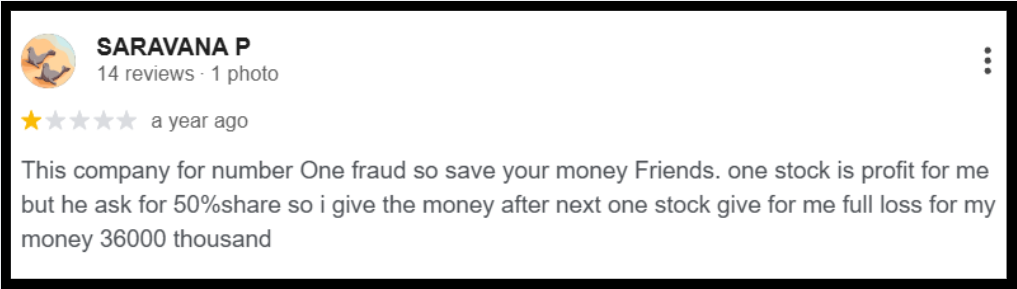
Notably, profit-sharing is explicitly prohibited for SEBI-registered Research Analysts. The fact that this arrangement was even offered is a regulatory violation in itself.
So now that we’ve seen what investors experienced on the ground, let’s look at what India’s market regulator found when it officially investigated Nifty Pro.
Niftypro SEBI Order
SEBI conducted a thematic inspection of Nifty Pro Trading Research covering the period from 24 May 2022 to 31 January 2024.
What they found resulted in two separate enforcement actions, a monetary penalty and a regulatory censure, both targeting Sameer Pande as the proprietor.
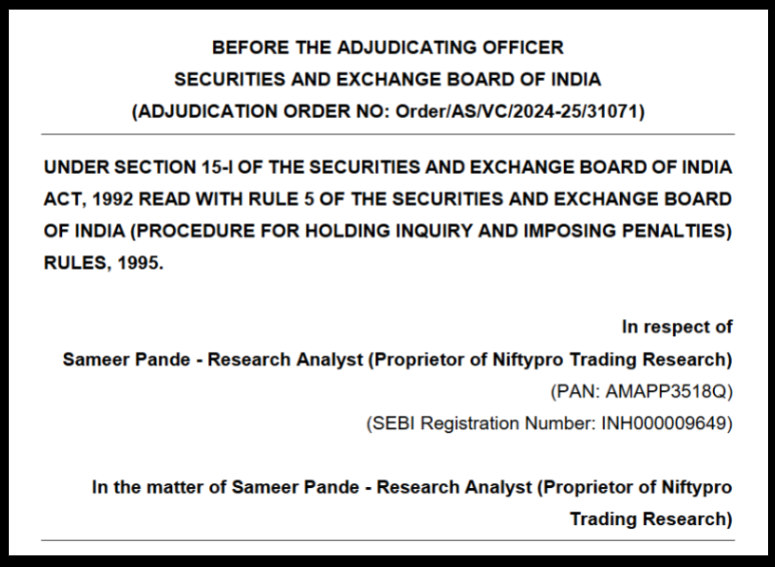
The first action came in the form of an Adjudication Order dated December 24, 2024, where SEBI’s Adjudicating Officer, Asha Shetty, imposed a monetary penalty on Sameer Pande.
Violations by Nifty Pro
The violations established in this order include:
- Claiming “90% Accuracy”: Nifty Pro’s website prominently displayed the phrase “We maintain upto 90% accuracy in intraday calls in all segments.” Under Clause C(x) of SEBI’s Advertisement Code for Research Analysts, claiming specific accuracy percentages is explicitly banned. It creates the impression of guaranteed performance, which no honest analyst can promise.
- Nifty Pro guaranteed profit claims: SEBI found that sales representatives of Nifty Pro were verbally assuring clients of specific daily profits. Callers were told that a capital of ₹50,000 could generate daily returns of ₹8,000 to ₹10,000, and that membership fees could be recovered in just 2–3 trading days.
- Misleading Testimonials: The website featured client testimonials that portrayed consistent, large-scale gains. SEBI found that these testimonials created a deceptive impression of guaranteed success, which is prohibited under RA regulations.
- Use of Superlative and Performance-Based Language: Phrases like “Best Market Tips” and “accurate intraday calls” were used in marketing materials. SEBI categorically prohibits such terms for research analysts as they imply superiority or guaranteed outcomes.
- Failure of Fiduciary Duty: SEBI’s order explicitly states that Sameer Pande, as a registered RA, “failed in his fiduciary duties owed to his clients.” This is a serious finding that goes beyond technical non-compliance.
Penalty on Nifty Pro
Penalty: ₹2,00,000 imposed under SEBI RA Regulations and PFUTP Regulations.
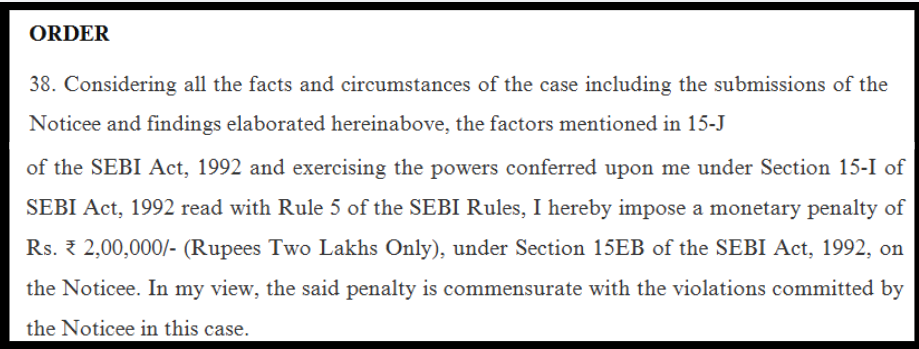
Sameer Pande attempted to defend himself by arguing that the language used was standard industry practice and that disclaimers on the website covered the risk.
SEBI rejected this defence entirely.
Disclaimers cannot neutralise misleading promises made upfront, in advertising, in calls, and on the website.
What Investors Must Keep in Mind?
Looking at the reviews and the SEBI orders, a few things stand out clearly for any investor considering Nifty Pro, or any SEBI-registered RA for that matter.
Here are the things every investor should check before subscribing to any research analyst service:
- No RA can promise specific returns: If any advisory service quotes daily profits, guaranteed accuracy percentages, or promises to recover your fees in a fixed number of days, that is a violation, not a selling point.
- Profit-sharing arrangements are banned for RAs: If a research analyst offers to share in your profits or charges a fee based on your portfolio’s performance, that is a direct SEBI violation. Do not enter such arrangements.
- Absence of stop-loss is a red flag: Every responsible advisory service will have a stop-loss on every call. No stop-loss means the downside is unlimited.
- Document every conversation: Keep records of calls, WhatsApp messages, invoices, and payment receipts. This documentation is what turns a grievance into a winning arbitration case.
- The upsell after a loss is a warning sign: If a firm that gave you losses immediately tries to sell you a more expensive package to “recover” those losses, leave immediately and file a complaint.
Check SEBI SCORES for any existing complaints or enforcement actions against an RA before subscribing.
How to Lodge a Complaint Against Sameer Pande?
If you have had an experience with Nifty Pro Trading Research that involved misleading advice, profit-sharing arrangements, excessive losses, or unresponsive support, you have clear legal avenues available.
Since Nifty Pro is a SEBI-registered Research Analyst, SEBI has direct regulatory jurisdiction, which makes the process structured and well-supported.
Step 1: Gather All Your Documentation
Before filing anywhere, collect every piece of evidence.
This includes payment receipts, invoices, call recordings, WhatsApp conversations, Telegram screenshots, and any written communications from the firm.
Note down specific dates, amounts paid, and what was promised vs. what was delivered.
Step 2: Send a Written Complaint to the Firm
Write a formal complaint to Nifty Pro Trading Research’s grievance officer. State the specific issue, misleading advice, profit-sharing violation, capital loss, or unresponsive support.
Give them 21 days to respond before escalating further.
Step 3: File a Complaint with SCORES
Since Nifty Pro holds SEBI registration, SEBI has direct oversight. Register and file a detailed complaint citing the specific violations, assured returns, profit-sharing arrangement, and misleading promotions.
Attach all supporting documents. SEBI’s past action against this firm means your complaint will land in an already familiar regulatory context.
Step 4: Register a Complaint with Smart ODR
If SCORES doesn’t resolve the matter within the expected timeline, escalate to the Smart ODR portal. CORD, empanelled by NSE, facilitates conciliation first.
If conciliation fails, you can move to arbitration.
Step 5: Stock Market Arbitration
If your loss is quantifiable and you have documentation supporting your claim, particularly around profit-sharing arrangements or misleading calls, arbitration through NSE’s Smart ODR framework can result in a binding award ordering a full refund.
Need Help?
If you subscribed to advisory services, paid fees above the SEBI cap, or received unsuitable recommendations from any registered investment adviser, you may have strong grounds for a formal complaint, and we can help you build and file it.
- Case Assessment: We review your payment records, subscription history, and communications to identify the exact violations applicable to your situation.
- Complaint Drafting: We prepare a precise, regulation-cited complaint for SEBI SCORES in language that regulators act on.
- SMART ODR Guidance: We walk you through every step of the ODR filing process and ensure the right evidence reaches the right authority in the right format.
- Arbitration Support: We build your case for financial loss recovery through BSE arbitration, covering documentation, submissions, and hearing preparation.
Register with us. Every case we handle stays completely confidential and focuses on one outcome: your assistance.
Conclusion
Nifty Pro Trading Research operates under a valid SEBI registration. On paper, that is a tick in the right box. But the evidence gathered from real investors and SEBI enforcement action tells a story that goes beyond registration numbers.
SEBI found that the firm promised guaranteed daily profits, used misleading accuracy claims, deployed fake-looking testimonials, and had sales representatives make verbal assurances that were never put in writing.
A monetary penalty of ₹2 lakh was imposed in December 2024. A regulatory censure followed in May 2025.
The reviews from real investors, lost capital, absent stop-losses, aggressive upselling after losses, and profit-sharing violations mirror exactly what regulators found.
The takeaway for every trader is simple: before subscribing to any research analyst service, verify their SEBI registration, search for their name on SCORES, read reviews carefully, and never engage with any firm that promises specific returns or proposes a profit-sharing arrangement.
If you’ve already invested and experienced losses because of misleading advice, know that you have options, and investor protection mechanisms in India are stronger than most people realise.
Your money deserves better than a promise.





 Add us as a preferred source on Google »

