

Quick Summary
DSIJ Wealth Advisory’s mandatory complaint disclosure shows 5 resolved complaints in seven years. But the disclosure page showed March 2026 data in mid-July 2026, three to four months out of date. Meanwhile, two Trustpilot reviews, four Mouthshut reviews, and five Google Play reviews describe losses from selective performance marketing, refund refusals, and service delivery failures. None of these appear to be captured in the zero-entry “Other Sources” row of the complaint table. This page covers every public account and explains what the gap between the official record and the public reviews actually means.
DSIJ Wealth Advisory’s mandatory complaint table shows 5 complaints received in seven years, all resolved. At first glance, that looks like a clean record.
But when that table is checked in mid-July 2026 and still shows data only through March 2026, something is wrong.
And when two Trustpilot reviews, four Mouthshut reviews, and five Google Play reviews all describe specific problems with service delivery, selective marketing, and refund refusals.
None of those accounts appear in the “Other Sources” row of the disclosure table which is also zero across seven years, the picture becomes more complicated.
This blog covers what the official record shows, what public reviewers reported, and why the gap between the two matters for anyone evaluating this firm.
What the DSIJ Wealth Advisory’s Complaint Disclosure Table Actually Shows?
DSIJ Wealth Advisory publishes mandatory investor complaint data as required by SEBI. The annual table covers 2019-20 through 2025-26.
|
Year |
Received | Resolved | Pending |
|---|---|---|---|
| 2019-20 | 1 | 1 |
0 |
|
2020-21 |
0 | 0 | 0 |
| 2021-22 | 1 | 1 |
0 |
|
2022-23 |
1 | 1 | 0 |
| 2023-24 | 0 | 0 |
0 |
|
2024-25 |
1 | 1 | 0 |
| 2025-26 | 1 | 1 |
0 |
|
2026-27 |
0 | 0 | 0 |
| Grand Total | 5 | 5 |
0 |
Three things about this table need to be read carefully.
1. The First is the Date on the Live Page
When checked in July 2026, the live complaint disclosure showed data for the month ending March 2026. April, May, and June 2026 were missing.
SEBI requires monthly complaint updates within the first week of the following month. A page showing March data in mid-July is 3 to 4 months stale.
This is a direct compliance failure, not a minor lag.
2. The Second is the “Other Sources” Row
Every month across every year in the monthly table shows zero complaints received from sources other than investors directly or SEBI SCORES.
That row exists specifically to capture complaints from any other channel. Multiple public reviews across Trustpilot, Mouthshut, and Google Play describe specific dissatisfaction.
Whether those reached the firm formally or not, the all-zero “Other Sources” reading across seven years is a pattern worth noting independently.
3. The Third is Scale
DSIJ’s Play Store listing shows 100,000 plus downloads and over 2,400 app reviews. The firm has been operating for decades.
Five formally filed SCORES complaints across seven years is very low for that subscriber base. It does not mean those five were handled badly.
It means the formal channel captured very few of the dissatisfied subscribers who expressed concerns publicly.
DSIJ Wealth Advisory Reviews on Trustpilot
DSIJ Wealth Advisory has two reviews on Trustpilot, a verified review platform where companies cannot pay to remove reviews.
Review 1: “Did Not Meet My Expectations”
The reviewer describes subscribing based on claims about the firm’s experience and expertise. The stock recommendations resulted in losses.
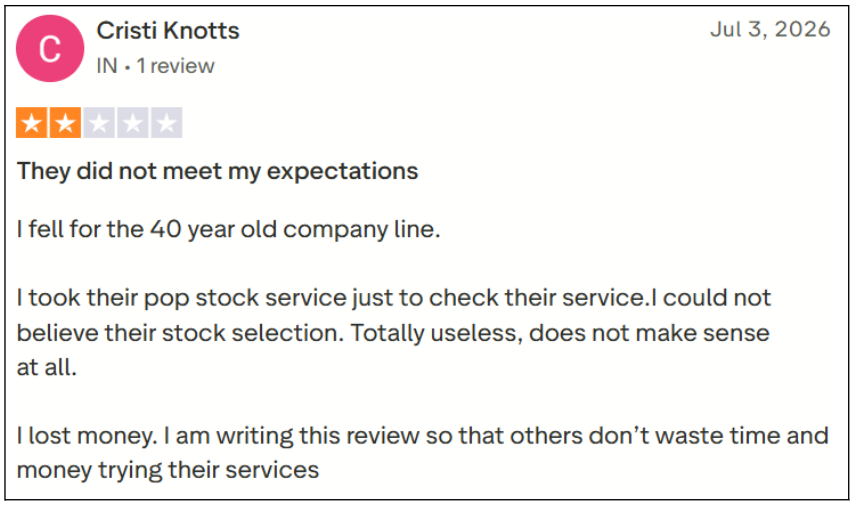
The reviewer states the performance claims made in marketing were not borne out by the actual service.
If performance claims were presented without the mandated risk disclosures or without a factual basis, they may violate SEBI Research Analyst Regulations which prohibit misleading or exaggerated representations.
Review 2: “Purchased Two Services, Both Were Worthless”
The reviewer alleges subscribing to two services and finding that only a few recommended stocks performed while the firm heavily promoted those winners and ignored the underperforming recommendations.
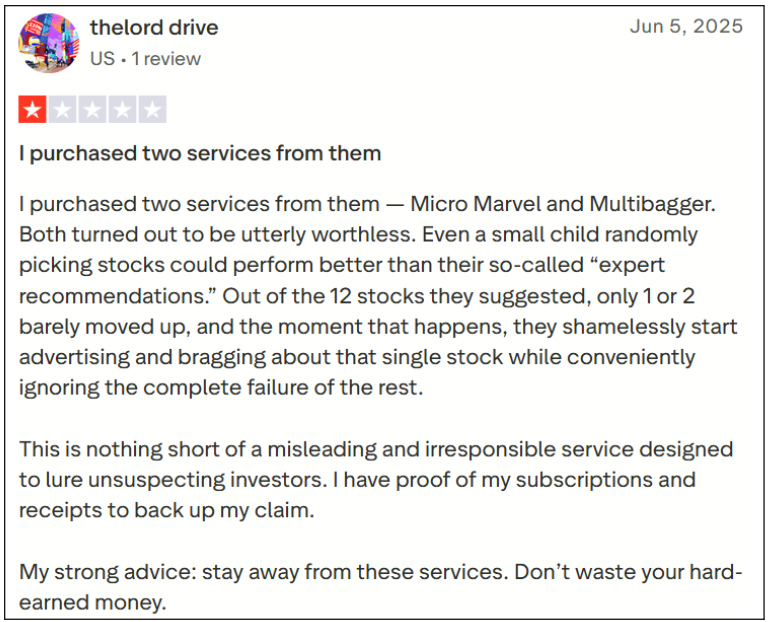
SEBI’s Research Analyst Regulations and Advertisement Code require that when past performance is used in marketing, the results must be presented across the full recommendation universe, not selectively.
Highlighting winning recommendations while omitting the broader performance record is a specific violation these regulations are designed to prevent.
Mouthshut Reviews on DSIJ Wealth Advisory
Four reviews appear on Mouthshut under the DSIJ Pvt. Ltd. profile, which is the former name of the same entity.
Review 1: “Fake Commitments”
The reviewer alleges false commitments were made before fees were collected and that they incurred a loss of Rs. 50,000.
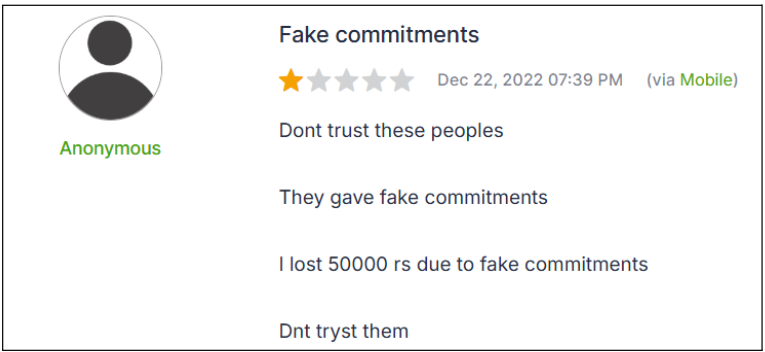
If guaranteed returns or assured outcomes were promised to induce subscription, that violates SEBI Research Analyst Regulations which prohibit assured-return representations.
Review 2: “Fraud Company”
The reviewer alleges stock recommendations led to losses, service changes were refused, refund requests were rejected, and grievances went unanswered.
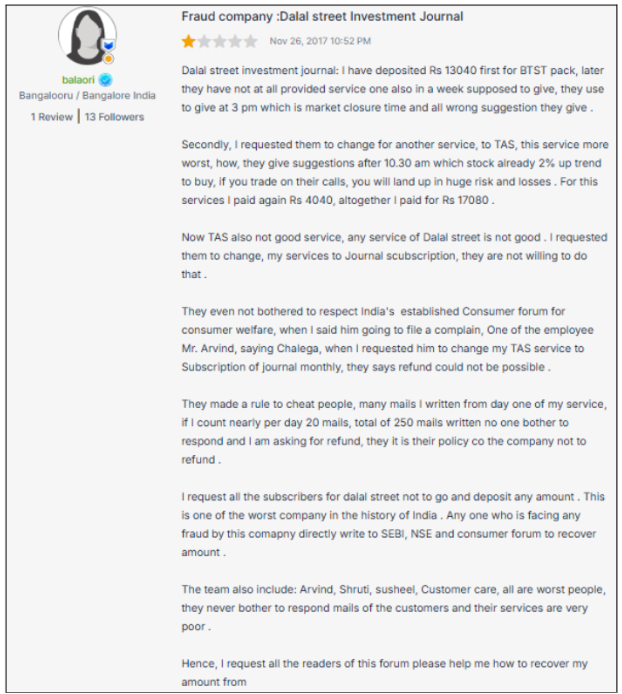
If refund requests were refused for unused subscription time, that refusal conflicts with SEBI’s December 2024 mandatory pro-rata refund requirement.
Review 3: “Portfolio Advisory Service”
The reviewer claims the service promised to outperform the market but delivered losses despite a rising market environment.
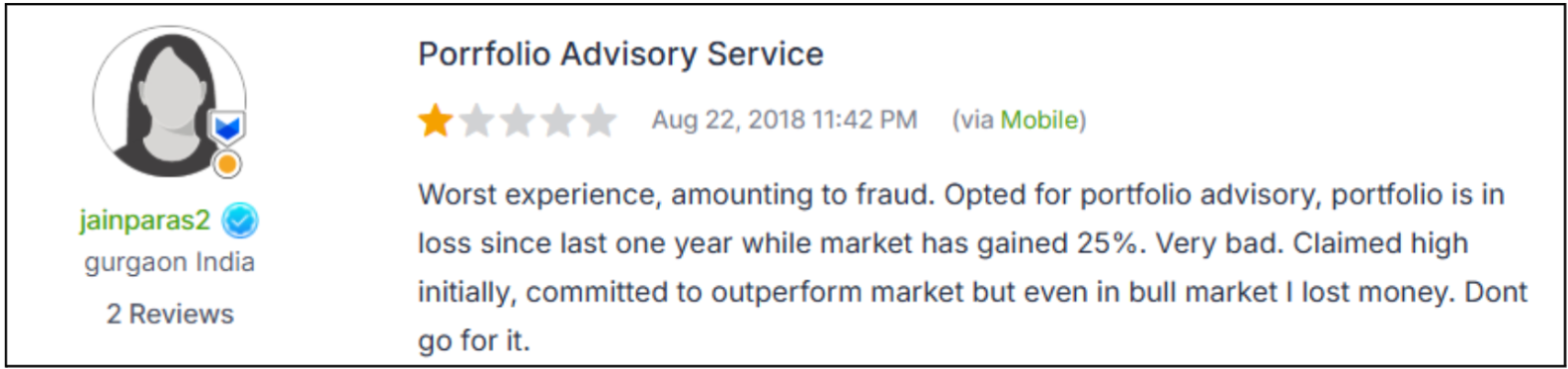
If an outperformance claim was made without a reasonable basis or without adequate risk disclosure, it may contravene SEBI’s Code of Conduct requiring fair, honest, and non-misleading communication.
Review 4: “Fraud and Scammers”
The reviewer alleges attractive past returns were used in marketing while most recommended stocks generated losses, and that historical performance was selectively highlighted.
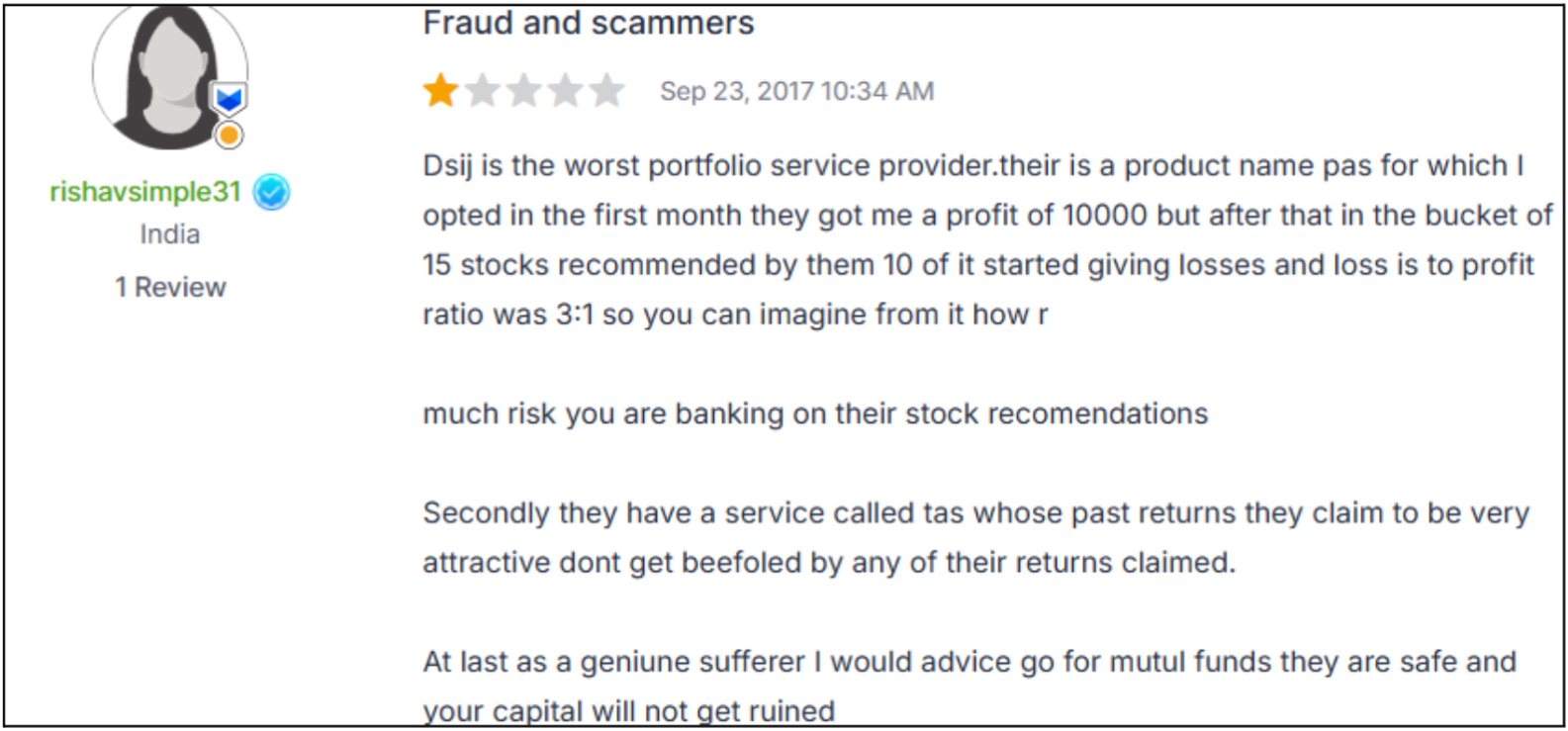
If cherry-picked results were used without balanced disclosure, this violates SEBI’s advertising guidelines for Research Analysts.
We are reporting what these users said on a public platform. We are not independently verifying these accounts. No SEBI order confirming this specific conduct exists as of July 2026.
Also Read: Shubh Stocks Capital review, 2 complaints in 2023, 10 the very next year.
Google Play DSIJ Wealth Advisory Reviews
Five reviews on the DSIJ Play Store listing describe specific service and delivery problems.
Review 1: “Poor Customer Service and No Response”
The reviewer states a promised hard copy was never delivered and repeated customer support requests went unanswered after payment.
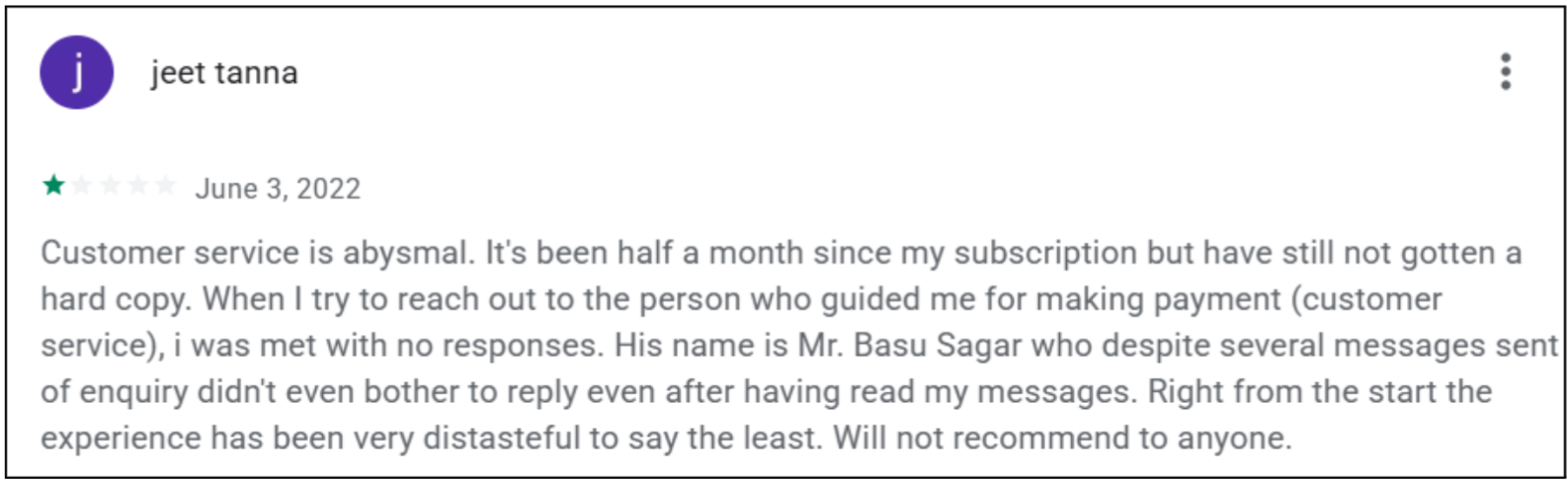
A registered RA is required under SEBI’s Code of Conduct to maintain effective investor grievance redressal and fair client service. Unanswered support requests for a paid service are a formal complaint basis.
Review 2: “Subscription Led to Significant Portfolio Losses”
The reviewer claims recommendations resulted in a 33 percent portfolio decline while the broader market performed well. Market losses alone are not a complaint basis.
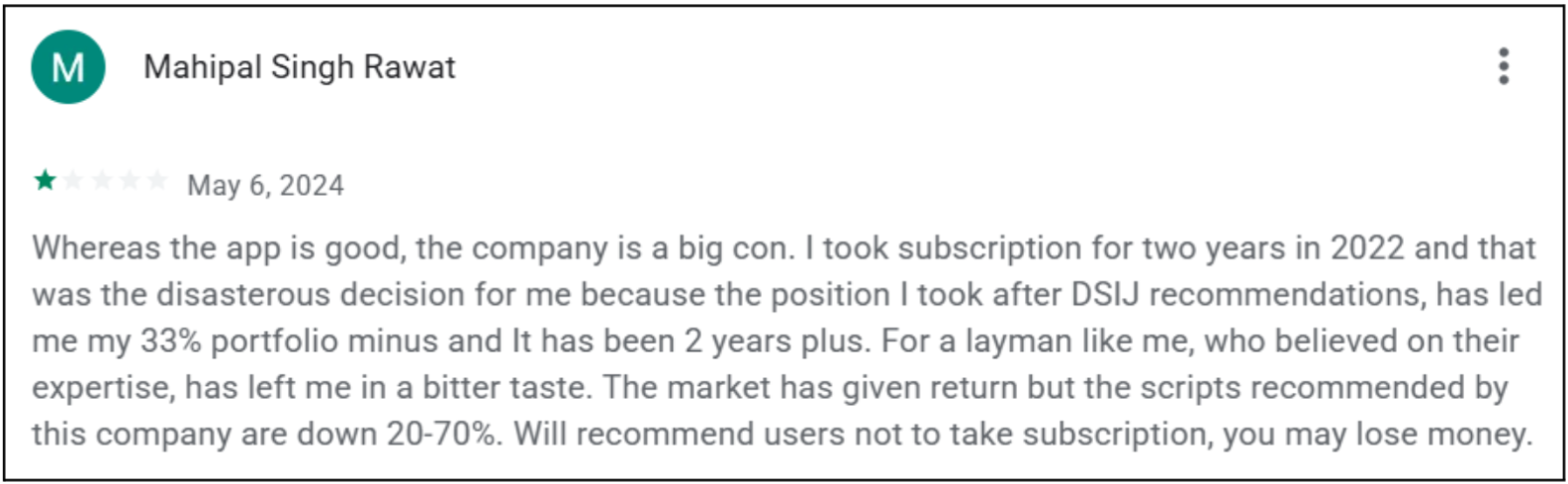
But if any exaggerated performance expectations were created by the marketing at the point of sale, those representations are actionable.
Review 3: “Service Promises Not Fulfilled After Payment”
The reviewer describes aggressive sales calls before subscription followed by poor service after payment, hard copies not delivered, and inaccessible customer support.
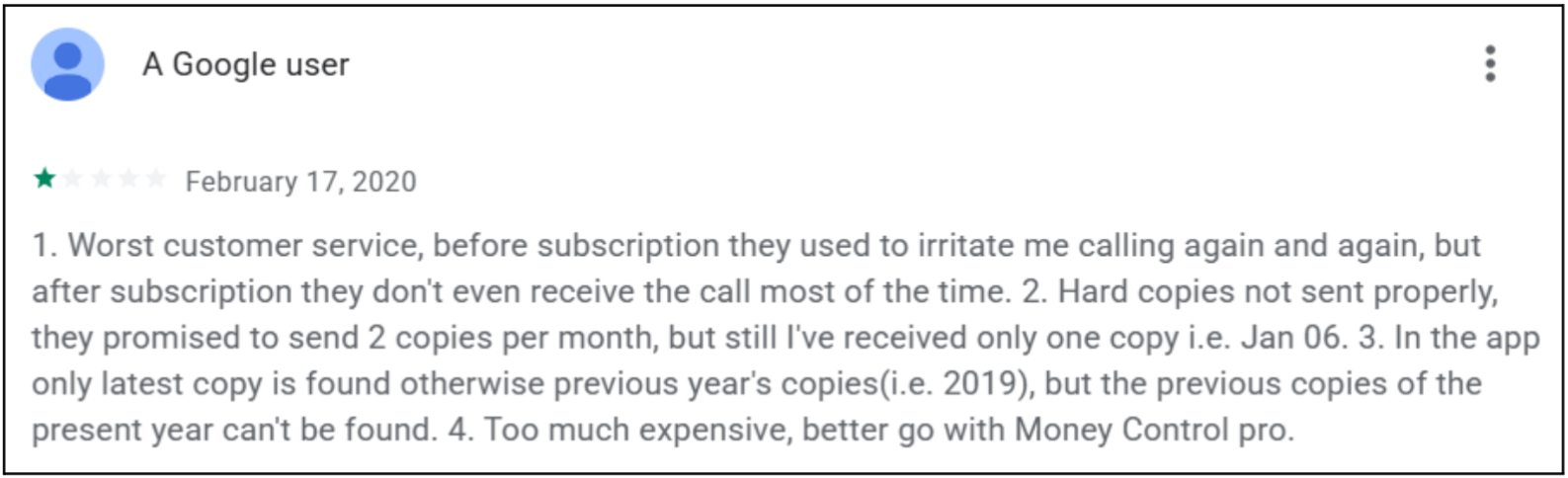
If commitments made during the sales process were not honoured, that constitutes unfair client servicing and possible breach of SEBI’s Code of Conduct.
Review 4: “Unable to Access Purchased Magazine”
The reviewer states the magazine could not be read or downloaded despite having purchased the subscription.
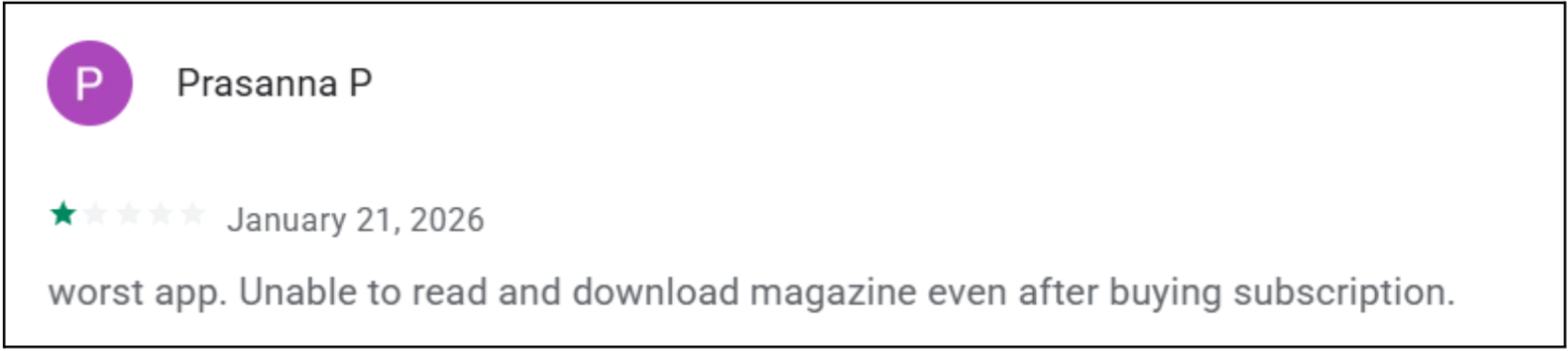
If a paid service is not made accessible, that is a service delivery failure and a direct complaint ground.
Review 5: “Losses, Poor Recommendations, and Refund Refusal”
The reviewer alleges substantial losses from recommended stock tips and states the firm refused to refund the subscription despite repeated requests.
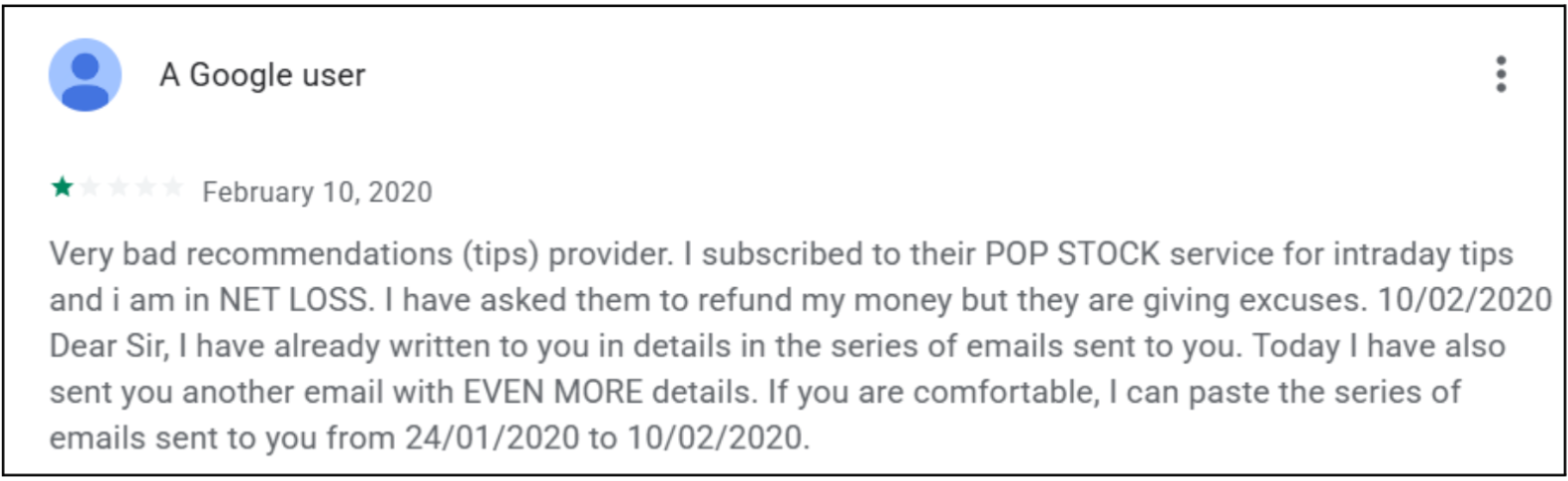
A refund refusal for unused subscription time conflicts with SEBI’s December 2024 mandatory refund requirement.
Also Read: Eqwires Research Analyst Reviews, showing the same pattern of shifting relationship managers and ignored stop-losses.
What the Full Picture Means?
Put the complaint disclosure table, the Trustpilot reviews, the Mouthshut reviews, and the Google Play reviews together and here is what the picture shows honestly.
- The official complaint record is current only through March 2026 despite it being mid-July 2026. That staleness is itself a compliance failure.
- The public reviews across three platforms describe a consistent pattern. Marketing that emphasised winners while omitting the broader record.
- Refund requests refused after losses appeared. Service delivery failures after payment. Customer support that did not respond.
Whether these specific accounts constitute formal violations depends on the exact wording used at the point of sale and the documentation each investor preserved.
What they collectively describe is a pattern that maps directly to SEBI’s requirements around advertisement code compliance, fair dealing, and grievance redressal.
An investor who paid DSIJ based on selective performance marketing, was refused a refund for unused subscription time, or did not receive a service they paid for has specific complaint grounds regardless of what the official complaint table shows.
And those grounds can lead somewhere real; our stock market fraud recovery record shows how investors in similar positions got their money back.
For the full analysis of the compliance gaps in DSIJ’s regulatory filings and website disclosures, the SEBI registration page covers every finding.
Read is DSIJ Wealth Advisory SEBI registered and what the current regulatory gaps mean.
For the complete step-by-step complaint guide including which registration to use on SCORES and what evidence to collect, the complaint page covers everything.
Read the complete guide on how to file a complaint against DSIJ Wealth Advisory.
Our team files your SEBI SCORES complaint, prepares the documentation, and represents you through SMART ODR and arbitration.
Conclusion
DSIJ Wealth Advisory’s formal complaint record shows 5 complaints in seven years, all resolved.
But the disclosure was months out of date when checked in July 2026, and the “Other Sources” row is zero across seven years despite multiple documented public reviews.
Eleven public accounts across Trustpilot, Mouthshut, and Google Play describe losses from selective marketing, refund refusals, and service delivery failures.
We have not independently verified any of these accounts. No SEBI enforcement order against the firm exists as of July 2026. What the reviews describe, as a documented pattern across multiple named users on verified platforms, is what this page reports.
The gap between the official record and the public accounts is not itself proof of wrongdoing.
It is a signal to verify the live page date stamp yourself before relying on it, and to know your rights under current SEBI regulations before you pay.
Frequently Asked Questions
Five complaints received between 2019-20 and 2025-26, all resolved, none pending. However, the live disclosure page showed data only through March 2026 when checked in mid-July 2026, a 3 to 4 month lag against SEBI's monthly update requirement.
Two Trustpilot reviews describe subscribing based on performance claims that were not borne out, and selectively promoted winning recommendations while underperforming ones were ignored. Both are single public accounts on a verified platform. We have not independently verified the specific transactions described.
Four Mouthshut reviews describe commitments made before fees were collected that were not delivered, refund requests refused after losses, the Portfolio Advisory Service delivering losses despite market gains, and historical performance selectively highlighted in marketing. All are public accounts attributed to named users. We have not independently verified these accounts.
Both. Three reviews describe the magazine or app delivery failing after payment, including hard copies not delivered and magazine access not working. Two reviews describe recommendation service dissatisfaction and refund refusals. The former are consumer product complaints. The latter involve SEBI-regulated services and the SCORES complaint path applies.
The "Other Sources" row captures complaints received through channels other than investors directly or SEBI SCORES. It reads zero across all seven years. Multiple public reviews exist across three platforms describing dissatisfaction. Whether those reviewers also formally complained to the firm through a documented channel is unknown. The consistent zero reading across seven years is a pattern worth noting independently rather than assuming it means no informal complaints reached the firm.





 Add us as a preferred source on Google »

