
Quick Summary
An INH number is the registration code SEBI gives a Research Analyst. You verify it on SEBI’s own intermediary search, never through the analyst’s website or chat. The number must be live, the name must match the invoice, and the fee must stay under ₹1,51,000 per client family per year. SEBI cancelled 17 research analyst registrations in one order on 4 August 2026, so an old certificate proves nothing. This guide shows what to check and where to complain.
The caller sounded sure of himself. He called himself a “SEBI registered analyst,” read out a long number starting with INH and promised weekly calls with fixed targets.
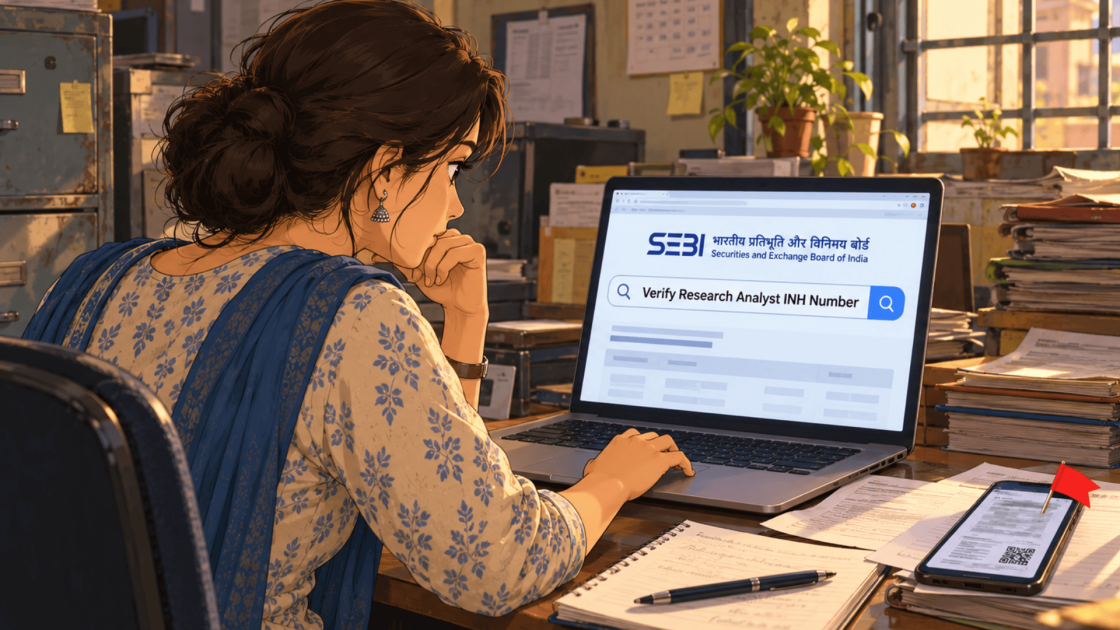
You can verify research analyst INH number details in about three minutes, and you should do it before the first payment.
The number sounds official, but only SEBI’s own list can tell you if it is real, current and linked to the person asking for your money.
How Do You Verify a Research Analyst INH Number?
Open SEBI’s website and go to the Intermediaries section, then Recognised Intermediaries.
Choose Research Analyst from the category list and search by name or registration number.
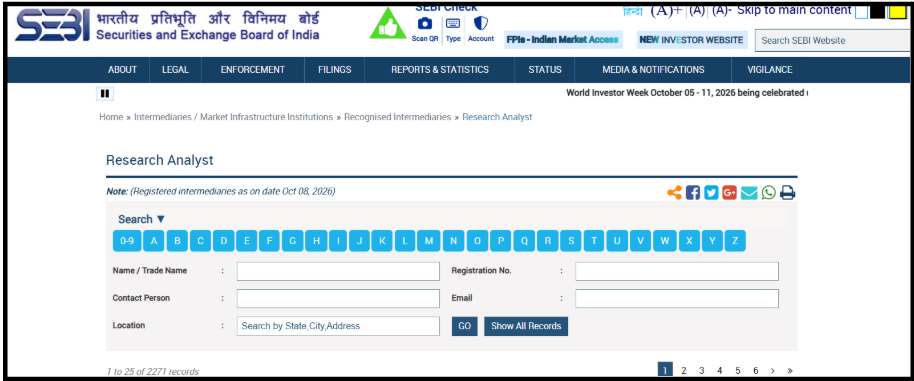
Do this on your own phone or laptop. Never use a link, QR code or screenshot that the analyst sends you.
Three things on the record matter, and each one catches a different problem:
- The INH number matches. Every digit must be identical to the number the analyst quoted.
- The name matches. The registered name must be the one on the payment page, the agreement and the invoice.
- The registration is live. The record should not show a cancelled, suspended or expired status.
If all three line up, you know the analyst is a real registered entity.
That is the first gate, not the last. It does not yet tell you whether the fee or the advice is acceptable.
What Does an INH Number Tell You?
INH is the prefix SEBI uses for Research Analysts. An Investment Adviser carries a different prefix, INA. The first three letters tell you which rulebook the person works under.
Many investors mix the two. Someone selling “buy and sell calls” with an entry price, target and stop loss is usually acting as a research analyst, so the number should start with INH.
If the person quotes an INA number instead, they hold an adviser registration, and the rules on fees and conduct differ.
Investment advisers carry a different prefix, and the walkthrough at verify investment adviser INA number shows what changes in their checks.
The digits after the prefix are only an identity key.
A low number does not mean an older or better analyst, and a high number does not mean a weaker one.
Can an Analyst Still Quote an INH Number After the Registration Has Expired?
Yes, and this is where many investors lose money. A certificate image or a number on a website does not update when the registration changes.
The analyst can keep showing it for years.
Research analyst registration runs for five years. The renewal fee must be paid within the three months before the period ends.
On 4 August 2026 SEBI cancelled the certificates of 17 research analysts, entities and individuals, because they had not paid that fee.
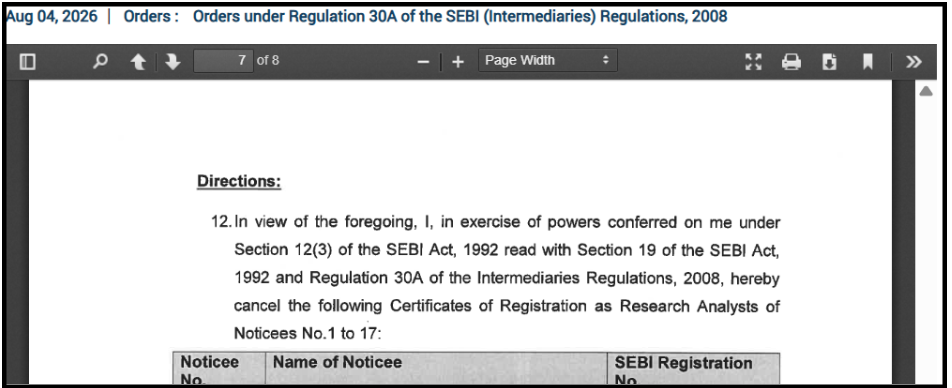
Some of those registrations had lapsed as early as 2020.
SEBI sent the order to BSE, which acts as the administration and supervisory body for research analysts.
Its stated aim was to stop people from using certificates that are “no longer in force” to mislead investors.
That one sentence is the whole reason you check the live record every time, and not only once.
What Else Should Match Besides the INH Number?
After the number checks out, compare the rest of the record with what the analyst showed you.
A genuine registration lines up on small details, and a gap in any one of them deserves a pause.
Start with the registered name and the type of registration.
A company registration should not collect your money in an individual’s personal account.
Next, compare the email address and phone number on the SEBI record with the ones the analyst uses to contact you.
Different contact details are not proof of a problem, but they are worth a written question.
Then read the footer of the analyst’s website and the first page of any research report.
SEBI rules require research analysts to show their registration details and a standard disclaimer on their communication.
Check the payment destination last. Payment should go to an account in the name of the registered entity.
If the analyst asks you to pay a different name, a personal UPI ID or a “partner” account, stop and read the section below on what to do when something does not match.
Is the Fee Within the SEBI Limit for Research Analysts?
A live INH number does not make a high fee acceptable. SEBI caps what a research analyst can charge an individual or HUF client at ₹1,51,000 per client family per year.
The cap does not apply to institutional or accredited investors.
Compare the amount in your agreement with this cap. Add up everything you paid or will pay in the year, not only the first instalment.
Plans called “premium,” “VIP” or “upgrade” count toward the total if they are for research services.
Advance fees have a limit too. A research analyst cannot take more than one quarter of fees in advance, and must refund the unused part pro rata if the service ends early.
Counting a year of fees gets tricky, and SEBI research analyst fee limit works through the arithmetic with examples.
What Should You Do If the INH Number Is Not Found on SEBI’s List?
Do not pay, and do not argue. Take a screenshot of your search with the date visible, and save the messages where the person quoted the number.
Those two items are your evidence.
Next, ask the person for the exact registered name and number, and search again with both.
A trade name that differs from the company name, or a typo in one digit, are the usual innocent reasons for a miss.
If the person still cannot point to a live record, treat them as unregistered.
SEBI rules do not allow anyone to give paid research recommendations without registration.
Anyone who cannot point to a live record belongs with the group described in unregistered advisory firms in India, along with the regulator’s own warnings about them.
Already paid money? Gather the payment proof, the chat history and any screenshots before you contact anyone.
Is the person you paid missing from SEBI’s list?
Our team reads your payment proof and chat export, then tells you in plain words which complaint route to take. Register with us for a free consultation.
What Documents Should a Registered Research Analyst Give You?
A registered analyst should hand you paperwork before you pay, not after. Missing paperwork is a quiet signal, so look at what you received.
Ask for the signed agreement, the Most Important Terms and Conditions document and the risk profile questionnaire.
These show the fee, the services, the refund terms and how the analyst assessed your risk appetite.
The agreement should state the exact fee, the period it covers and the refund rule for early exit.
If it only says “as discussed on call,” you have no written terms to rely on.
Also look for the grievance contact and the compliance officer details. A registered entity must give investors a place to send complaints.
Finally, find the monthly complaint disclosure on the analyst’s own website.
Note whether the data is present, missing, outdated or hard to confirm, and save a dated screenshot either way.
Does a Valid INH Number Mean the Research Is Good or Safe to Follow?
No. Registration confirms that SEBI recognised the entity and that the entity must follow SEBI rules.
It does not confirm that the calls will make money, and it does not mean SEBI endorses any analyst.
A registered analyst can still break the rules.
SEBI has acted against registered entities for conduct such as misleading claims, missing risk disclosures and unsuitable advice. Each action sits in a public order.
When you read about a firm, rely on the order itself and not on rumour or a screenshot in a group chat.
Never accept a promise of assured or fixed returns. No registered analyst may offer one, and the promise alone is worth keeping as evidence.
Be careful with tips that arrive on messaging apps.
Chat apps make copying a registered firm easy, as the entries in Telegram channels banned by SEBI in 2026 make clear.
Can Someone Use a Real Analyst’s INH Number to Pose as Registered?
Yes, and this catches careful people too. Some callers quote a genuine INH number that belongs to a real analyst, so your search shows a clean, live record.
The number is real, but the person on your phone may not be that analyst.
A matching record only proves the number exists. It does not prove the caller owns it.
Close that gap with one more step. Look up the contact details on the SEBI record and reach the analyst through those details, not through the number that called you.
Then ask the registered entity directly whether the person who contacted you works for them.
A genuine firm will answer in writing within a day or two.
Watch the payment page as well. If the number belongs to Company A and the UPI handle or bank account belongs to someone else, you have found the mismatch that matters.
Borrowed numbers are a growing problem, and identity misuse of SEBI registered advisers and analysts breaks down the usual patterns.
Why Might a Real Analyst Not Show Up in Your Search?
Sometimes the analyst is genuine and the search simply misses.
Before you decide against someone, rule out the common innocent causes.
- Trade name against registered name: Many firms market under a short brand name while SEBI lists the full company name.
- A typo in one digit: INH numbers carry many digits, and one slip changes the whole record.
- A new registration: A recently granted certificate may take time to appear on every listing.
- The wrong category: A search under Investment Adviser will not find a Research Analyst, and the reverse is also true.
Ask the person for the registered name in writing, then search again with the exact spelling.
Compare the result with the name on the agreement and the invoice.
If you still find nothing after two careful tries, treat the silence as your answer.
A real registration is easy to point to, and a person who is registered will not hesitate to share the exact record.
How Do You Complain If a Registered Research Analyst Has Misled You?
Start with the analyst’s own grievance contact, in writing, and keep a copy.
If the reply does not satisfy you, the next stop is SEBI’s complaint system.
Each stage has its own guide with the full procedure, so we do not repeat the steps here.
When the analyst’s reply fails you, the checklist at SEBI complaint against research analyst tells you which documents to gather first.
Keep your own timeline while you wait: the date you paid, the date you wrote to the analyst and the date they replied.
These dates decide which stage you can move to next, and they show a regulator exactly what happened.
Your next formal step is the regulator’s portal, where a SCORES SEBI complaint gets a registration number and a fixed reply timeline.
Read the reply carefully when it arrives.
Note whether it answers each point you raised, and whether it gives a reason in writing if the entity refuses your request.
A money dispute that still needs a ruling moves on to the SMART ODR portal, which runs conciliation first and arbitration after.
We keep the exact steps on that page, so this blog does not repeat them.
Both routes work better when you file with the registered name, the INH number and a dated payment trail in hand.
How Do You Make the INH Check a Habit Before You Subscribe?
Treat the check as a three minute routine that comes before every payment.
Search the live record, match the name, match the payment account, compare the fee with the cap and keep the screenshot.
That routine rules out most of the problems that reach us.
Repeat the check at renewal time. The registration can change while your subscription continues, and a record that was live in January can look different in October.
If anything feels off, pause. A genuine analyst will not mind you taking a day to confirm, but a person who rushes you with a “limited slots” message has already told you something.
Conclusion
An INH number is useful only when you confirm it on SEBI’s own list, on the day you pay, with a name that matches the invoice.
A number on a website or a certificate image can outlive the registration by years, as the August 2026 cancellation order showed.
Run the three checks and compare the fee with the ₹1,51,000 cap.
Save your dated screenshots and the payment trail, because they decide how strong your complaint will be.
If the record does not match, or you have already paid someone who failed the check, start your complaint with the documents you saved and ask for help early.
Report. Recover. Stay Fraud Free.
Frequently Asked Questions
Use SEBI's website, in the Intermediaries section under Recognised Intermediaries, and choose Research Analyst. Search by name or registration number yourself. Do not trust a link, certificate image or screenshot that the analyst shares with you.
No. INH is the prefix for Research Analysts and INA is the prefix for Investment Advisers. They work under different regulations, so the rules on fees, conduct and complaints differ. Check the prefix against the kind of service you were sold.
Yes, a certificate or website banner does not update itself. SEBI cancelled 17 research analyst registrations in August 2026 for unpaid renewal fees, and some had lapsed years earlier. Always check the live SEBI record on the day you pay.
Do not pay. Take a dated screenshot of the SEBI record and keep the messages where the number was quoted. A mismatch between the registered name and the name on the invoice or payment account is a serious warning sign.
No. A registered research analyst cannot promise or assure returns, and registration does not mean SEBI vouches for the research. If someone offers fixed profits, keep the messages as evidence and look at your complaint options.




 Add us as a preferred source on Google »