

Investors today have no shortage of advisory platforms promising stock market guidance, portfolio support, and financial growth strategies.
Among the many names appearing online, Growthlift Investment Advisor has drawn attention from retail investors looking for research-based investment recommendations and advisory services.
Growthlift appears to target individuals who want help navigating stock market decisions. Especially those interested in equity recommendations, portfolio management guidance, and subscription-based advisory services.
Before paying fees to any advisory platform, investors usually ask a few simple questions: Is the company properly registered? Are its services compliant with regulations? What should clients watch out for?
This blog looks at Growthlift Investment Advisor from a factual and neutral lens by reviewing available public information, website disclosures, and complaint-related material.
Growthlift Investment Advisor Details
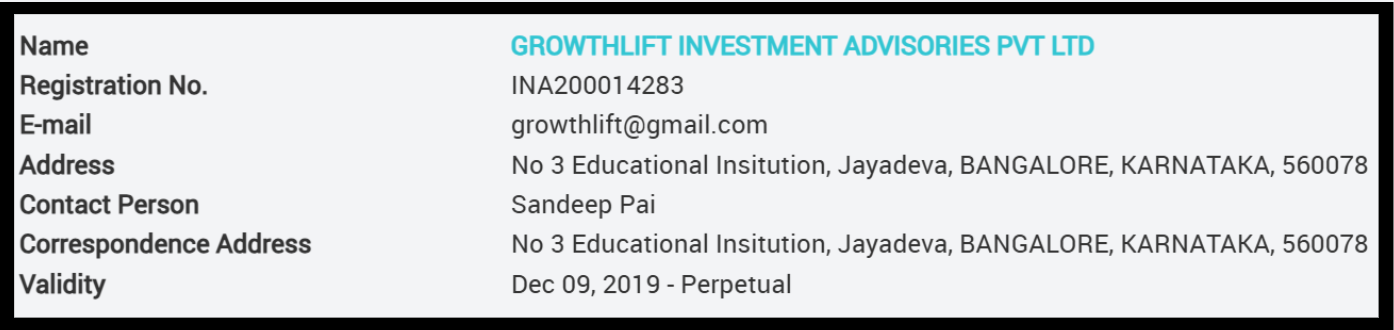
Growthlift Investment Advisories Pvt Ltd holds a valid SEBI registration under the number INA200014283, granted on December 9, 2019, on a perpetual basis.
The contact person listed on the SEBI registry is Sandeep Pai, and the firm operates from No. 3, Educational Institution, Jayadeva, Bangalore, Karnataka -560078.
The firm describes itself as “India’s youngest SEBI-registered investment advisor” and markets daily discount offers, flexible pricing plans, and premium services for HNI (high-net-worth) clients.
Services are delivered through SMS, phone calls, and an online platform covering stock cash, stock futures, stock options, index options, commodities, including bullion, energy, and base metals.
Also Read: Is Elite Investment Advisor good, what conduct alone revealed, once compliance was actually checked.
Growthlift Investment Advisor Safe or Not?
Safety in financial services is not a simple yes-or-no question.
A valid SEBI registration confirms that a firm is authorised to operate, but it does not guarantee ethical conduct, accurate advice, or client-first practices.
When evaluating any investment advisor, it helps to look beyond the registration certificate and examine actual conduct: how the firm charges clients, how it treats complaints, and what regulators and users have found.
In Growthlift’s case, there are several documented red flags worth understanding before making any payment.
1. Complaint Activity on the Disclosure Page
Growthlift’s own complaint disclosure page shows complaint activity and pending complaints.
While some complaints are normal in financial services, investors should ask:
- What kind of complaints are being raised?
- How quickly are they resolved?
- Are complaints repetitive?
- Are there patterns involving fees, pressure selling, or losses?
A complaint board should not be dismissed simply because it appears on the company’s own website.
2. Urgency-Based Sales Practices
Growthlift’s website frequently promotes “daily discount offers” and time-limited pricing deals.
If a sales representative creates urgency, avoids documentation, or relies heavily on verbal assurances, that is a sign to slow down. Investors should insist on written agreements before paying any fees.
No investment advisor is worth rushing into.
3. High Subscription Fees with No Performance Guarantee
Growthlift’s pricing plans are positioned at a significant premium. A Stock Cash Basic plan at half-yearly pricing runs ₹59,999, while a Stock Option HNI plan at half-yearly can cost ₹90,000 or more.
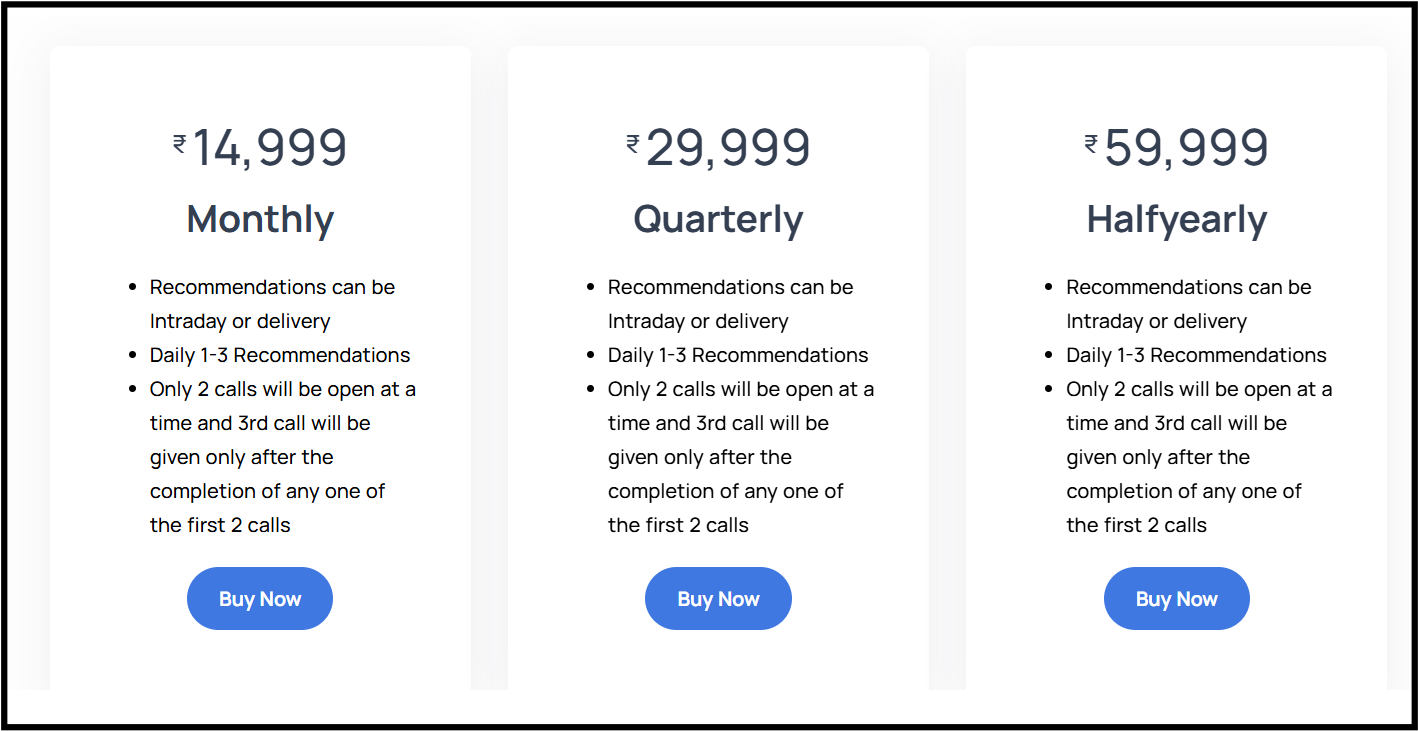
At these price points, investors naturally expect a high degree of accuracy and accountability.
Growthlift Investment Advisor Sebi Order
On April 16, 2026, SEBI’s Adjudicating Officer issued a formal order (No. Order/SM/SM/2026-27/32351) against Growthlift Investment Advisories Pvt Ltd.
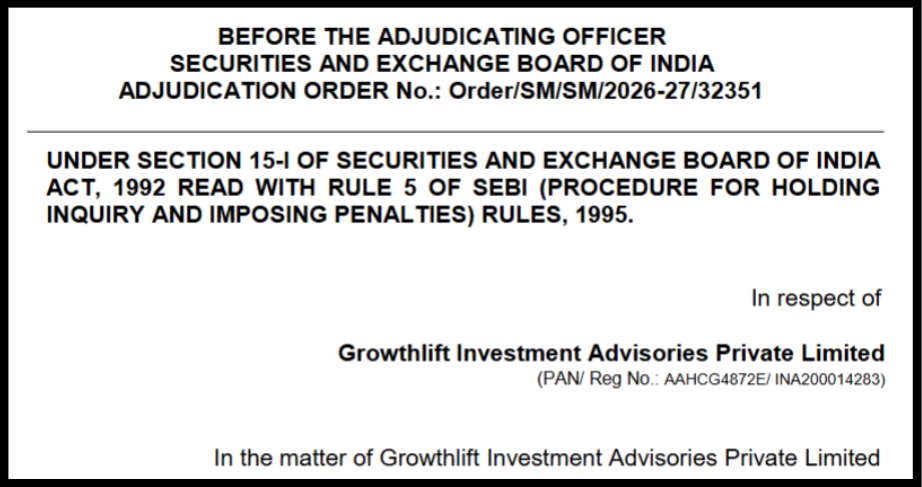
The inspection was conducted by BSE Administration and Supervision Ltd (BASL), covering the period from April 2022 to October 2023. The investigation uncovered multiple violations of SEBI’s Investment Advisers Regulations, 2013.
Here is what the order found, explained plainly:
Violations by Growthlift Investment Advisor
Here are the major violations highlighted in the inspection findings against Growthlift Investment Advisor:
1. Growthlift Investment Advisories Unauthorized Fee Collection
SEBI’s inspection found that Growthlift had charged fees exceeding this ceiling from at least 16 clients.
Additionally, the firm collected ₹1.9 lakh from three clients whose PAN card details were not even on record.
This means fees were being collected from clients who had not completed basic identification requirements.
To understand how this happens in practice, look at Growthlift’s own pricing.
A single Stock Cash Basic plan at Half-Yearly runs ₹59,999. A Stock Option HNI plan at Half-Yearly can cost ₹90,000 or more.
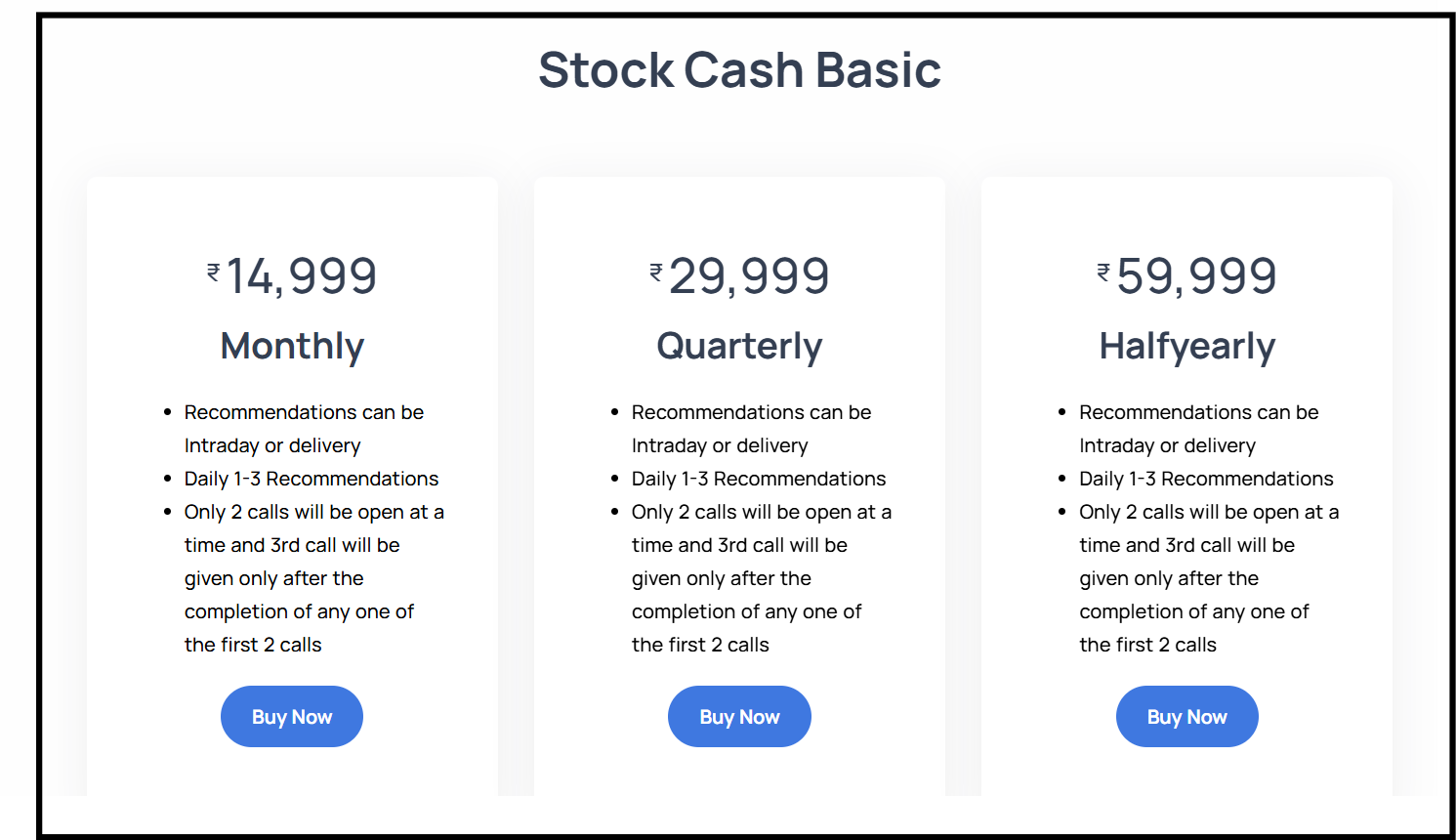
Growthlift acknowledged the excess billing and stated that the amounts had been refunded.
SEBI was clear in its response: returning money after the fact does not undo a regulatory breach. The violation stands.
2. No CKYCR Registration During the Inspection Period
SEBI mandates that investment advisers register with the Central KYC Records Registry (CKYCR) and upload client KYC records promptly.
This is a basic compliance requirement tied to investor identity verification.
Growthlift failed to obtain this registration during the entire inspection period from April 2022 to October 2023.
The firm later attempted to claim compliance by submitting a CKYCR registration email, but the email referenced only “yesterday” with no formal date, making it clear the registration happened only after SEBI issued its Show Cause Notice.
3. AML Reporting Lapses
Under anti-money laundering (AML) guidelines, every registered investment adviser must formally inform the Financial Intelligence Unit (FIU-IND) about the appointment of its principal officer and designated director.
This forms a key part of India’s financial monitoring infrastructure.
Growthlift did not complete this reporting during the relevant period.
Regulators treat AML lapses seriously because they represent a gap in the oversight framework that exists to protect the financial system overall, not just individual clients
Growthlift Investment Advisor SEBI Penalty
SEBI noted that there was no quantified investor loss or disproportionate financial gain on Growthlift’s part, and that some corrective steps had been taken.
However, the regulator was unambiguous: once statutory violations are established, a penalty is unavoidable.
A penalty of ₹3 lakh was imposed under Section 15 EB of the SEBI Act.
Growthlift was found to have violated multiple provisions of the Investment Advisers Regulations 2013 and related master circulars, spanning KYC registration, employee qualification standards, fee ceiling compliance, and AML reporting obligations.
So the regulatory order does not say that all clients suffered financial harm or that the firm cannot operate.
But it does show documented compliance failures.
That distinction matters.
A regulatory breach is not the same thing as proving client losses, but it is still relevant information for anyone considering paying advisory fees.
If a sales representative creates urgency, avoids documentation, or relies heavily on verbal assurances, that is a sign to slow down.
No investment advisor is worth rushing into.
Also Read: Can you trust Wealthmax Solution, fees paid with no invoice, receipt, or written confirmation ever sent.
Growthlift User Complaints
In order to understand if the IA is safe or not, investors need to check what other users are saying.
These user complaints play a critical role in determining the reliability of an Investment Advisor.
Complaint 1: Very Low Accuracy Rate
This complaint suggests a strong mismatch between the user’s expectations and the actual service experience delivered by Growthlift.
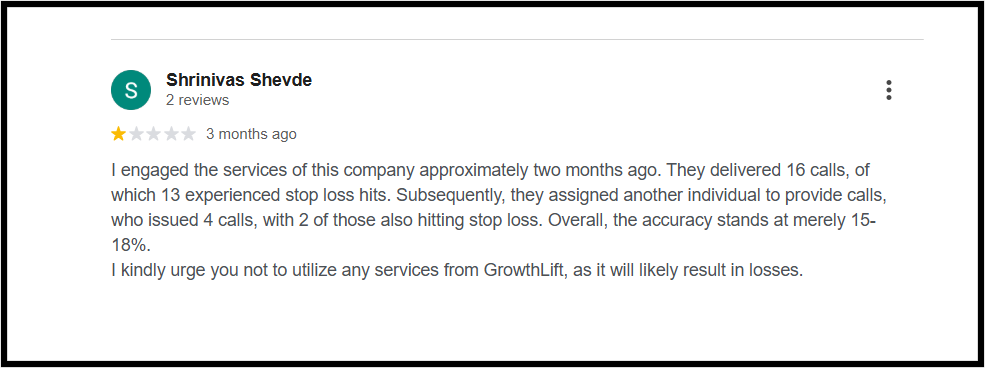
The user says they subscribed to Growthlift’s services for around two months and received a total of 20 trade calls. Based on this, the complainant estimates overall accuracy at 15-18%.
In plain terms, the user is saying that a large majority of recommended trades did not work as expected.
The statement “do not utilise services” reflects dissatisfaction severe enough that the user is warning others publicly.
Complaint 2: Perceived Conflict of Interest
This type of complaint reflects a high level of investor dissatisfaction and trust breakdown rather than serving as verified proof of wrongdoing.
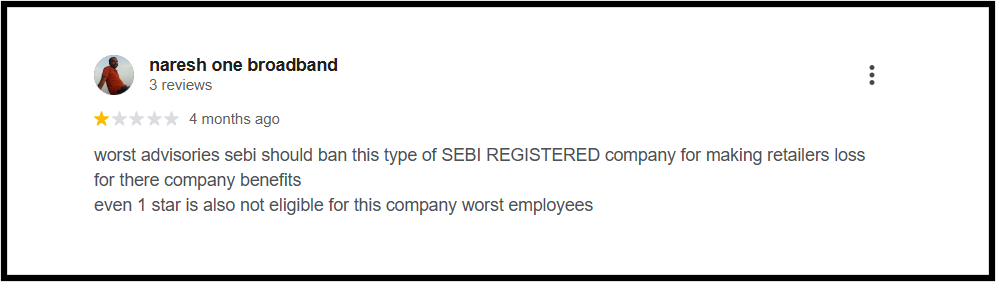
The user appears frustrated with both the company’s service quality and perceived conflict of interest, suggesting they believe the advisor’s recommendations may have benefited the business commercially while leading to losses for retail clients.
Comments about “worst employees” usually point to dissatisfaction with customer support, communication quality, or issue resolution.
For potential investors, complaints like this can impact a firm’s reputation by raising concerns about service experience, expectation mismatch, and overall client confidence.
Where to File a Complaint Against SEBI Registered Investment Advisor?
If you have subscribed to an advisory service and believe your rights have been violated, here is a clear path to raise a complaint.
Step 1: Approach the Company First
Start by raising the issue directly with the firm through its official grievance redressal contact. Document your complaint in writing; via email is best.
The firm is required to respond. If you receive no satisfactory response within 30 days, escalate.
Step 2: File a Complaint in SCORES
Visit the portal, click on ‘Investor Corner’, and create an account using your email ID and mobile number.
After registration, log in, select the appropriate category, describe your issue clearly, and attach all supporting documents, payment receipts, subscription agreements, email exchanges, and any screenshots.
Step 3: Raise a Complaint in SMART ODR
For disputes requiring online resolution, SEBI has integrated SCORES with the Smart ODR Portal.
The process is faster than courts and handled by trained conciliators and arbitrators within the securities ecosystem.
Step 4: File Stock Market Arbitration
If all prior steps remain unresolved, proceed with arbitration through the stock exchange mechanism as the final legal remedy.
Submit all evidence, payment records, trade details, and prior complaint references so the arbitrator can evaluate the case and deliver a binding resolution.
Need Help?
Many investors feel confused when advisory relationships become unclear.
Register with us. If you need help understanding whether an advisory arrangement appears compliant or what next steps may be available, professional financial awareness and investor education resources can help you evaluate the situation more clearly.
Conclusion
Growthlift Investment Advisor operates in a space where trust, compliance, and transparency matter significantly.
No online investment advisor should be chosen purely based on advertisements, testimonials, or urgency-based sales calls.
Before paying any advisory platform, including Growthlift, investors should verify regulatory credentials, review all commercial terms carefully, and preserve written documentation.
A little due diligence upfront can save significant confusion later.
In investing, excitement is common. Documentation is smarter.
Invest with information. Protect your capital by understanding who you’re trusting with your decisions.





 Add us as a preferred source on Google »

