

Have you paid money to Supreme Investrade and ended up losing money instead of making the profits you were expecting?
Maybe you were shown screenshots of successful trades. Maybe you were told that your losses could be recovered if you upgraded to another package.
Or perhaps you were encouraged to invest more money after an earlier recommendation did not work out.
If you’re now wondering what happened and what options are available to you, you’re not alone.
There have been widespread Supreme Investrade complaints from investors across the country who experienced similar patterns.
Understanding your rights and taking the right steps early can help you assess the situation more clearly.
Can You Recover Money Lost After Paying Supreme Investrade?
Yes, recovery is possible, and the SEBI order against Supreme Investrade specifically strengthens your position if what happened to you matches what SEBI found.
For example, if you were shown profit screenshots before subscribing, told your losses could be recovered with an upgrade, or pressured to invest more after losses, those exact patterns are what SEBI penalised.
Your documentation of those communications is where your case starts.
The strength of your evidence also matters.
WhatsApp chats, emails, payment receipts, call recordings, advertisements, research reports, and screenshots can all help establish what was communicated to you before and after you paid for the service.
The sooner you gather your records and understand your options, the easier it can be to take appropriate action.
How to File a Complaint Against Supreme Investrade?
If you have concerns regarding the services provided by Supreme Investrade, it is important to act promptly and preserve evidence.
Here are the steps to raise a complaint against research analyst:
1. Gather and Preserve Evidence
Collect all available records, including:
- Payment receipts
- WhatsApp chats
- Telegram messages
- Emails
- Call recordings (if available)
- Advertisements
- Research reports
- Screenshots
Proper documentation can play a crucial role in any complaint process.
2. Raise a Written Complaint With Supreme Investrade
The next step is to formally raise your concerns in writing.
Clearly explain what service you purchased, what representations were made to you, what losses occurred, and why you believe the conduct was misleading or inappropriate.
Avoid relying on phone calls alone. Written communication creates a record that may become important later if the dispute escalates.
Keep copies of all emails, messages, and responses received from the company.
Their response, or silence, within 30 days becomes your first piece of evidence for SCORES escalation.
3. File a Complaint with SEBI SCORES
If the matter remains unresolved, you can escalate your complaint through SEBI’s SCORES platform.
When filing your complaint, provide a detailed explanation of what happened. Attach supporting documents wherever possible and explain the sequence of events clearly.
For example, mention how you came into contact with the service, what claims were made, what payments were made, and what happened afterwards.
A well-organised complaint supported by evidence is often much easier to understand than a complaint containing only general allegations.
4. Register a Complaint with SMART ODR
If the issue is not resolved through the initial complaint process, you may be able to pursue the matter through SMART ODR (Online Dispute Resolution).
SMART ODR provides a platform where disputes can be addressed through structured resolution mechanisms without requiring lengthy offline proceedings.
Before initiating the process, organise all your evidence, communication records, and complaint history. Having a clear timeline of events can make the process much smoother.
5. Share Market Arbitration
If the dispute still remains unresolved, arbitration may become an available option.
Arbitration is a formal dispute resolution process where an independent arbitrator reviews the evidence and arguments presented by both sides before issuing a decision.
Because arbitration often depends heavily on documentary evidence, preserving records from the beginning can make a significant difference.
This is why it is important to save every communication, payment record, and promotional claim that influenced your decision to purchase the service.
SEBI Order Against Supreme Investrade
If you’re worried that you’re the only one who had trouble with Supreme Investrade, you’re not alone.
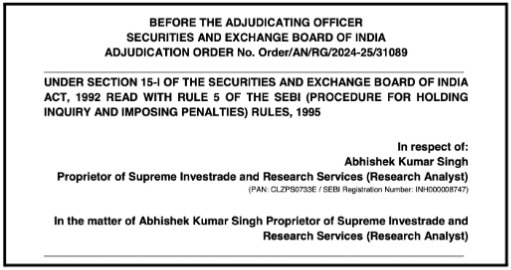
SEBI recently investigated the firm and issued an order against its proprietor, Abhishek Kumar Singh, after reviewing investor complaints and WhatsApp messages.
What Did SEBI Find?
SEBI didn’t just look at whether the stock tips caused losses; it got into how the firm sold its services and treated clients.
They found that the firm frequently showed potential clients screenshots of big profits to convince them they could make money easily.
The issue?
They focused entirely on potential gains while completely ignoring the risks of the stock market.
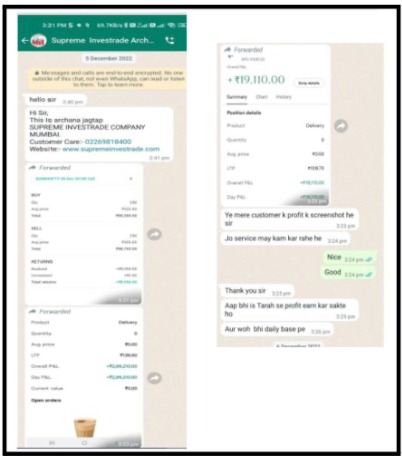
Things took a turn for the worse when clients started losing money. Instead of explaining that market losses happen, the firm allegedly pushed clients to invest even more.
They promised that buying “premium” packages or using “senior-level” strategies would help recover the money already lost.
If you’ve heard, “Your loss can be recovered, just upgrade to the next package,” you’ve experienced the exact behaviour SEBI flagged.
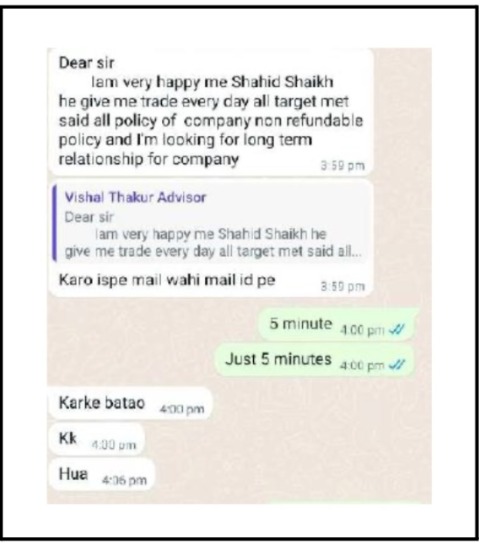
Perhaps most significantly, SEBI found that when a client filed a complaint through SCORES, the firm allegedly drafted a ‘satisfaction email’ for the client to send, designed purely to make the complaint disappear.
If you received any such communication after raising a concern, preserve it immediately.
They also highlighted an instance where a client complained through SEBI’s SCORES platform, and the firm allegedly drafted a “satisfaction email” for the client to send just to make the complaint go away.
Ultimately, the order shows a consistent pattern: the firm pressured investors to keep pouring more money into their services.
What Penalty Did SEBI Impose?
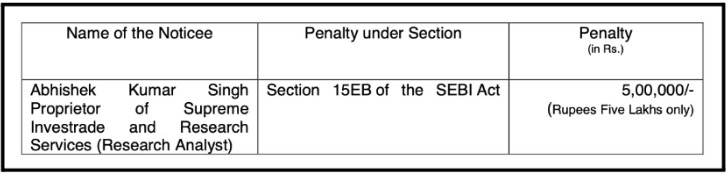
SEBI fined Abhishek Kumar Singh ₹5 lakh. They concluded that his actions directly violated rules put in place to protect investors from deceptive practices.
Need Help?
SEBI has already established that Supreme Investrade used profit screenshots to attract clients, pressured investors to upgrade after losses, and allegedly drafted satisfaction emails to suppress complaints.
If your experience matches any of those patterns, you don’t need to wonder whether you have a case. You need to document what you have and file.
Tell us what happened. We’ll assess your case and tell you honestly what recovery looks like.
Register with us now; we’ll get back to you within 24 hours.
Conclusion
After reviewing the allegations and investor experiences, many affected clients eventually start searching for a Supreme Investrade refund, hoping to understand whether any recovery options may still be available.
Supreme Investrade’s proprietor was fined ₹5 lakh for exactly the practices that may have affected you: profit screenshots, loss recovery promises, and pressure to upgrade.
A regulatory penalty doesn’t automatically mean compensation, but it does mean the regulator already validated that these practices were wrong.
Your complaint has that foundation behind it. Use it.
Frequently Asked Questions
1. Can I recover money lost after following Supreme Investrade’s recommendations?
Recovery is possible, particularly given that SEBI has already penalised the firm for the exact practices that may have affected you.
The strength of your case depends on your documentation.
If you have payment records, chat history, and screenshots of profit claims or loss recovery promises, those form the basis of a formal claim.
2. What evidence should I keep if I want to file a complaint?
Keep payment receipts, WhatsApp chats, emails, advertisements, screenshots, research reports, and any other communication relating to the service.
3. Does a SEBI penalty automatically mean investors will receive compensation?
Not necessarily. A regulatory penalty and an investor compensation claim are separate matters and involve different processes.
You need to follow a separate complaint process to ensure you receive recovery.
4. What should I do if I was told to invest more money to recover earlier losses?
Stop payments immediately. Preserve every communication where loss recovery was promised in exchange for further payment; those messages are direct evidence of a SEBI-prohibited practice.
The SEBI order against Supreme Investrade specifically flagged this pattern.
5. Can I file a complaint even if I subscribed months ago?
Yes, but act now. Evidence gets harder to retrieve over time, and arbitration has a three-year filing deadline from the date of the dispute.
The SEBI order is already on record. Your documentation is what determines how strong your individual case is.





 Add us as a preferred source on Google »

