

Choosing a financial advisory or research provider requires a careful review of its regulatory credentials, the way its services are designed, and the transparency it maintains in communicating risks and strategies.
Many investors often ask, Can we trust SEBI registered research analysts?
While registration provides a layer of oversight, today’s investors look for clear visibility into how recommendations are formed and how potential downsides are explained before committing their capital.
Abhay Kumar, registered with SEBI as an Individual Research Analyst (RA), operates within India’s regulated research framework and offers research analyst services to its clients, focusing on structured market analysis and informed trading perspectives.
In this blog, we explore his professional profile, the nature of services offered, and his position within the broader financial research landscape to provide readers with a comprehensive understanding of how his platform operates.
Abhay Kumar Research Analyst Review
In recent years, as participation in India’s financial markets expands beyond major urban centers, a new wave of research-led platforms and individual analysts has started gaining traction.
Among them is Research Analyst Abhay Kumar, a SEBI-registered individual (Reg. No. INH300008465), offering equity research and trading insights.
Unlike many informal sources of market advice circulating on social media, Abhay Kumar presents himself as a structured and regulation-compliant analyst, focused on delivering research-driven recommendations.
His services are designed to cater to retail traders, investors, and high-net-worth individuals (HNIs) seeking guided exposure to the markets.
To verify such claims, investors should check SEBI registered research analyst in India via the official SEBI database to ensure the credentials are active.
The significance of SEBI registration in this context is substantial. It implies that the analyst is expected to operate within a defined regulatory framework, adhering to prescribed standards of conduct, disclosures, and investor protection norms.
As a SEBI-registered Individual Research Analyst, his operations are aligned with regulatory guidelines applicable to independent professionals in the financial advisory space.
The analyst operates from Gopalganj, Bihar, and provides services such as:
- Equity Investment guidance
- Equity Trading strategies
- Options Trading insights
- Stock Market Masterclass programs
With a clearly stated motto of “learning and earning,” the platform emphasizes the role of retail investors as a growing force in India’s financial ecosystem, aiming to contribute to this evolution through education and research-backed insights.
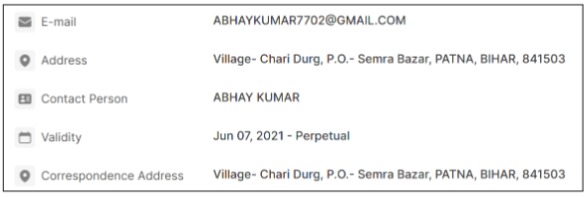
The registration, which has been valid since June 7, 2021, is perpetual in nature, indicating continued compliance requirements under SEBI regulations.
While this positioning may create a sense of structure and reliability, it is important to understand that SEBI registration also comes with clearly defined boundaries regarding the nature of advice, communication standards, and risk disclosures.
For investors, being aware of these regulatory expectations is just as important as evaluating the services being offered.
At the same time, publicly accessible information regarding investor complaints or grievance data is not prominently visible.
Under SEBI norms, Research Analysts are expected to maintain transparency in complaint disclosures, making this an important aspect for investors to consider during their evaluation process.
What a SEBI-Registered Individual Research Analyst Is Permitted to Do?
Under the SEBI Research Analyst guidelines, a research analyst registered with SEBI is allowed to provide research-oriented services within a clearly defined compliance framework.
They are allowed to:
- Publish Research Reports: A Research Analyst can release in-depth reports covering listed companies, specific industries, or broader market trends. These reports generally include financial evaluations, valuation methodologies, key assumptions, and potential risks. Such reports must remain unbiased, evidence-based, and carry disclosures regarding any conflicts of interest.
- Give Research-Based Recommendations: They are authorised to provide investment recommendations that are backed by proper research and analysis. Each recommendation must be supported with a rationale, highlight associated risks, and must strictly avoid any assurance or guarantee of returns.
- Share Analytical Insights: Research Analysts may present their views on stocks, sectors, economic developments, or derivatives markets. However, these opinions should remain interpretative and analytical, without crossing into the execution of trades or managing client portfolios.
- Charge Transparent Fees: They are permitted to charge clients for their services, as long as the fee structure is clearly communicated and complies with regulatory guidelines. The pricing must remain independent of trading performance and cannot be structured as profit-sharing or outcome-based compensation.
What SEBI-Registered Individual Research Analysts Are Not Allowed to Do?
Before engaging with any individual research analyst (IRA), it is important to clearly understand the regulatory limits within which they are expected to operate.
SEBI’s regulatory framework exists to protect investors by ensuring fairness, transparency, and ethical conduct in financial advisory services.
Knowing what is prohibited is just as important as understanding what services are permitted.
- No Guaranteed Return Promises: A registered research analyst is not permitted to assure fixed profits, guaranteed returns, or claims of daily consistent income. Since market movements are uncertain and influenced by multiple factors, such guarantees are considered misleading and non-compliant.
- No Assurance of Loss Recovery: Analysts cannot promise recovery of earlier losses or market strategies that claim zero-risk outcomes. Any suggestion of certainty in recovering capital goes against SEBI’s risk disclosure principles.
- No Profit-Linked Fee Structures: Charging models cannot be directly tied to trading profits, portfolio appreciation, or percentage-based profit sharing. Such arrangements may create conflicts of interest and bias in recommendations.
- No Aggressive or Misleading Marketing Practices: Repeated unsolicited outreach, pressure-based selling, or creating urgency to force subscriptions is not allowed under ethical advisory standards. Communication must remain professional and non-coercive.
- Full Disclosure and Proper Documentation Required: Clients must receive clear information about services, associated risks, and formal agreements before onboarding. Any missing disclosures, unclear communication, or incomplete documentation can lead to regulatory concerns under SEBI norms.
What Should You Do If Problems Arise With Your IRA?
If you feel that your individual research analyst has acted in a manner that appears misleading, non-compliant, or not in line with expected professional conduct, it is important to handle the situation in a calm and structured way.
Investor safeguard systems are already available, and following the right process can help you protect your interests and raise your concerns in an effective manner.
Here is how you can go about it:
- Gather Evidence: Start by collecting all relevant documents related to your issue. This may include payment receipts, chat records, emails, trade statements, and screenshots. Proper documentation strengthens your case and makes your complaint more credible.
- Contact the Research Analyst: Before escalating the matter, try reaching out to the firm directly. Explain your issue clearly and request a resolution. Sometimes, problems can be resolved at this stage without further escalation.
- Register a Complaint in SCORES: If your issue is not resolved, you can file a complaint on the SEBI SCORES platform. This is an official system where investors can raise concerns against registered entities. Once submitted, the complaint is forwarded to the concerned firm for a response. You can also track your SEBI complaint status online.
- File a Complaint in SMART ODR: If the issue remains unresolved, you can move to the SMART ODR platform. This platform helps in online dispute resolution through mediation and conciliation, making the process faster and more structured.
- Stock Market Arbitration: As a final step, you can opt for arbitration. This is a legal process where an independent authority reviews your case and gives a binding decision. It is usually considered when all other methods fail.
Need Help?
Many people often feel unsure while dealing with SEBI-registered firms, as official registration can sometimes create a perception of full trustworthiness.
When you reach out to us, we guide you through each step by helping you understand:
- How to properly verify and validate SEBI registrations.
- How to identify possible rule violations or unethical conduct.
- How to draft clear and structured complaints for SEBI and cybercrime authorities.
- How to distinguish between mis-selling practices and genuine fraud.
Our approach is focused on proper documentation, adhering to due process, and ensuring accountability is directed where it rightfully belongs.
Conclusion
Abhay Kumar is a SEBI-registered Individual Research Analyst, and he provides research-based advisory services to clients in the Indian equity markets.
If you are considering subscribing to his offerings, it is important to clearly understand the scope of services permitted under SEBI regulations, along with the limitations and responsibilities that apply to research analysts.
Before proceeding, carefully evaluate his registration details, pricing plans, service terms, and all associated risk disclosures. Make sure that the recommendations provided are based on structured research and are not represented as guaranteed or risk-free outcomes.
It is also advisable to confirm that all engagement terms are properly documented and that there is full clarity regarding communication, roles, and expectations from both sides.
Taking a well-informed approach after reviewing these aspects can help investors set realistic expectations and reduce the likelihood of misunderstandings in the future.





 Add us as a preferred source on Google »

