

When it comes to stock market advisory, trust is everything. But what happens when that trust is tested by regulatory findings?
The story of Abhishek Kumar Singh Research Analyst forces investors to look beyond polished services and ask deeper questions.
Behind every recommendation lies influence.
Influence over your trades, your money, and sometimes even your decisions during losses.
SEBI’s actions against this research analyst reveal patterns that every investor should understand before putting their hard-earned money at risk.
Let’s break this down in a way that actually helps you think smarter.
Abhishek Kumar Singh Research Analyst Details
Abhishek Kumar Singh is a SEBI registered Research Analyst operating as the proprietor of Supreme Investrade.
His SEBI Registration Number is INH000008747.
His firm provides stock market recommendations, trading strategies, and subscription-based advisory services to clients.
As a registered analyst, he is required to follow SEBI’s Research Analyst Regulations, which mandate honesty, transparency, and proper risk communication.
His services include intraday calls, positional trades, and advisory support through channels like WhatsApp and direct communication.
Now here’s the reality: Registration is just a starting point, not a guarantee of ethical conduct.
When money is involved, smart investors go beyond websites and check how advice is actually delivered. That is where the real story usually lies.
SEBI Orders Against Abhishek Kumar Singh Research Analyst
Before jumping into the orders, here’s the context. SEBI did not act based on a single complaint. Multiple investor grievances, WhatsApp chats, and communication patterns were examined.
What came out was a consistent pattern of influencing investor decisions through misleading communication.
Now let’s break down each order clearly.
Case 1: SEBI Action against Supreme Investrade for Misleading Advisory Services
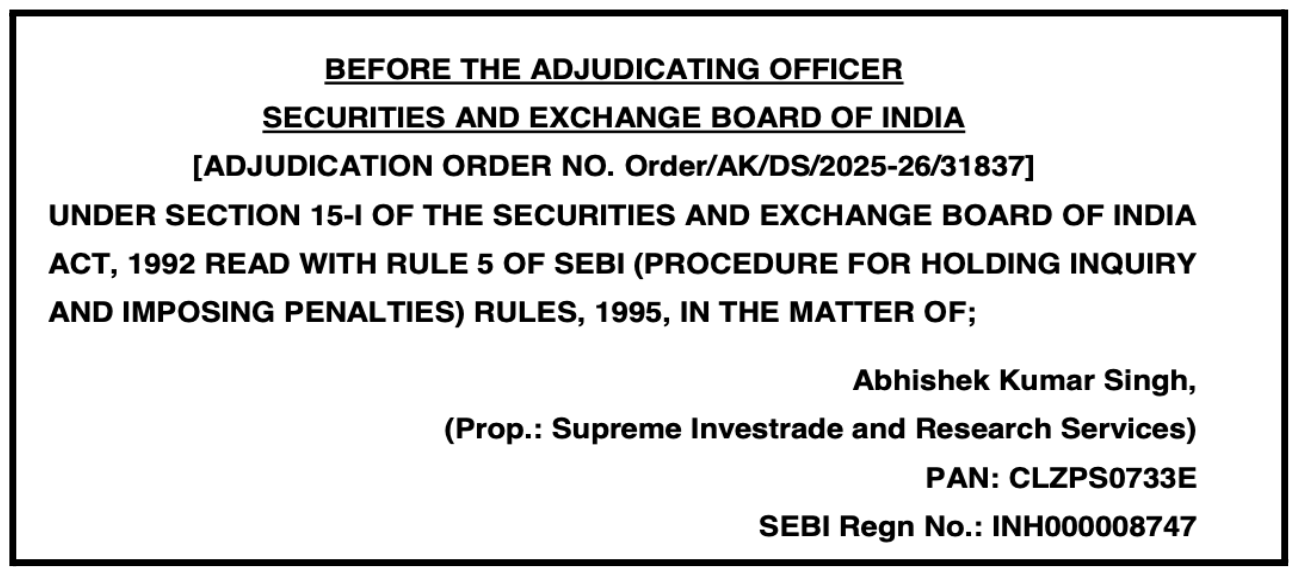
SEBI passed an adjudication order against Abhishek Kumar Singh, proprietor of Supreme Investrade and Research Services, after examining complaints filed by investors on SCORES along with chat records and supporting evidence.
Why was the order implemented?
The order was implemented due to the following key violations:
- Assured clients of earning daily returns of 15 to 20 per cent, which is misleading in the stock market.
- Asked clients to share 50 to 70 per cent of profits as fees, which is not permitted for research analysts.
- Induced clients to trade based on informal WhatsApp communication rather than structured research.
- Failed to act with honesty, fairness, and good faith as required under SEBI regulations.
- Mis-selling of advisory services by giving unrealistic expectations.
These actions were held to be in violation of PFUTP Regulations and the Code of Conduct under Research Analyst Regulations.
Penalty Imposed
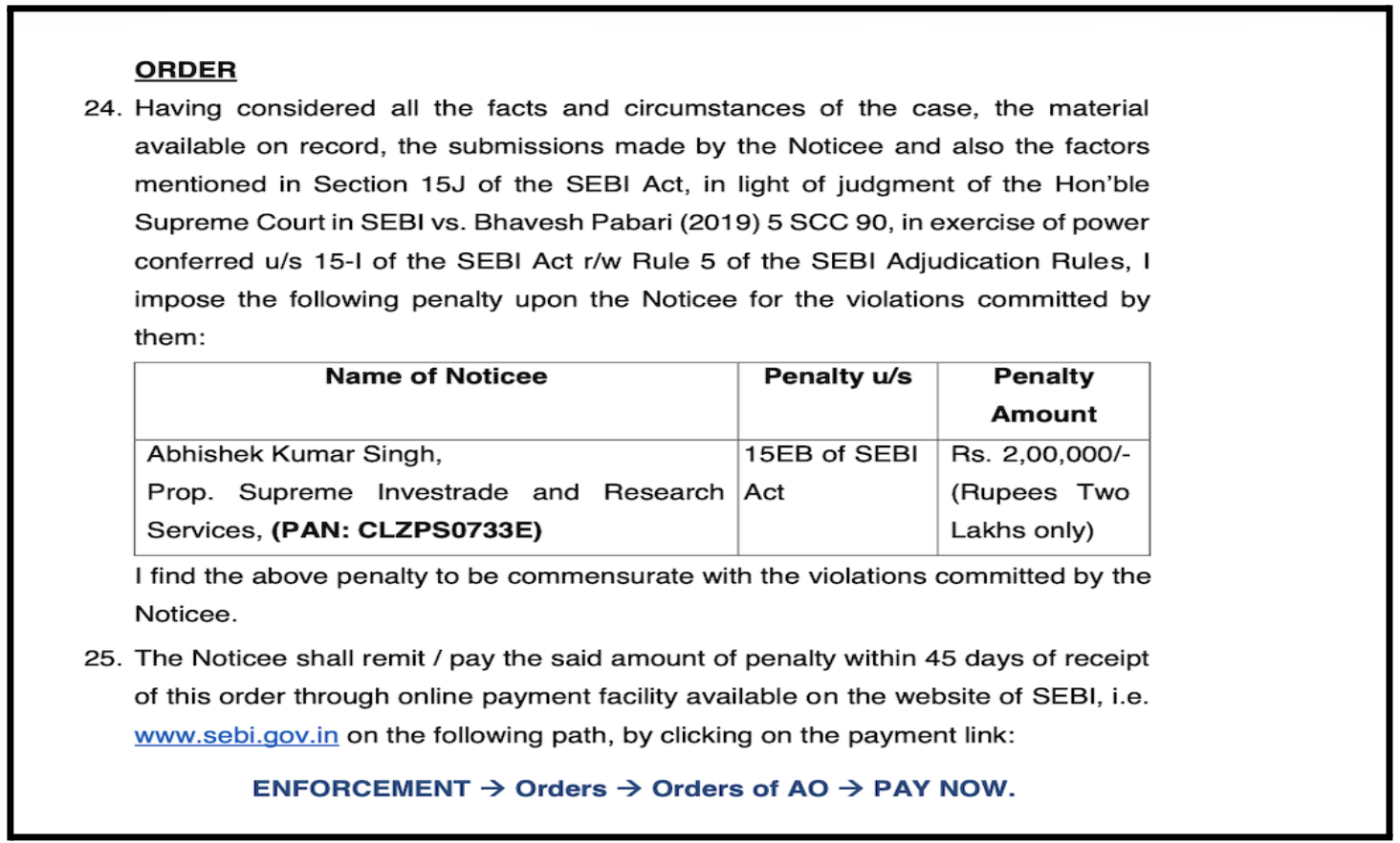
SEBI imposed a monetary penalty of ₹2,00,000 under Section 15EB of the SEBI Act.
Case 2: SEBI Action against Supreme Investrade for Guaranteed Returns
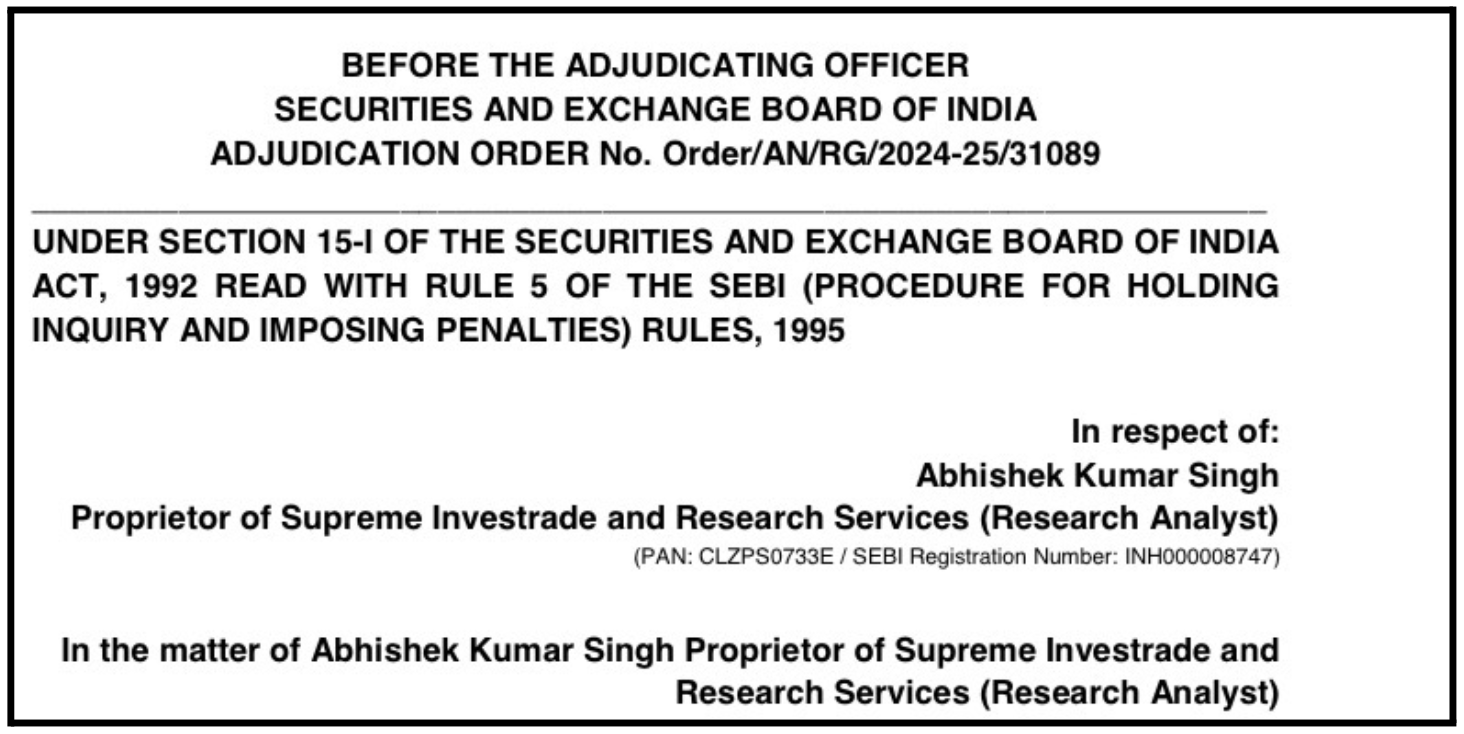
SEBI passed another detailed adjudication order after further investigation into complaints, communication records, and the overall conduct of the research analyst.
Why was the order implemented?
The order was implemented due to the following key violations:
- Assured clients that losses could be recovered through future trades.
- Shared screenshots of profits earned by other clients without properly disclosing risks.
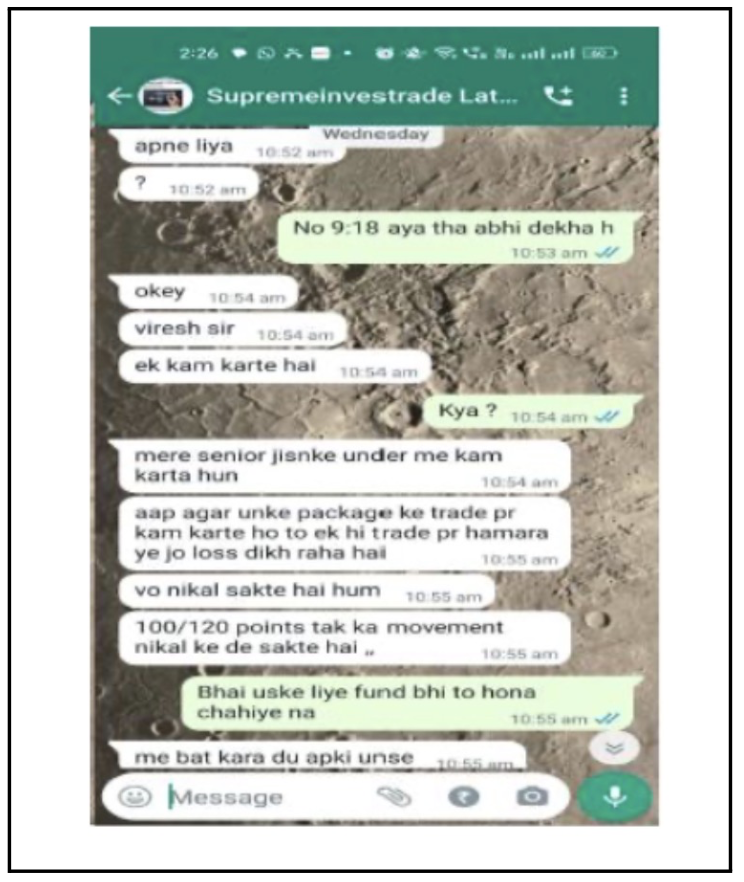
- Induced investors to invest more money even after they had already suffered losses.
- Provided exact entry, exit, and position sizing guidance, influencing trading decisions directly.
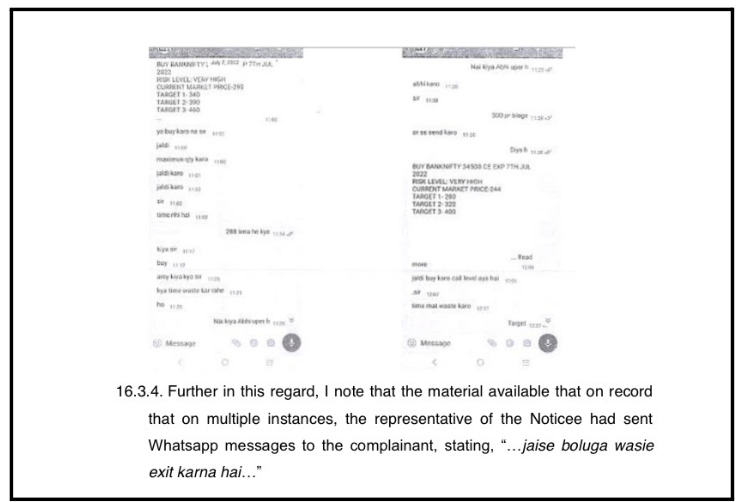
- Created a misleading impression that contradicted the risk disclaimers given during onboarding.
- Used communication designed to influence investor behaviour and decision-making.
SEBI clarified that even influencing decisions through such communication falls under “dealing in securities” and amounts to fraudulent and unfair trade practices under PFUTP Regulations.
Penalty Imposed
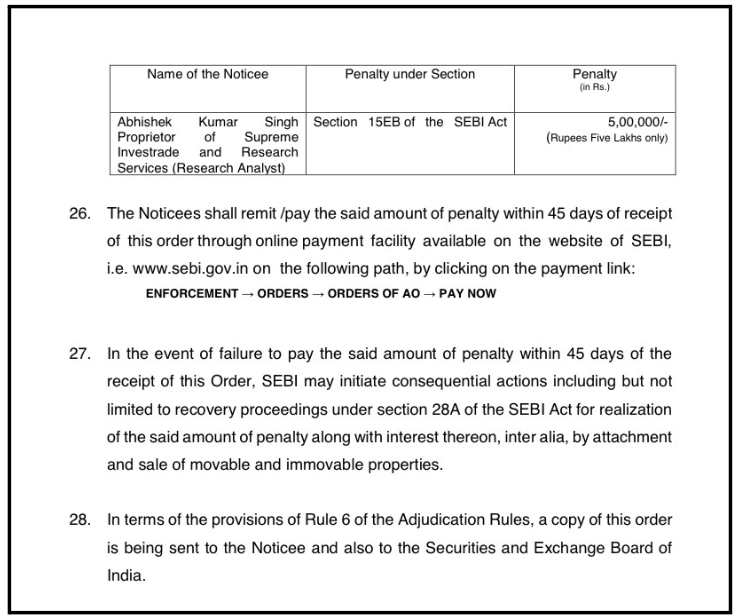
SEBI imposed a higher penalty of ₹5,00,000 under Section 15EB of the SEBI Act, considering the seriousness of the violations.
When you look at both these SEBI orders together, one thing becomes very clear. These were not isolated incidents but part of a broader pattern of communication that influenced investor decisions in a misleading way.
What makes this more serious is that such actions were carried out despite being a SEBI registered research analyst, where the expectation is of discipline, honesty, and responsibility.
These orders are not just regulatory actions. They are signals for investors to pay close attention to how advice is delivered, not just what is being advised.
Should You Trust Abhishek Kumar Singh Research Analyst?
Looking at these SEBI findings, it becomes important to approach with caution.
Here are key learnings from both orders:
- Be cautious of any form of return assurance or loss recovery promise.
- Profit-sharing models can create conflicts of interest.
- Screenshots of profits are not proof of consistent performance.
- Communication outside formal reports can be highly influential and risky.
What stands out is the pattern, not just the incidents. When advisory starts influencing behaviour rather than guiding decisions, it becomes risky.
So before trusting any such service, ask yourself one simple question. Are you making informed decisions, or are you being influenced?
How to Register a Complaint Against a Research Analyst?
If you have faced a similar situation, here’s a structured way to take action:
- Collect and organise evidence: Save chats, emails, payment receipts, trade details, and timelines. Organise them properly so your case is easy to understand.
- File a complaint with the company first: Send a formal written complaint to the advisory firm. This step is important before escalating further.
- Register a Complaint in SCORES: If unresolved, file your complaint on SCORES with all documents attached. Be clear, factual, and structured.
- Lodge a Complaint with SMART ODR: If the issue still continues, escalate it to SEBI’s Online Dispute Resolution platform for structured mediation.
- Share Market Arbitration: If mediation fails, arbitration allows an independent authority to review your case and give a binding decision. Counselling can also help you understand your legal position better.
The key is not just complaining, but doing it in a way that gets results.
Need Help?
Sometimes the hardest part is not knowing where to begin.
If you have been in a situation where advice felt misleading or losses kept increasing despite following recommendations, you deserve clarity and proper guidance.
We help investors turn confusion into structured action.
From reviewing your case to preparing strong documentation, filing complaints, and guiding you through dispute resolution, we make sure your effort actually leads somewhere.
You do not have to figure this out alone. Register with us. The right support at the right time can completely change the outcome.
Conclusion
The case of Abhishek Kumar Singh research analyst is not just about regulatory penalties, it is about understanding how influence works in the stock market.
When advice starts sounding too confident, too consistent, or too persuasive, that is exactly when investors need to slow down and think.
SEBI’s orders clearly show that even communication, not just actions, can cross the line when it begins to shape investor behaviour misleadingly.
From return assurances to loss recovery promises, these are not just red flags; they are warning signs that should never be ignored.
For investors, the lesson is simple but powerful: Do not rely only on what is being told to you; look at how it is being told, why it is being told, and whether it truly aligns with market realities.
Because at the end of the day, the market will always carry risk.
But being aware, asking the right questions, and staying cautious can make all the difference between a smart decision and a costly mistake.





 Add us as a preferred source on Google »

