

Quick Summary
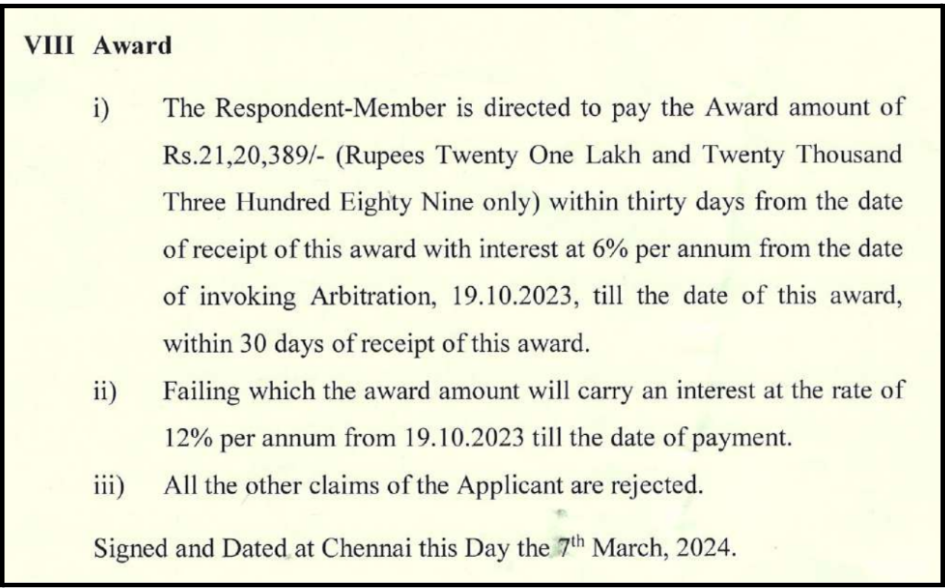
An MCX arbitral tribunal directed Angel One to pay a client ₹21,20,389 plus interest, the largest single award in this case set, after finding the broker never informed him that an exchange circular had moved a gold options contract’s expiry three days earlier than shown on the trading screen. Believing the contract still had until 26 September to run, the client held his position past its actual 23 September expiry and was forced into physical delivery of 346 lots at a steep loss, rather than being able to sell at a profit. This page walks through what he said, what Angel One said, and what proved decisive.
A missing notification cost one Angel One client over twenty-one lakh rupees.
An MCX tribunal ordered the broker to pay ₹21,20,389 for never sending it.
What Happened In This Angel One MCX Arbitration
The client had been building a position in a gold options contract, OPTFUT GOLD 26 SEP 2022 PE 49000, whose expiry, as its own name indicated and as shown on Angel One’s trading screen, was 26 September 2022.
He traded it steadily through September, believing he had until that date to manage the position.
What he did not know was that MCX had issued a circular in December 2021 moving the actual expiry of this contract three days earlier, to 23 September, while deliberately leaving the display name and Market Watch screen unchanged to show the original date.
Brokers were expected to separately communicate the revised expiry to clients trading the contract.
Angel One never did. On 23 September, the contract expired without the client’s knowledge.
He was forced into physical delivery of his full position of 346 lots, at a cost of ₹21,20,389, when he could instead have sold the position at a market price that would have secured him a substantial profit.
What The Investor Argued
He argued the loss was entirely the result of Angel One’s failure to notify him, not any trading decision he had made.
He had checked the circulars available to him through Angel One’s own channels and found nothing about the revised expiry.
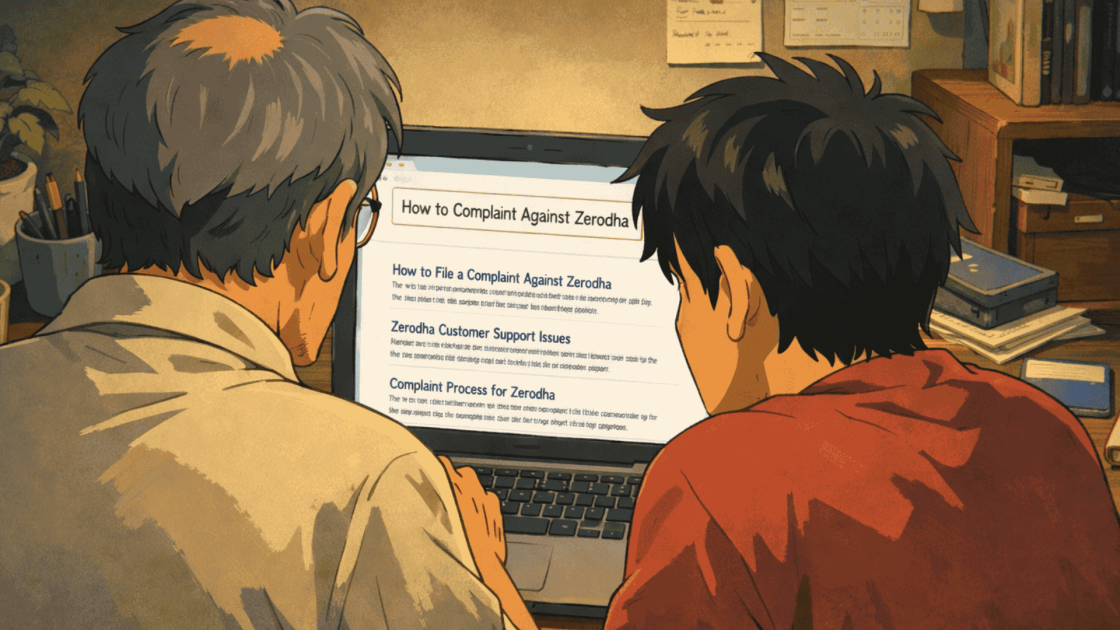
To make his point concrete, he produced a call recording and screenshots showing that a different broker, Zerodha, had properly notified its own clients of the exact same MCX circular.
If another broker could manage it, Angel One’s silence could not be excused as an industry-wide problem.
What Angel One Argued
Angel One’s position was that SEBI’s Annexure 4 guidelines place a duty on clients to stay informed of exchange circulars themselves, and that as a regular trader, the client should have known about the revised expiry independently.
It maintained that it had published the relevant circulars on its website for clients to check.
What the Tribunal Concluded, and Why
The tribunal examined whether Angel One had actually published the revised expiry circular anywhere accessible to the client, on its website or through direct communication, and found no evidence that it had done either.
The comparison with Zerodha mattered. It converted Angel One’s general defence, that clients bear responsibility for knowing exchange circulars, into a specific, provable failure unique to this broker, since another member of the same exchange had managed to notify its clients of the identical circular.
The tribunal held that SEBI’s Annexure 4 clause obliges the client to follow circulars, but does not relieve the broker of its own separate duty to actually communicate those circulars to clients in the first place.
One obligation does not cancel the other.
Angel One was ordered to pay the full ₹21,20,389 cost of the forced delivery, plus 6% interest from the date of filing.
The tribunal rejected the client’s additional claims for lost profit, loan reimbursement, and general damages as too speculative or unconnected to the direct loss. For a related notice-failure dispute, Angel One square off arbitration.
What to Check Before a Contract Expiry?
Commodity contract expiries are especially prone to this kind of dispute because exchanges do occasionally move expiry dates without changing how the contract is displayed on trading screens.
Gather now:
- The exact contract specifications and any exchange circular revising the expiry date for the specific contract you traded.
- Proof of whether your broker published or communicated that revision anywhere you could reasonably have seen it.
- A comparison, if available, of how other brokers handled the same circular for their clients.
- Your full trading history for the contract, to establish what you would have done with timely notice.
Compare against other brokers if you can.
In this case, showing that a competing broker successfully notified its clients of the same circular was decisive.
It converted a general “the client should have known” argument into a specific, provable failure by this particular broker.
Our page on how to file complaint against Angel One sets out the complaint process before arbitration.
For the full range of cases, see Angel One arbitration cases.
Did an unnotified expiry or corporate action cost you a forced delivery or an unfavourable close-out?
Our team traces the exact exchange circulars that applied to your contract, checks whether your broker actually communicated them, and builds the claim around the specific notification gap. Register with us for a free consultation.
An Honest View of the Odds
These claims rest on a genuinely provable question: did the broker publish or send the notification, or not.
That makes them stronger than disputes over verbal assurances, because the answer usually exists in writing, or its absence is just as documentable.
The size of the potential award also depends heavily on what you can show you would have done with timely notice, ideally with a clear, calculable alternative like a specific sale price you could have achieved instead.
Conclusion
The ₹21,20,389 award rests on a duty Angel One could not show it had met.
An exchange circular revising a contract’s expiry does not fulfil a broker’s own obligation to tell its clients, and the fact that another broker managed to do exactly that made the gap impossible to explain away.
If a contract’s expiry or terms changed without your knowledge, check whether your broker can actually prove it told you, not just that a circular existed somewhere.
Report. Recover. Stay Fraud Free.
Frequently Asked Questions
Yes, if you can show the exchange revised the expiry through a circular and your broker failed to communicate that revision to you, even though it was displayed unchanged on the trading screen. The broker's duty to inform clients exists separately from the client's general duty to follow exchange circulars.
It showed the notification was achievable and that other brokers managed it for the same circular. This turned a general defence about client responsibility into a specific, documented failure unique to Angel One.
The tribunal awarded ₹21,20,389, the actual cost of the forced physical delivery, plus 6% interest from the date of filing. Additional claims for lost profit, loan reimbursement, and damages were rejected as too speculative or unrelated to the direct loss.
Check the exact exchange circular governing that specific contract's expiry, and whether your broker published or communicated it anywhere you could have reasonably seen it. The gap between what the circular required and what the broker actually did is the basis of a claim like this one.



 Add us as a preferred source on Google »

