

Have you ever received an urgent call from your broker demanding additional funds? If yes, you may wonder: is your broker asking you to add more funds? Here’s what SEBI says.
Many traders across India face this situation regularly. Sometimes, brokers warn about margin shortages. Other times, they threaten immediate square-offs. As a result, traders often panic and transfer money quickly.
However, brokers cannot behave without limits. SEBI has laid down strict rules on margin calls, client communication, and fund handling.
Therefore, brokers must follow proper procedures before taking any action against client positions.
In this blog, we explain SEBI’s rules in simple terms. We also discuss some enforcement cases involving broker violations.
Additionally, you will learn how to identify warning signs, protect your funds, and respond if something feels suspicious.
Is a Broker Asking You to Add Funds Legal?
SEBI Orders Against Unauthorized Fund Demands by Brokers
SEBI does not just make rules. It inspects brokers, finds violations, and takes action.
Two recent enforcement cases show exactly how Indian brokers have mishandled client funds, and what SEBI did about it.
Case 1: Prabhudas Lilladher Private Limited SEBI Order
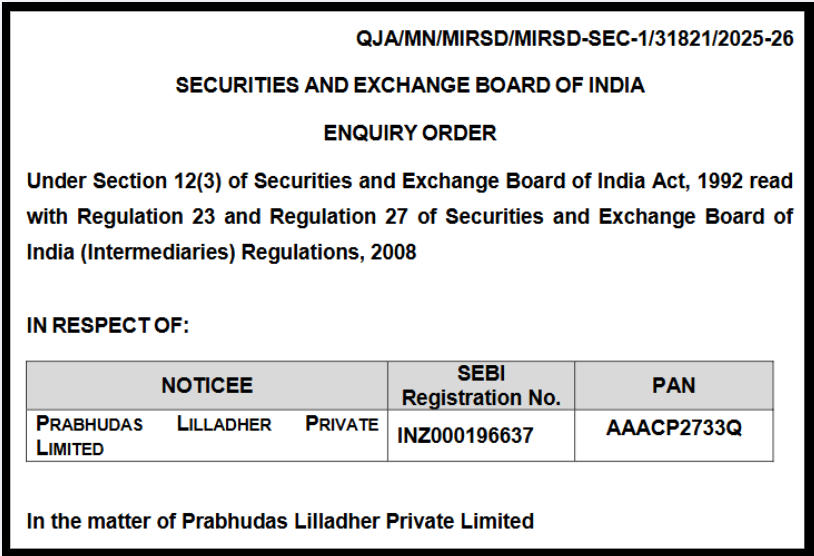
Prabhudas Lilladher is a well-known, SEBI-registered stockbroker.
Yet, after a joint inspection by SEBI, NSE, BSE, and MCX covering the period April 2021 to October 2022, the regulator found serious violations in how the firm handled client funds, margins, and reporting.
This was a comprehensive inspection of the broker’s operations. SEBI found that Prabhudas Lilladher had, in multiple instances, failed to protect client money and had misreported critical data to regulators.
The broker tried to attribute most lapses to clerical errors and COVID-19 disruptions. SEBI rejected many of these defences.
Key SEBI Violations
- Misuse of client funds: On three sample dates, July 12, 13, and 15, 2021, the broker’s G-value (a measure that checks whether client funds and collateral cover total client credit balances) was negative. The total shortfall reached ₹2.70 crore. SEBI held that a negative G-value shifts the burden of proof onto the broker to justify the shortfall, and Prabhudas Lilladher failed to do so.
- Wrongfully passing on margin penalties to clients: SEBI found the broker had transferred penalty charges for upfront margin shortfalls to clients, a total of ₹15.64 lakh. Exchange rules explicitly prohibit brokers from doing this. The broker refunded penalties in only 5 of 33 required cases.
- Incorrect margin reporting: The broker incorrectly reported End-of-Day margins in four instances and peak margins in five instances. It also short-collected a peak margin of ₹55.46 lakh from one client.
- Incorrect reporting of client funds and collateral: On three dates, ₹1.26 crore of base capital was wrongly shown as “funded collateral,” distorting client fund protection data sent to exchanges.
- Excess brokerage collection: In 10 instances, the broker charged brokerage beyond the SEBI-prescribed limit. The defence of clerical error was not accepted.
Penalty Imposed
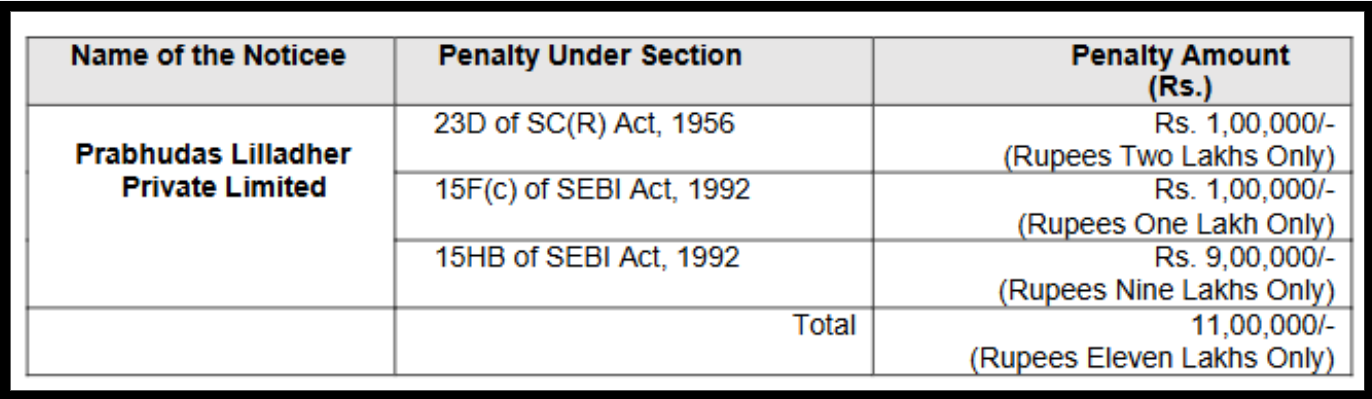
SEBI barred Prabhudas Lilladher from onboarding new clients for seven days, effective December 15, 2025. A separate adjudication had already imposed a monetary fine of ₹11 lakh for the same set of violations.
What this means for you as a trader: If a broker is passing penalty charges onto you, incorrectly reporting your margin, or failing to settle your account on time, that is a regulatory violation. You have every right to question it and escalate it.
Case 2: Anand Rathi Share and Stock Brokers Limited SEBI Order
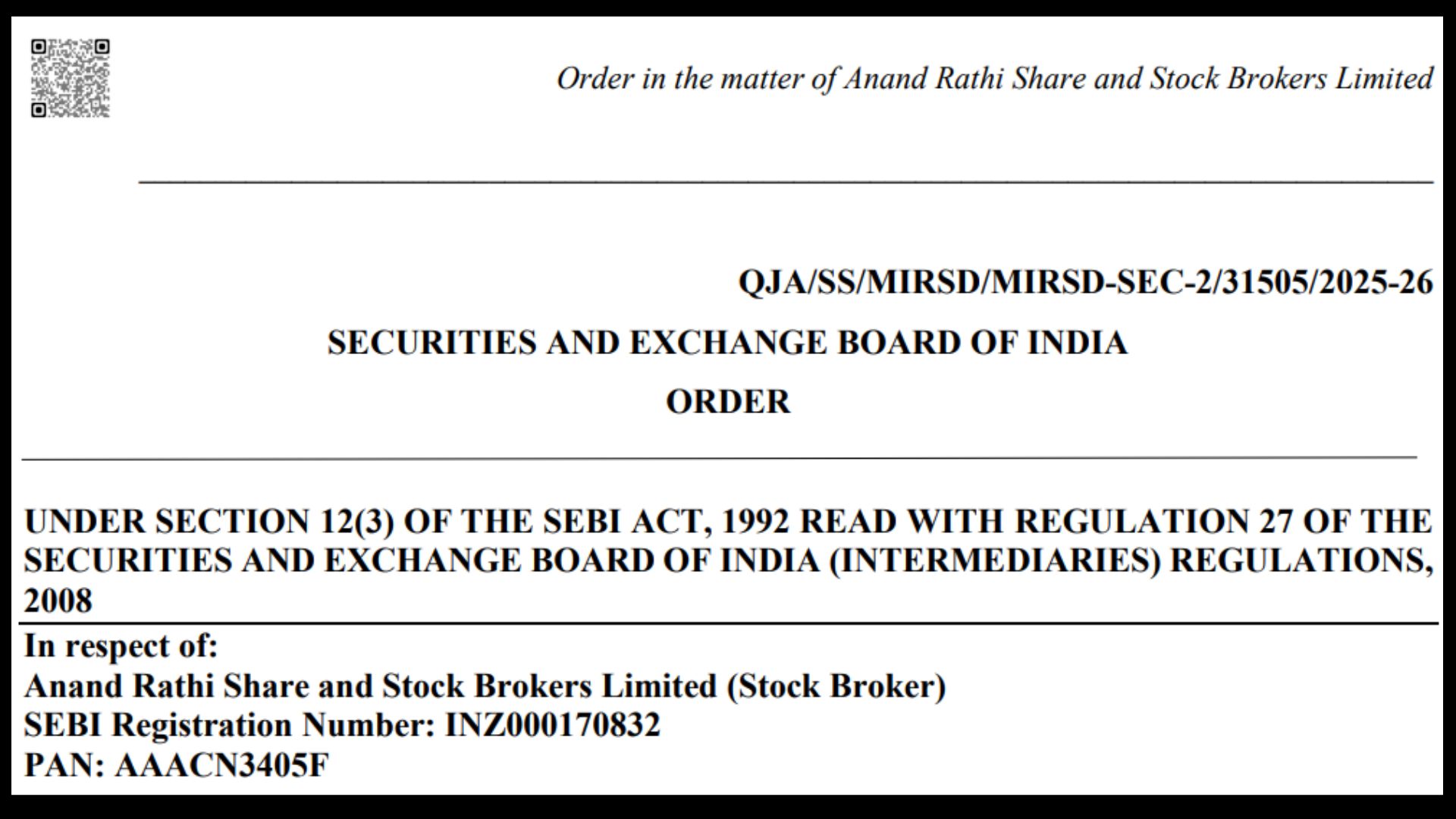
Anand Rathi is one of India’s large, established brokerage houses.
Yet a SEBI inspection for the period April 2020 to October 2021 uncovered multiple violations, including misuse of client funds, unauthorised trading, and incorrect reporting.
SEBI initiated two parallel proceedings against Anand Rathi following the inspection, adjudication proceedings and intermediary regulation proceedings.
The violations covered a wide range of broker obligations, from fund management to trade recording. The broker defended many lapses by citing COVID-19 disruptions.
Key SEBI Violations
- Misuse of client funds: The G-value was negative on 6 out of 43 sample instances, all in September 2020. The shortfalls were significant, reaching as high as ₹16.36 crore on September 17, 2020. SEBI noted this as a presumptive indicator of client fund misutilisation.
- Incorrect margin reporting and short collection: In three separate instances, the broker reported wrong margin figures to exchanges due to data pulled from the wrong source, a technical issue, and a typographical error. One instance involved a short collection of margin.
- Ledger balance mismatch in daily margin statements: In four instances, the ledger balance shown in the Daily Margin Statement did not match the broker’s back-office records. Differences ranged from ₹1.78 lakh to ₹3.35 crore. There was also a total margin mismatch of ₹1.03 lakh in one instance.
- Anand Rathi unauthorised trading: In 3 out of 1,057 sample instances, trades were executed in client accounts without proper authorisation. The broker acknowledged this happened due to “punching errors” by dealers.
- Incorrect financial data reporting under Risk-Based Supervision: The broker under-reported total debit balances of clients by approximately ₹10 lakh due to a system issue that excluded a segment of clients (BSE MFSS) from the data.
Penalty Imposed
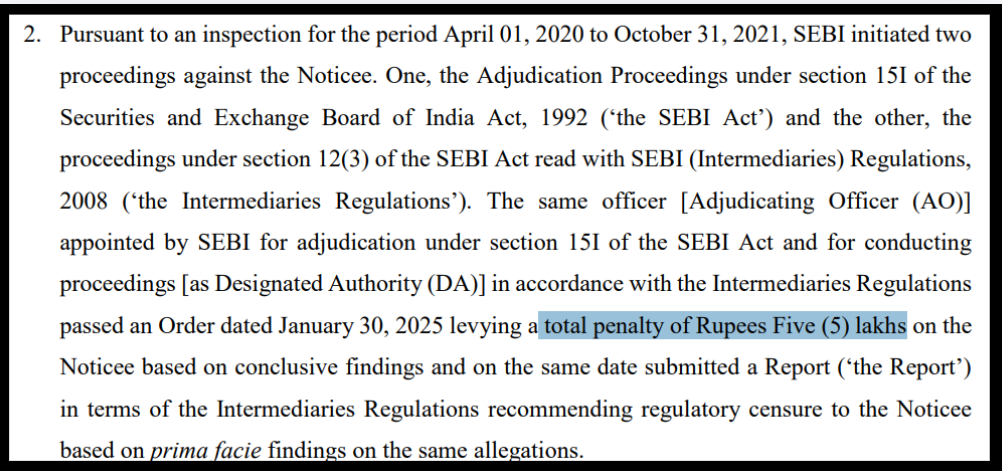
The adjudicating officer had already imposed a monetary penalty of ₹5 lakh in January 2025.
The June 2025 order under intermediary regulations disposed of the Show Cause Notice without further action, considering that the monetary penalty was already paid, corrective steps had been taken, and there were no investor complaints linked to the violations.
What this means for you as a trader: Even well-known, large brokers get pulled up by SEBI for client fund misuse and unauthorised trading. If trades happen in your account without your knowledge or consent, that is a serious violation, and SEBI takes it seriously, too.
What Should You Do If Your Broker Is Asking You to Add Funds?
Now that you know when it is legal and when it is not, here is what to do when your broker sends that fund-addition request.
Step 1: Ask For a Clear Written Reason
Do not add money just because someone called you.
Ask your broker to send a written explanation, via email or through their app, specifying exactly why funds are needed, how much, and under which regulation they are making this request. A legitimate broker will always provide this.
Step 2: Check your Margin Statement
Log into your trading account and verify your current margin utilisation.
Cross-check whether the shortfall your broker is citing actually exists. If the numbers do not match, that is a red flag.
Step 3: Check if Penalty Charges are Being Passed to You
As seen in the Prabhudas Lilladher case, some brokers wrongly charge margin penalty shortfalls to client accounts.
Review your ledger carefully. If you see unexplained debits, demand a line-by-line explanation.
Step 4: Document Everything
Save all WhatsApp messages, emails, and call details related to the fund request. If something feels off, this documentation becomes your evidence.
Arbitration proceedings and SEBI complaints often turn on whether you have written proof.
Step 5: Raise a Complaint with the Broker First
Before escalating to regulators, file a written complaint with your broker’s grievance team. Most regulatory processes require evidence that you attempted internal resolution first.
Step 6: File a Complaint in SCORES
If your broker does not resolve the issue, register your complaint on SEBI’s SCORES portal. Select “Stock Broker” as the entity type, describe the issue, and attach your evidence.
SEBI mandates a response within 30 days.
Step 7: Register a Complaint with SMART ODR
If the SCORES complaint does not bring resolution, move to SEBI’s SMART ODR platform, an online dispute resolution mechanism designed for structured mediation between traders and brokers.
Step 8: Stock Market Arbitration
If mediation fails, formal arbitration through NSE or BSE is your next step. This results in a binding award.
As seen in the Renu vs Angel One case on a related matter, proper documentation can make all the difference, even in arbitration.
Need Help?
If your broker is asking you to add funds for unclear reasons, if you have found unexplained debits in your account, or if trades have happened without your consent, documenting your case correctly matters more than anything else.
Register with us, and we will walk you through the process, from organising your evidence to helping you escalate through the right channels.
Conclusion
So, is your broker allowed to ask you to add more funds? Yes, but only within limits.
A legitimate margin call is legal and required by SEBI rules.
But a broker misusing your funds, passing penalty charges onto you, misreporting your margin, or executing trades without your consent, those are violations that SEBI has clearly acted against.
The Prabhudas Lilladher case and the Anand Rathi case both show one thing clearly: even large, established brokers cross lines when it comes to client money and reporting.
SEBI finds these lapses through inspections and takes action.
As a trader, your first line of defence is awareness. Know what is normal and what is not. Ask questions. Demand written explanations. Keep records.
Because when it comes to your money in the market, informed traders protect themselves far better than trusting ones.
Your account holds your money. Therefore, question every unexplained debit. Moreover, review each transaction carefully and raise concerns without hesitation.





 Add us as a preferred source on Google »

