
An investment advisor calls you and says, Invest through us, and we will split the profits 50/50. It sounds fair. But leads to the statement: is profit sharing legal for investment advisors in India?
The answer is a clear no, and understanding why you protect yourself from one of the most common mis-selling tactics in the Indian advisory industry today.
What Is Profit Sharing in Investment Advisory?
Profit sharing in stock market means an advisor charges a fee based on how much profit the client makes, rather than a fixed fee for the advice itself. It goes by many names.
Some advisors call it “profit-linked fees.” Others call it “50/50 profit sharing,” “commission on profit,” or “performance-based charges.”
The structure varies, but the core arrangement remains the same: the advisor gets paid more when the client makes money.
On the surface, this sounds aligned with investor interests. In practice, it creates the opposite, and SEBI identified this problem long before most retail investors did.
Profit Sharing Legal for Investment Advisor Or Not?
Most often, investors seem to ask: can an Investment Advisor share in profits?
The simple answer is no, not for SEBI-registered Investment Advisers, Research Analysts, or unregistered advisors.
SEBI does not allow registered Investment Advisers (IAs) to charge fees based on client profits or trading performance and hence any such demand directly comes under the category of profit sharing trading scam.
Under Regulation 15(2)(b) of the SEBI (Investment Advisers) Regulations, 2013, an Investment Adviser cannot use a profit-sharing or performance-linked fee model.
Separately registered Portfolio Managers can charge performance fees only under strict conditions, such as high-water mark mechanisms, mandatory disclosures, and a minimum investment threshold of ₹50 lakh per client.
If a Portfolio Manager violates these conditions, you can file complaint against portfolio managers through SEBI’s grievance mechanisms
Currently, registered investment advisers can charge up to ₹1.25 lakh per annum per client family.
SEBI also requires advisers to follow proper risk profiling and suitability rules for clients.
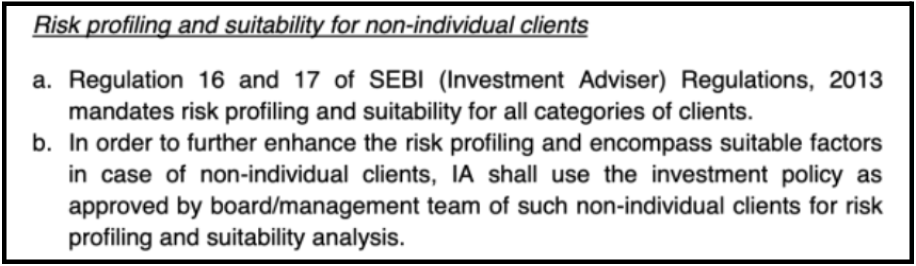
For non-individual clients such as companies or institutions, advisers must consider the investment policy approved by the client’s board or management while assessing suitability and risk profile.
Why SEBI Restricts Profit Sharing by Investment Advisors?
SEBI introduced these restrictions to reduce conflicts of interest. When an adviser earns a percentage of profits, their income depends on how much the client makes.
This can encourage risky behaviour such as:
- pushing high-risk trades,
- discouraging stop-losses,
- asking clients to hold losing positions longer,
- or promoting aggressive trading strategies.
Instead, SEBI requires a transparent and fixed fee structure so that advice remains independent of trading results.
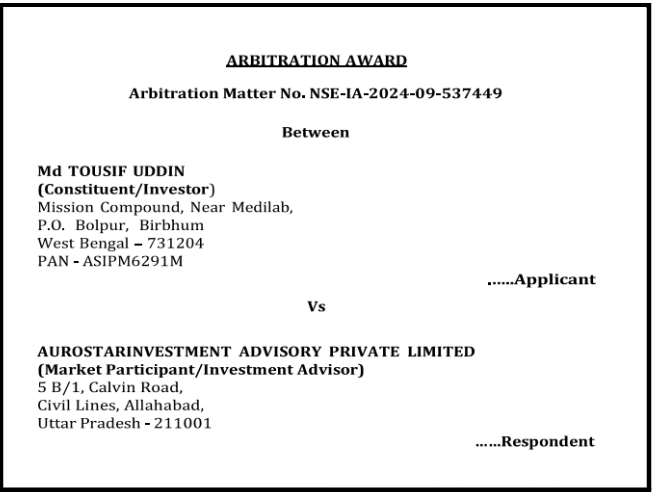
Profit Sharing Violation By Aurostar Investment Advisory
A January 2025 arbitration case involving Aurostar Investment Advisory Private Limited highlighted how aggressive, profit-driven advisory conduct can lead to severe investor losses.
The investor was initially attracted through a profitable demo trade and later paid multiple advisory fees.
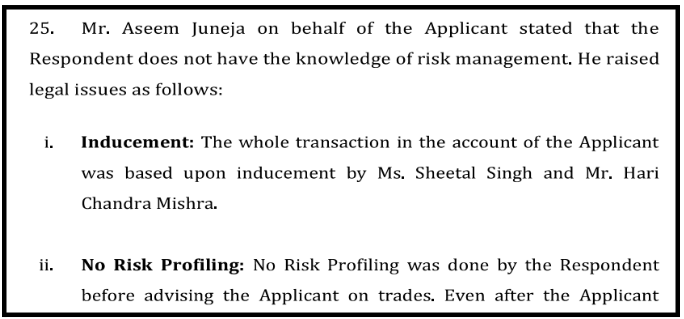
He was then advised to take large Bank Nifty options positions without proper stop-loss protection and was repeatedly pushed to “average” losses instead of exiting.
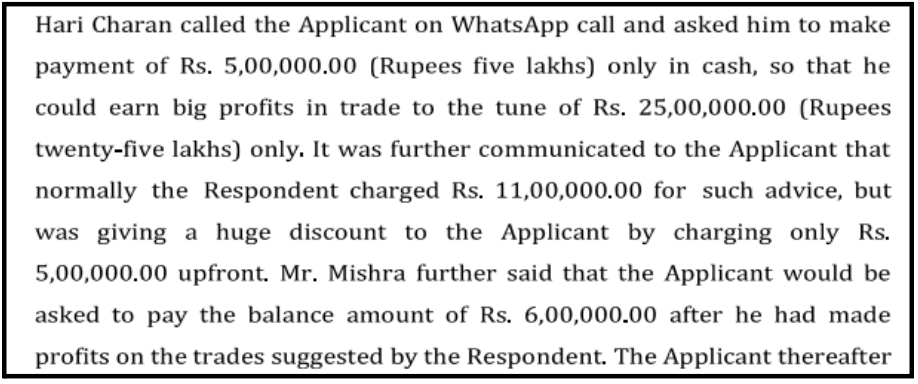
The proceedings also involved allegations of off-record cash payment demands and promises of exceptionally high profits. We assisted the investor during the arbitration process.
Violations by the IA
The arbitrator noted several serious compliance failures:
- No valid risk profiling under SEBI IA Regulations

- Reckless and unsuitable options trading advice
- Repeated averaging instructions despite mounting losses
- Alleged cash and third-party payment demands outside the disclosed fee structure
- Profit inducements and unrealistic return assurances
While the award did not explicitly use the term “profit sharing,” the findings reflected the kind of conflicted incentive structure SEBI’s restrictions are designed to prevent.
Penalty and Final Decision
The arbitrator held the advisory firm responsible for the conduct of its employees and found the advice unsuitable for the investor’s declared financial profile.
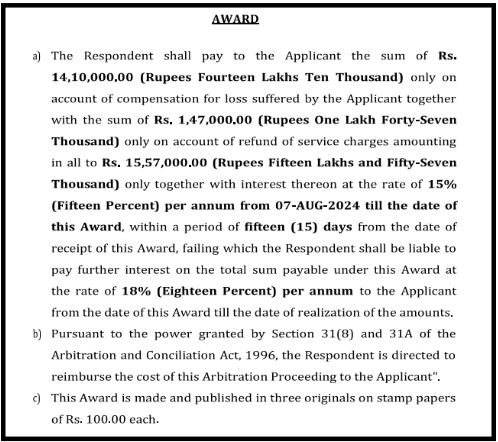
The tribunal awarded:
- ₹14,10,000 as trading loss compensation.
- ₹1,47,000 as a refund of advisory fees.
- 15% annual interest from the date of loss.
The respondent was also directed to reimburse arbitration costs.
Lessons for Investors
Investors should treat profit-sharing offers, guaranteed return claims, unofficial cash payment demands, and repeated pressure to average losses as major warning signs.
A profitable demo trade does not prove that an advisory service is safe or compliant. When an advisor’s incentive becomes tied to aggressive trading outcomes, investor protection often takes a back seat.
How To Identify Profit-Sharing Arrangements by Investment Advisors?
Not every advisor uses the phrase “profit sharing.” Many disguise the arrangement to avoid regulatory scrutiny. Here is what to watch for:
- “We only charge if you profit”, this is profit sharing by definition, regardless of what the advisor calls it.
- “50/50 split on gains” is a direct profit-sharing offer that violates IA and RA regulations.
- Demands for cash payments or payments to a third-party account, a common way to collect profit-linked fees off the books.
- “Average your position”, repeated after a loss, typically motivated by extending the trade duration to generate a profitable outcome that the advisor can claim a cut from.
- No stop-loss on recommendations, removing stop-losses keeps trades open longer and increases potential profits for the advisor.
- Requests for your broker login or demat credentials facilitate account handling, which enables advisors to execute trades and claim profit shares directly.
Each of these is an independent SEBI violation. Together, they form the standard pattern of an illegal profit-sharing advisory operation.
Where to File A Complaint Against SEBI Registered Investment Advisor?
If an advisor has already taken profit-sharing payments from you through cash, third-party accounts, or any other means, here is how to act.
Step 1: Document Everything Immediately
Save all payment records, bank transfer screenshots, WhatsApp conversations, call recordings if available, and any written communication where profit sharing was discussed or demanded.
Evidence from the point of the demo trade matters; start documenting from the beginning of your engagement.
Step 2: Send a Formal Complaint to the Advisor
Write a formal complaint to the advisor’s grievance officer by email and registered post.
State that profit-sharing fee arrangements violate SEBI IA/RA Regulations, specify the exact amounts paid and the basis on which they were collected, and demand a refund. This starts the official resolution clock.
Step 3: File a Complaint in SCORES
File a detailed complaint on SEBI SCORES with the advisor’s registration number.
Profit-sharing fee demands are independently reportable under SEBI’s IA and RA Regulations.
Attach your payment records and any communication where the profit-sharing arrangement was proposed.
Step 4: Register a Complaint with SMART ODR
If SEBI SCORES does not resolve the matter, escalate to Smart ODR, SEBI’s Online Dispute Resolution platform.
Register your case, upload your documentation, and request a conciliation session for a structured, regulator-supervised resolution.
Step 5: Stock Market Arbitration
If you suffered trading losses because the advisor pushed you into unsuitable trades to generate profit-sharing income, arbitration is the route to full compensation.
The Aurostar case established that an advisor is fully liable for trading losses caused by reckless advice given without valid risk profiling, regardless of what the advisory agreement says.
Arbitration produces a binding award and covers both trading loss compensation and subscription fee refund.
Need Help?
If an advisor charged you on a profit-sharing basis, demanded cash payments, or pressured you to average losses, you may be facing serious regulatory violations.
Professional investor protection support can improve your chances of recovery.
Our services include:
- Case assessment: We review your payment records, call evidence, and trade history to determine which specific SEBI violations apply.
- Complaint drafting: We prepare a precise complaint citing the exact regulatory provisions violated.
- SCORES and Smart ODR guidance: We walk you through every step of the filing and escalation process.
- Arbitration support: We help you build and present your case through the arbitration process for trading loss recovery.
- Conciliation representation: Our team represent your interests in formal dispute resolution sessions.
If you believe an advisor violated SEBI regulations or caused trading losses through unsuitable advice, you can register with us for guidance on these steps.
Conclusion
Is profit sharing legal for an investment advisor in India? The answer is an unambiguous no.
SEBI’s IA Regulations, RA Regulations, and PFUTP framework restrict performance-linked fees because profit-sharing creates incentives that can harm investors.
For example, the Aurostar arbitration case involved reckless trades, no stop-losses, repeated averaging pressure, unofficial payment demands, and massive trading losses.
Therefore, when an advisor offers profit sharing, they often reveal conflicted incentives instead of investor-focused advice.