

Assessing a financial advisory firm requires more than just verifying its online presence or contact details.
Investors should examine the regulatory structure under which the firm operates, the scope of services it is authorized to provide, how it addresses client grievances, and what its historical complaint data indicates.
One Nivesh is an India-based financial advisory firm headquartered in Indore, offering stock market guidance through research-backed trading calls across short-term and intraday segments.
In this blog, we present a structured overview of the firm’s registration details, service offerings, complaint disclosures, and the key factors investors should consider before opting for its services.
One Nivesh Review
n recent years, from Indore’s growing financial hub, a stock market advisory firm has steadily built its presence: One Nivesh.
It operates in a space crowded with advisory services, yet positions itself with a structured and compliance-driven approach.
For investors asking: is One Nivesh SEBI registered?
The answer is yes. One Nivesh holds a SEBI Registered Research Analyst licence, Reg. No. INH000021614.
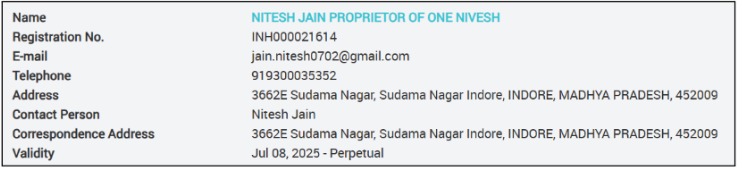
One detail worth flagging immediately: the firm’s own website shows two conflicting registration dates for this same licence, March 10, 2025 on one page, July 08, 2025 on another.
In an environment where many advisory services function without formal oversight, SEBI registration serves as a meaningful distinction.
It brings the firm under a defined regulatory structure that mandates disclosures, standardized research processes, and adherence to investor protection guidelines.
For investors wondering how to check SEBI-registered research analysts online, SEBI provides an official database where registration details can be verified for authenticity and compliance status.
SEBI itself states plainly that registration “in no way guarantees performance of the intermediary or provides any assurance of returns to investors.”

According to available information, One Nivesh offers services across multiple trading segments, including equity cash trading, futures, options, and commodities such as gold, silver, and crude oil.
The firm also claims to provide personalized advisory solutions, portfolio guidance, and strategic combinations of trading approaches to suit different investor profiles.
Additionally, it shares market insights and trading updates through digital platforms, catering to an active base of traders seeking real-time inputs.
When looking at a setup like this, it’s completely natural to wonder: is One Nivesh genuine?
At first glance, the setup appears organized and backed by regulatory compliance, with an emphasis on client-centric financial solutions.
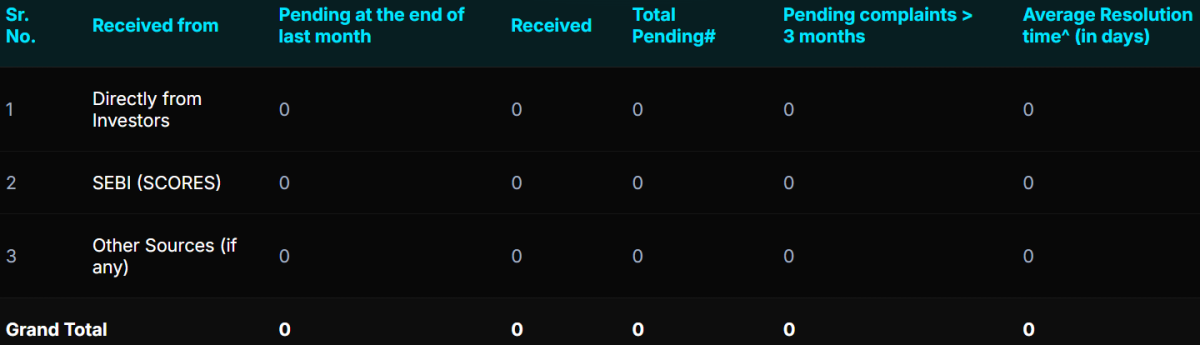
Importantly, as per disclosed records, the firm reports zero complaints across all categories, including direct investor complaints and those received through SEBI’s SCORES platform.
However, SEBI registration also clearly defines the scope of permitted activities and the boundaries within which such advisory services must operate.
What Can a SEBI Registered Research Analyst Do?
As per the guidelines defined by SEBI for Research Analyst entities holding a valid RA registration are allowed to offer specific research and analytical services, as long as they strictly adhere to the prescribed regulatory framework.
They are allowed to:
- Release Well-Structured Research Reports: Registered Research Analysts can publish in-depth reports on listed companies, sectors, indices, or commodities. These reports must be objective, supported by data, and include necessary risk disclosures along with any conflict-of-interest statements.
- Share Research-Based Recommendations: They may provide buy, sell, or hold recommendations on securities, but only when backed by proper analysis. Each recommendation must clearly mention that historical performance is not indicative of future outcomes.
- Offer Market Analysis and Insights: RAs can present their views on equity, derivatives, and commodity markets purely as analytical opinions, not as direct trading instructions or portfolio management services.
- Charge Clearly Disclosed Fees: They are permitted to charge subscription or advisory fees, provided the pricing is transparently communicated, fixed in nature, and not linked to profits or trading performance, with no revenue-sharing arrangements involved.
What SEBI Registered Research Analysts Are Prohibited From Doing?
Knowing the restrictions is just as crucial as understanding the permissions.
Should we trust SEBI registered research analysts?
While registration ensures a level of oversight, trust should be built on the analyst’s adherence to these prohibitions:
- No Assured Return Claims: Promising fixed income, guaranteed profits, or “sure-win” trades is not allowed. Financial markets are inherently uncertain, and such assurances are treated as misleading under SEBI guidelines.
- No Promises of Recovery: Advisers cannot claim that past losses will be compensated through future trades or recommendations. Such statements can mislead investors and encourage risky decisions.
- No Profit-Based Fee Models: Charging fees based on a client’s profits, invested capital, or returns earned is not permitted. Any compensation structure tied to performance creates a conflict of interest.
- No High-Pressure Sales Tactics: Reaching out repeatedly with unsolicited calls, creating urgency, or aggressively pushing clients to subscribe violates SEBI’s code of conduct for intermediaries.
- Compulsory Documentation and Disclosures: Clients must be provided with formal agreements, risk disclosures, and a clear fee structure before services begin. Failure to provide these documents indicates non-compliance with regulatory requirements.
What Should You Do If You Face Issues With Your Research Analyst?
If you believe a Research Analyst has behaved in a way that is misleading, non-compliant, or inconsistent with the agreed terms of service, the most effective approach is to remain calm and follow the formal grievance process step by step.
India’s investor protection mechanism provides a well-defined escalation route, and using it systematically can improve the chances of a fair resolution.
Here’s how you can proceed:
-
Gather Evidence: Begin by assembling all the necessary documents related to your concern. This may include payment proofs, email exchanges, chat conversations, trade records, and relevant screenshots. Well-organized documentation strengthens your case and adds credibility to your complaint.
-
Contact the Research Analyst: Before escalating the issue, make an effort to connect with the research analyst or the firm directly. Communicate your problem clearly and request a resolution. Often, concerns can be addressed at this stage without needing further action.
-
Register a Complaint in SCORES: If the issue remains unresolved, you can lodge a complaint on the SEBI SCORES platform. This official system enables investors to raise grievances against registered entities. After submission, your complaint is sent to the concerned firm, and you can monitor your SEBI complaint status online.
-
File a Complaint in SMART ODR: If you are still not satisfied, you can proceed to the SMART ODR platform. It offers an online dispute resolution mechanism through mediation and conciliation, ensuring a more streamlined and efficient process.
-
Stock Market Arbitration: As a last resort, you may choose arbitration. This formal legal process involves an independent authority reviewing your case and issuing a binding decision, typically when all other options have been exhausted.
Need Help?
For many investors, raising a complaint against a SEBI-registered entity can be more complex than it initially appears.
The existence of a registration number often gives a sense of security, but the actual grievance process may involve detailed documentation and consistent follow-up.
When you register with us, we assist you with:
- Understanding how to verify SEBI registrations and what they actually signify, and what they don’t.
- Identifying warning signs such as misleading claims, non-compliant practices, and aggressive sales tactics.
- Preparing clear, well-documented complaints supported by proper evidence for SEBI and cybercrime platforms.
- Differentiating between service-related issues and situations that may involve fraudulent activity.
Our method is centered on factual analysis, correct procedures, and ensuring accountability where it is due.
Conclusion
One Nivesh is a SEBI-registered Research Analyst and a BSE-enlisted entity, operating from Indore and focusing on stock market advisory services.
The firm provides trading recommendations primarily for intraday and short-term strategies, delivered through SMS and selected communication channels, with an emphasis on market timing and technical setups.
While its registration confirms regulatory recognition, investors should evaluate the overall service experience, including communication practices, consistency of recommendations, and risk alignment.
Before making a final decision, ask yourself the right regulatory questions: Did One Nivesh guarantee profit during their sales calls? Did they provide transparent onboarding documentation?
Ultimately, well-informed choices remain the strongest protection for any investor navigating the markets.
Also, cross-check the SEBI registration on the official website, ensure proper onboarding documentation is shared, and base your expectations on regulatory guidelines rather than projected returns.
Ultimately, well-informed choices remain the strongest protection for any investor navigating the markets.





 Add us as a preferred source on Google »

