

Have you come across the Parag Salot SEBI Order and wondered how a SEBI-registered Research Analyst could still end up facing regulatory action?
For many retail investors, SEBI registration creates a sense of trust and safety. But this case shows that even registered market professionals can face serious compliance issues if regulatory rules are not properly followed.
It happens more often than investors realise. Not every issue comes from anonymous Telegram channels or unregistered tip providers.
Sometimes, the concerns arise from established analysts with professional websites, active client bases, and valid registrations, but whose practices may still violate SEBI norms behind the scenes.
In this blog, we break down what SEBI observed during its inspection, the violations highlighted in the order, the penalties imposed, and what investors should learn from the case before trusting any stock recommendation service.
Parag Salot SEBI Order Details
SEBI’s inspection was not a routine check that passed without findings.
It identified serious compliance violations across multiple areas, including misleading marketing, absent audits, wrong disclosures, and even operating without a valid certification for years.
The inspection triggered two separate regulatory actions:
- Adjudication Order dated January 15, 2025, imposing a monetary penalty.
- WTM Order dated August 21, 2025, issuing a formal regulatory censure.
Both orders stem from the same inspection period and largely cover the same violations, but they were passed under different regulatory frameworks.
Let us walk through them properly.
SEBI Adjudication Order Against Parag Salot (January 2025)
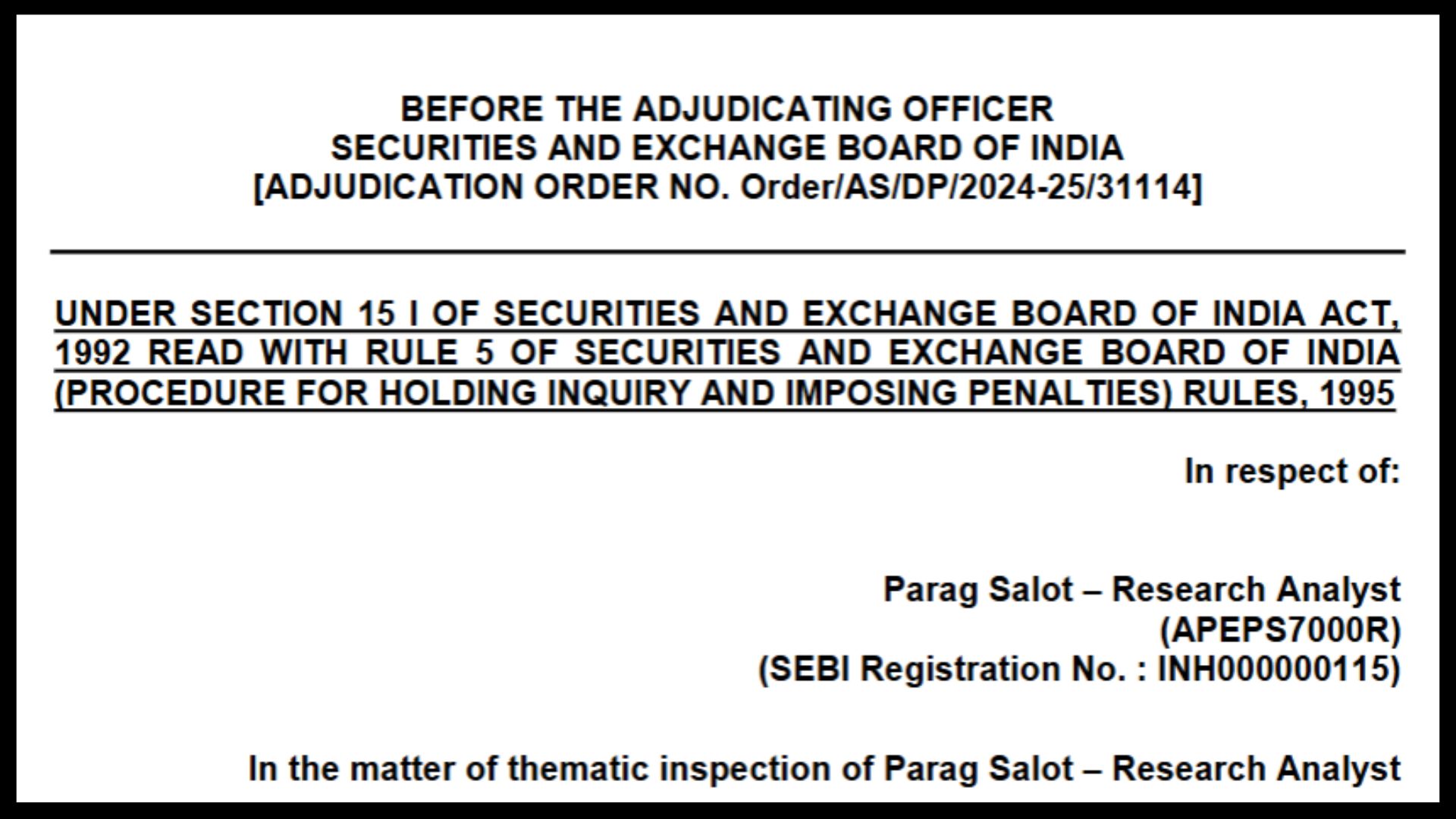
This order was issued by SEBI’s Adjudicating Officer and covers the financial penalty aspect of the violations found during the inspection.
Violation 1: Assured Returns and Misleading Profit Claims on Website
This is the most serious violation and the one that attracted the heaviest penalty.
SEBI found that on Parag Salot’s website, under the page “Stock Recommendations Provider in India” and the service section titled “Index Option,” the following was explicitly stated:
“Possible Profit Up to Rs 4000 per positive trade.”
Another service, “Platinum Option Service”, reads:
“Get Approx Possible Profit Up to 5k to 30k Per Trade.”
A section titled “Profit Assured” on the website further reads:
“In these services, we offer you 50 Profitable recommendations. Pay only when you make profits.”
SEBI held that these specific, quantified claims created a clear and measurable expectation of returns. This is fundamentally different from vague marketing language.
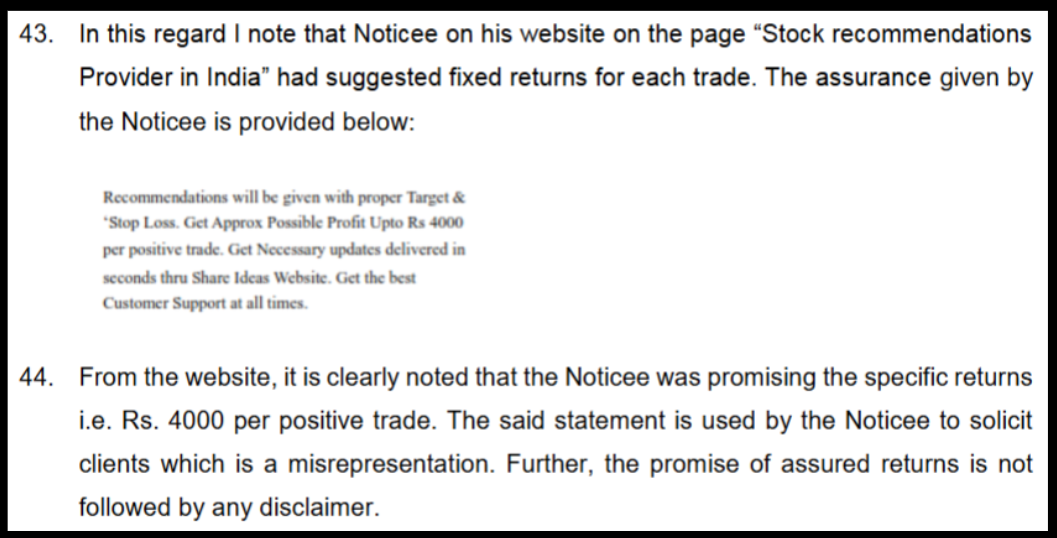
Phrases like “Rs. 4,000 per positive trade” or “5k to 30k per trade” directly imply guaranteed profitability.
Parag Salot’s defence was that the homepage had a scroll/ticker disclaimer saying he does not offer guaranteed profits.
SEBI rejected this, noting that a static profit claim displayed on a full page cannot be offset by a small moving ticker that a visitor might not even notice.
The responsibility to ensure no misleading content exists on the platform rests entirely with the RA, not with a website developer.
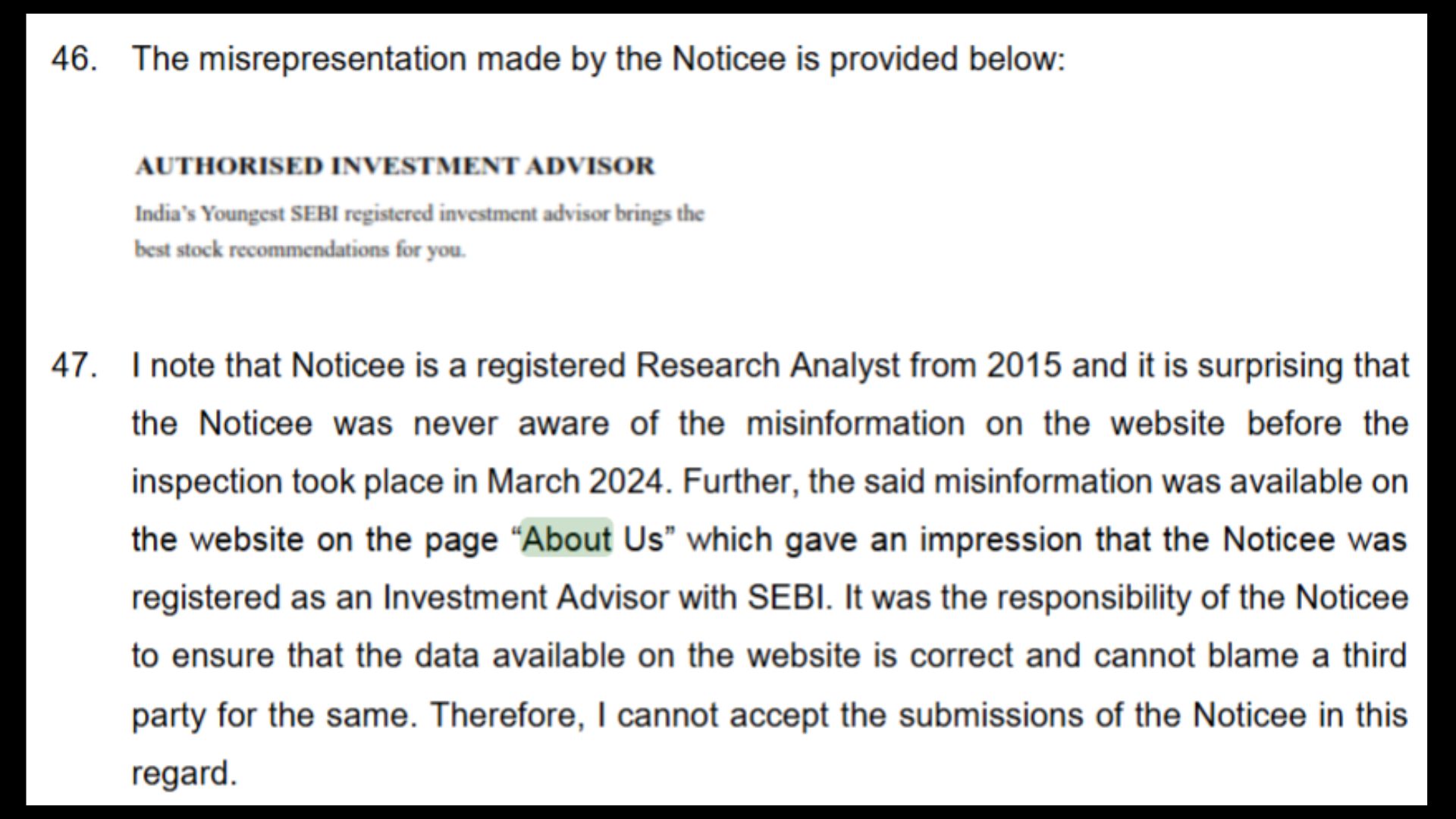
SEBI also found that the “About Us” section of his website read: “Authorised Investment Advisor – India’s Youngest SEBI registered investment advisor brings the best stock recommendations for you.”
Parag Salot was never registered as an Investment Advisor (IA) with SEBI. Presenting himself as one, even due to a web developer’s copy-paste error, was held to be a violation since it was his responsibility to verify his own website content.
Violation 2: Inducing a Client Through an Employee
SEBI found a formal complaint by one Mr. Pramod Kumar Mishra, who shared WhatsApp chats with a person whose contact was saved as “KUSUM SHARE IDEAS.”
In these messages, Ms. Kusum had made statements inducing Mr. Pramod to pay more money, with phrases assuring big profits.
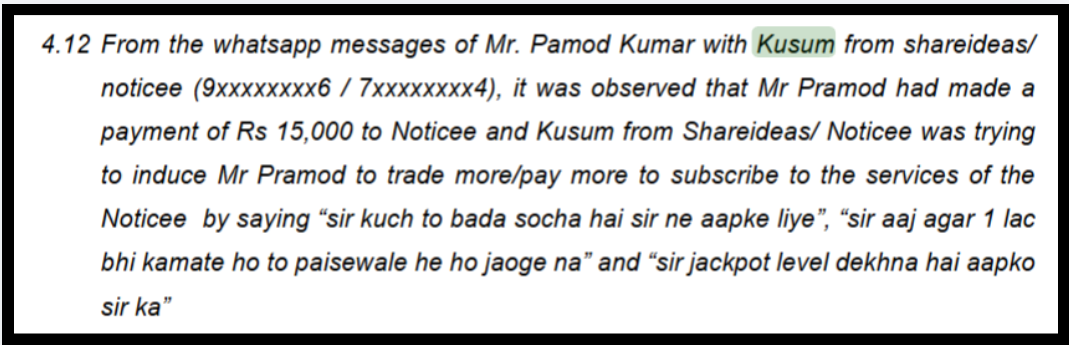
What made this particularly significant was how SEBI connected the dots. The QR code shared by Ms. Kusum in the chats, when scanned, directly redirected to the UPI account of Parag Salot himself, “PARAG JAYSUKH SALOT / Banking name: SHARE IDEAS.”
Furthermore, Mr. Pramod Kumar Mishra appeared in the client list submitted by Parag Salot to SEBI for FY 2023-24, with matching payment amounts and subscription timelines.
Parag Salot tried to argue that he never officially received the complaint and that WhatsApp chats cannot be relied upon without a Section 65B certificate.
SEBI dismissed both defences, noting that the proceedings are quasi-judicial in nature (not a court of law), and the circumstantial evidence linking the employee’s actions to Parag Salot was too specific to be coincidental.
Violation 3: No Annual Compliance Audit for Nearly a Decade
Under Regulation 25(3) of the RA Regulations, every Research Analyst, individual or corporate, must conduct an annual compliance audit from a qualified CA or CS.
Parag Salot admitted he did not conduct this audit from FY 2014-15 until FY 2023-24, nine consecutive financial years. His reason: he believed audits were mandatory only for corporate entities, not individual RAs.
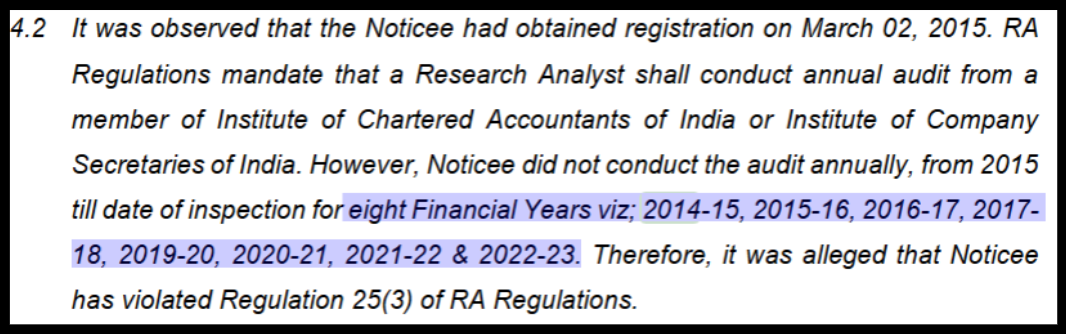
SEBI flatly rejected this, stating that ignorance of the law is not a valid defence. The regulation makes no distinction between individuals and corporates.
By not conducting the audit annually, any ongoing compliance issues in his practice were allowed to continue undetected and uncorrected.
He later submitted audit reports for all nine years before the order was passed. SEBI noted the corrective action but held that it does not retroactively absolve the violations.
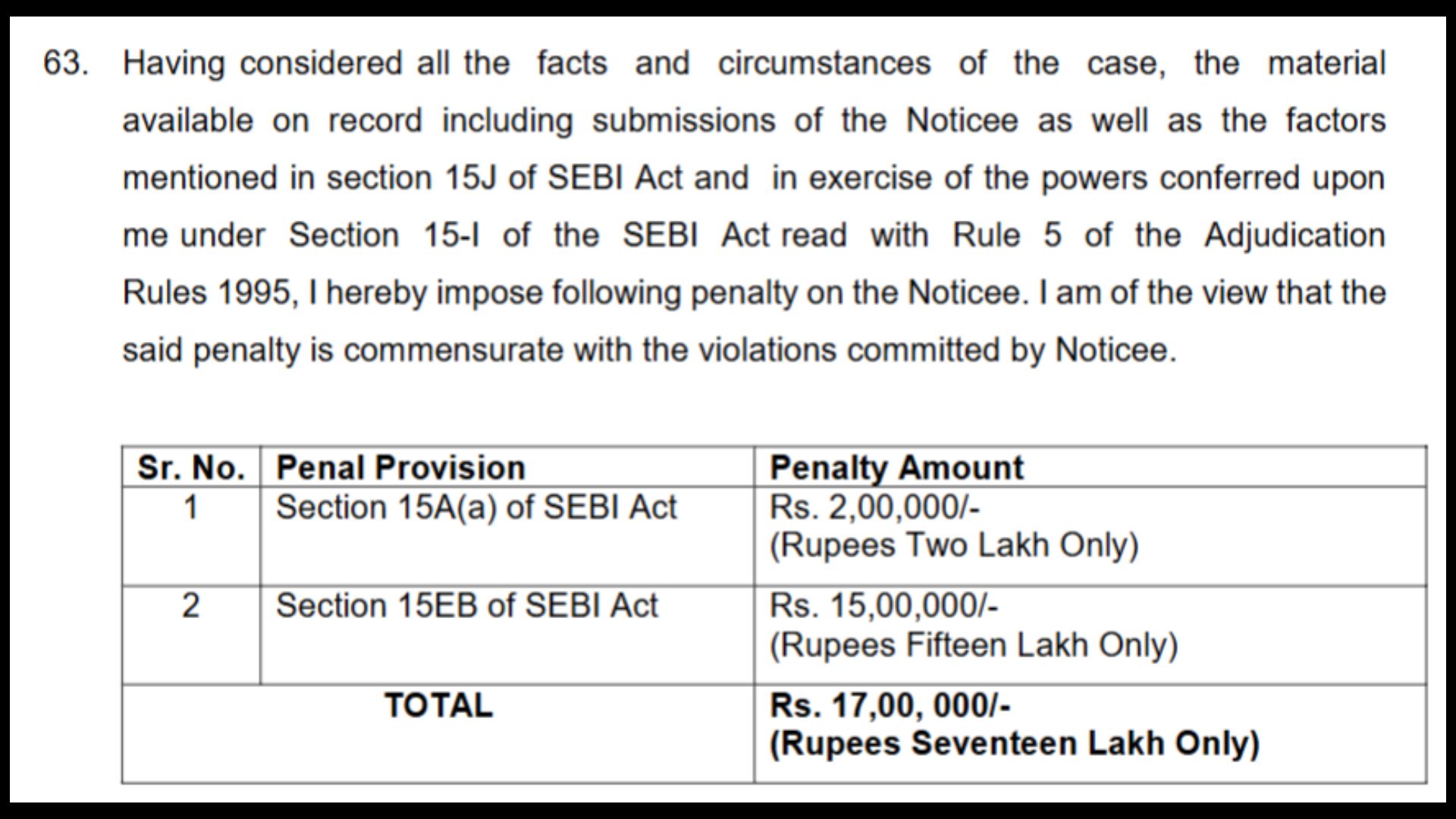
Penalty imposed: ₹2,00,000 (Rupees Two Lakh) for failure to maintain annual compliance audits.
Total Monetary Penalty under the Adjudication Order: ₹17,00,000 (Rupees Seventeen Lakh)
SEBI WTM Order Against Parag Salot (August 2025)
Following the adjudication order, SEBI’s Whole Time Member (WTM) issued a separate order under the SEBI (Intermediaries) Regulations, 2008.
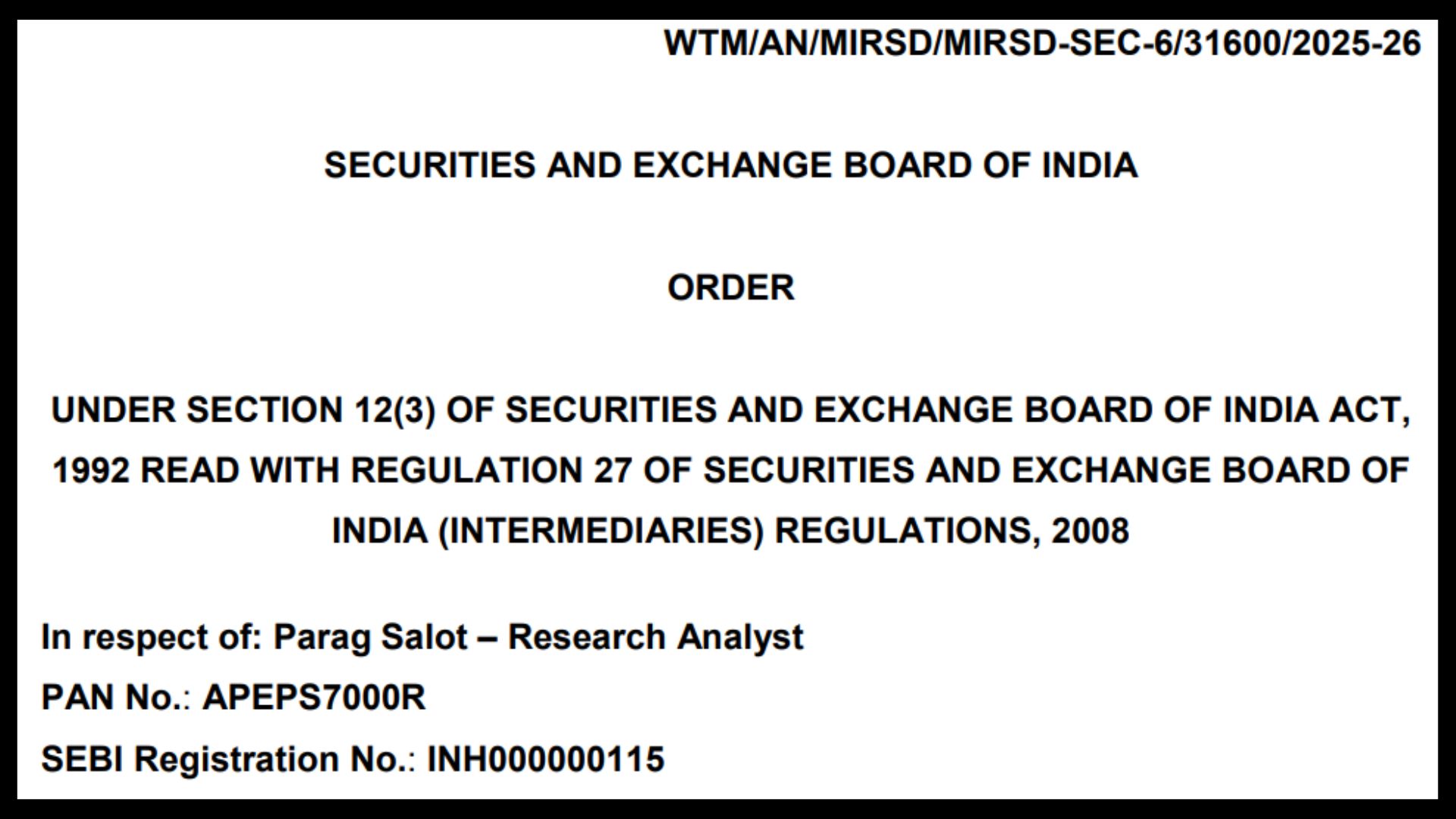
This order examined the same violations but focused on whether further regulatory action, beyond the monetary penalty, was warranted.
The DA (Designated Authority) had already found multiple violations established. The WTM reviewed all of them and issued its own findings.
Violation 1: Operating Without a Valid NISM Certification for Six Years
This violation stands out because of how long it continued. Under Regulation 7(2) of the RA Regulations, every registered Research Analyst must maintain a valid NISM (National Institute of Securities Markets) Series-XV certification at all times.
This is a basic, non-negotiable requirement for anyone providing research recommendations to the public.
SEBI found that Parag Salot did not hold a valid NISM certification from December 1, 2016, to September 6, 2022, a period of nearly six years.
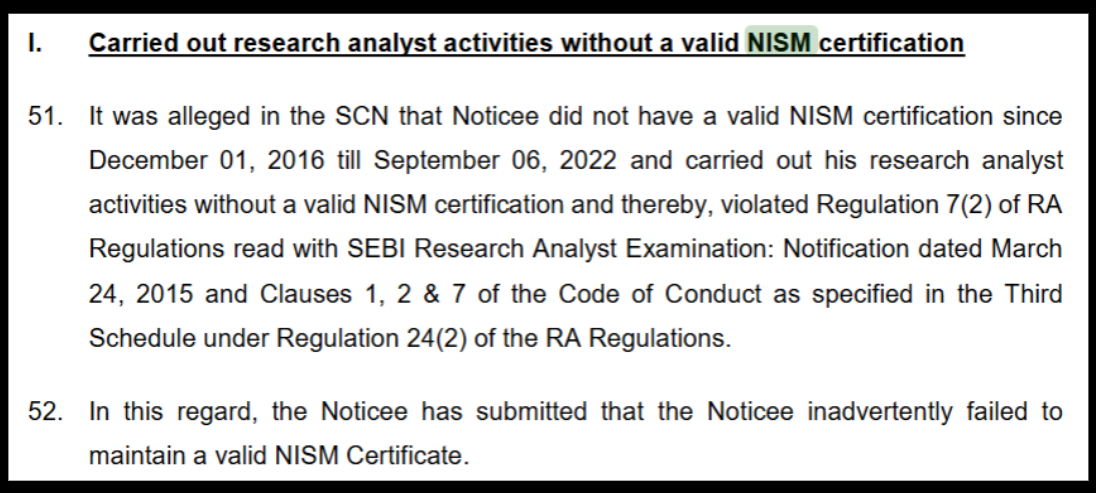
During this entire time, he continued operating as a SEBI-registered RA, giving stock recommendations and collecting fees from clients.
His explanation: he believed the certification was a one-time requirement tied to his professional qualifications and did not need renewal.
SEBI rejected this, citing the legal maxim that ignorance of the law is no excuse, especially for a registered intermediary.
He eventually reappeared and passed the NISM exam in September 2022, well before the inspection or show cause notice. While the corrective action was noted, the years-long lapse was held to be a violation.
Violation 2: Failure to Update SEBI About Change of Office Address
As per Regulation 13(ii) of the RA Regulations, an RA must immediately inform SEBI in writing of any material change in previously submitted information, including a change of office address.
SEBI found that Parag Salot shifted his office from Room No. S136 to Room No. S120 within the same building (Raghuleela Mall, Kandivali West, Mumbai) in June 2023.
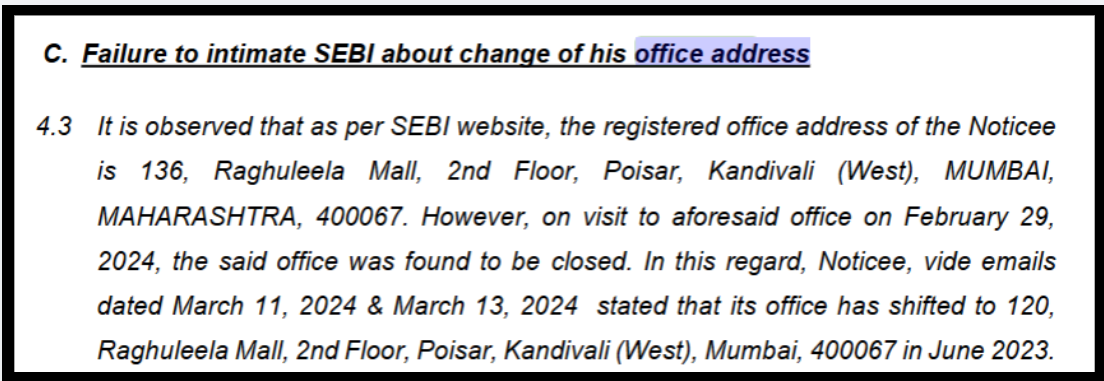
He updated this address with SEBI only in March 2024, nearly nine months later, and only after the inspection had already taken place.
His defence was technical difficulties with the SEBI portal and ill health. SEBI held that even if portal issues existed, he could have contacted SEBI directly to resolve the matter.
A change in office address, regardless of whether it is in the same building, is a material change that must be communicated promptly.
Violation 3: False and Incomplete Office Information Given to SEBI
During the inspection, Parag Salot submitted that he operated from his Kandivali address. However, his website listed his address as “Mahape, Navi Mumbai”, a completely different location.
He attributed this to a web developer’s error, submitting a letter from the developer acknowledging the mistake. SEBI found it difficult to accept this explanation and placed the responsibility squarely on the RA.
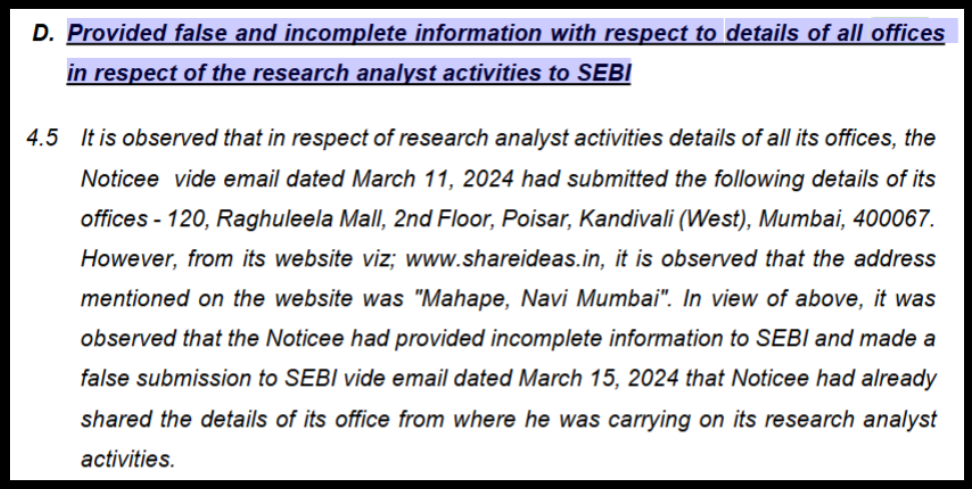
A registered intermediary of nine-plus years cannot claim ignorance of content on his own business website. The letter was undated and lacked a detailed explanation.
Providing inaccurate information about the offices where RA activities are conducted is a violation of Regulations 29(1) and 29(2) of the RA Regulations, as well as Clause 1 of the Code of Conduct (requiring honesty and good faith).
Violation 4: Not Displaying Investor Charter and Complaint Data
Clause 4.2 and 4.3 of SEBI’s Master Circular for Research Analysts require every RA to prominently display the Investor Charter and a monthly update of all complaints received (including SCORES complaints) on their website.
If no website exists, the same must be sent to investors via registered email.
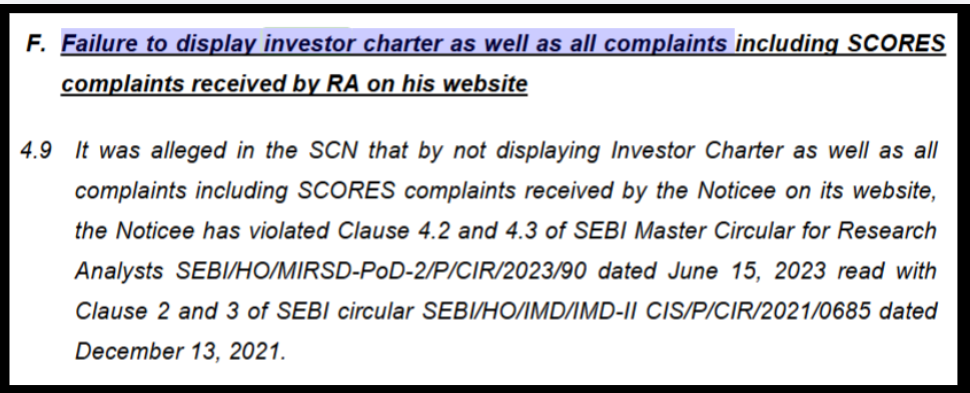
At the time of inspection, Parag Salot’s website was inactive. His defence was that he had closed his business operations, had no active clients, and therefore the requirement did not apply to him.
SEBI held that as long as a person holds SEBI registration, compliance obligations continue, including to past clients who deserve transparency.
The obligation to email the charter and complaint data to former clients remained in force, and he could not claim impossibility simply because his website was down.
Violation 5: Not Maintaining Email Records for Inspection
SEBI found that Parag Salot had not maintained records of all email accounts used for his RA activities.
When the inspection was conducted, the email mailbox associated with his domain had been deactivated because he had not renewed his website domain and hosting.
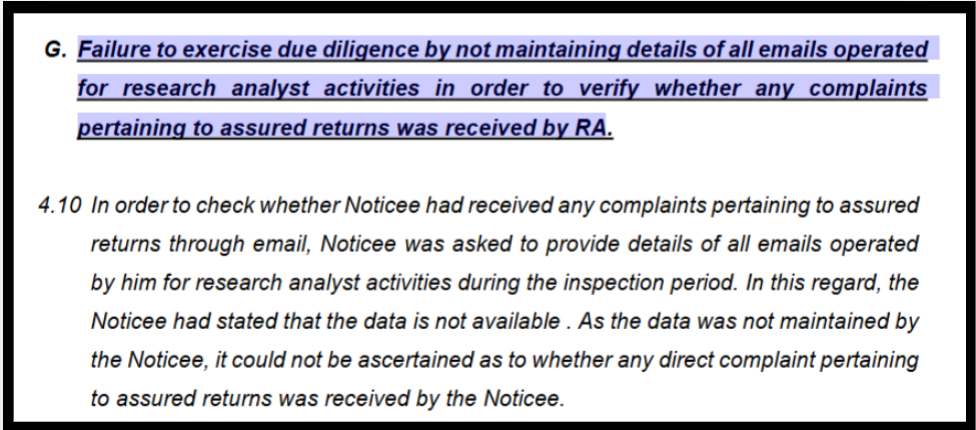
This created a significant gap in the audit trail, making it impossible for SEBI to verify whether any complaints about assured returns had been received directly.
Clause 2 of the Code of Conduct requires a RA to act with due skill, care, and diligence. Not maintaining basic communication records violates this standard.
The WTM noted that the Adjudicating Officer had already imposed a ₹17,00,000 monetary penalty (which Parag Salot had paid).
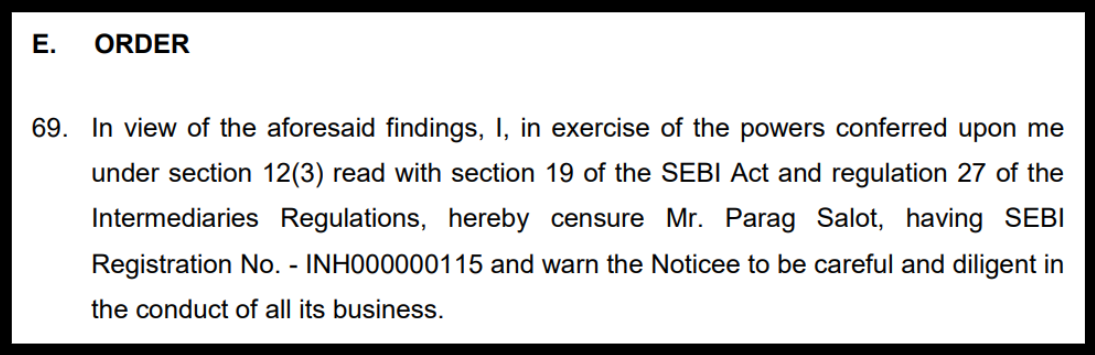
Given that he had voluntarily closed his business, had no active clients, and had taken some corrective measures, the WTM agreed with the DA’s recommendation to issue a regulatory censure rather than additional monetary penalty.
Outcome: Formal regulatory censure and a warning to be careful and diligent in all business conduct going forward, effective immediately.
How To File a Complaint Against a Research Analyst?
If you are reading this and feel that a research analyst, whether Parag Salot or any other, has misled you, promised returns, or behaved in a way that seems wrong, do not wait and hope it resolves itself.
Here is what you can do, step by step:
Step 1: Gather All Evidence
Save everything: WhatsApp chats, Telegram messages, emails, call notes, payment receipts, UPI screenshots, invoices, and any documents showing profit promises or claims.
Make a simple timeline with dates, what was promised, what was paid, and what actually happened.
Step 2: Send a Written Complaint First
Draft a clear, factual message or email to the research analyst or their grievance team stating your concern, whether it is a mis-sold service, a refund request, or a misleading claim.
Keep it short and to the point. Save their response (or non-response) as evidence too.
Step 3: File a Complaint with SCORES
SCORES (Securities and Exchange Board of India Complaints Redress System) is SEBI’s official portal for investor complaints against registered intermediaries, including Research Analysts.
Upload your evidence, explain your issue clearly, and submit. SEBI monitors and follows up on complaints filed here.
Step 4: Register a Complaint with SMART ODR
If your SCORES complaint is not resolved satisfactorily within the stipulated time, you can escalate to SEBI’s Smart ODR (Online Dispute Resolution) platform.
This is a structured digital process for resolving investor disputes without going to court, and it is free to use.
Step 5: Share Market Arbitration
For cases involving larger amounts or unresolved disputes, arbitration through NSE or BSE is an option. An independent arbitrator reviews the case and passes a decision based on the evidence submitted.
Proper documentation strengthens your position significantly.
So instead of following up informally or simply moving on, track your complaint at every stage, keep a record of all communication, and escalate step by step with proper proof.
Need Help?
If you need assistance, you can register with us. We have a dedicated team that specialises in handling cases involving money lost in such situations.
We guide you at every step and provide support during arbitration in the stock market as well as the counselling process.
Our goal is to make your entire experience as smooth and satisfactory as possible.
Conclusion
The Parag Salot SEBI Order is a clear reminder that SEBI’s compliance framework is not optional, even for registered, long-standing intermediaries.
Nine years of no annual audits. Six years of operating without a valid NISM certification. Specific profit claims on a public website without proper disclaimers. An employee inducing clients with profit assurances.
A wrong address on the website for years. These are not minor paperwork errors.
Taken together, they represent a pattern of non-compliance that SEBI found serious enough to warrant both a ₹17 lakh penalty and a formal regulatory censure.
Can you trust Parag Salot based on registration alone? The answer to this is clear. SEBI registration tells you someone has met the basic eligibility bar to provide research services.
It does not tell you that they follow all rules, maintain proper records, or market their services ethically every single day.
Your protection starts with your own due diligence. Check enforcement records. Ask for audit certificates.
Never act on profit assurances. And when something feels off, know that SEBI’s complaint channels exist specifically for situations like this.
The market rewards those who stay informed, stay sceptical, and stay protected.





 Add us as a preferred source on Google »

