

If you trade in the stock market, you have probably come across analysts whose calls and profit claims seem highly convincing at first glance. That naturally leads many investors to ask: Can You Trust Parag Salot with your money, trading decisions, and expectations as a retail trader?
It is a question worth asking carefully. In a market where losses can happen quickly, a polished website, confident communication, and attractive stock recommendations can easily create a sense of trust.
But relying only on presentation or online reputation is never enough when real money is involved.
That is why names like Parag Salot and his brand Share Ideas are increasingly becoming part of investor discussions.
Some traders are considering subscribing, while others are already clients trying to understand whether the service truly matches the promises being made.
In this blog, we break down everything you need to know about Parag Salot’s SEBI registration status, the regulatory violations identified, penalties imposed, and the steps investors can take if they face any issues or wish to file a complaint.
Can You Trust Parag Salot With Your Money?
Is Parag Salot SEBI registered? That is one of the first questions investors ask when they come across his name online.
Parag Salot is a Mumbai-based stock market analyst who operated under the brand name Share Ideas through the website shareideas.in.
He held a SEBI registration as a Research Analyst with registration number INH000000115, granted to him since March 02, 2015.
On the surface, Share Ideas presented itself as a legitimate advisory platform.
The website offered various subscription packages for stock market recommendations, including Index Option services and Platinum Option services, and promoted itself to retail investors as a reliable source of trading calls.
But here is something that many investors searching for him online have already noticed.
When you search for Parag Salot’s name or registration number on SEBI’s official intermediary portal today, no records are available.
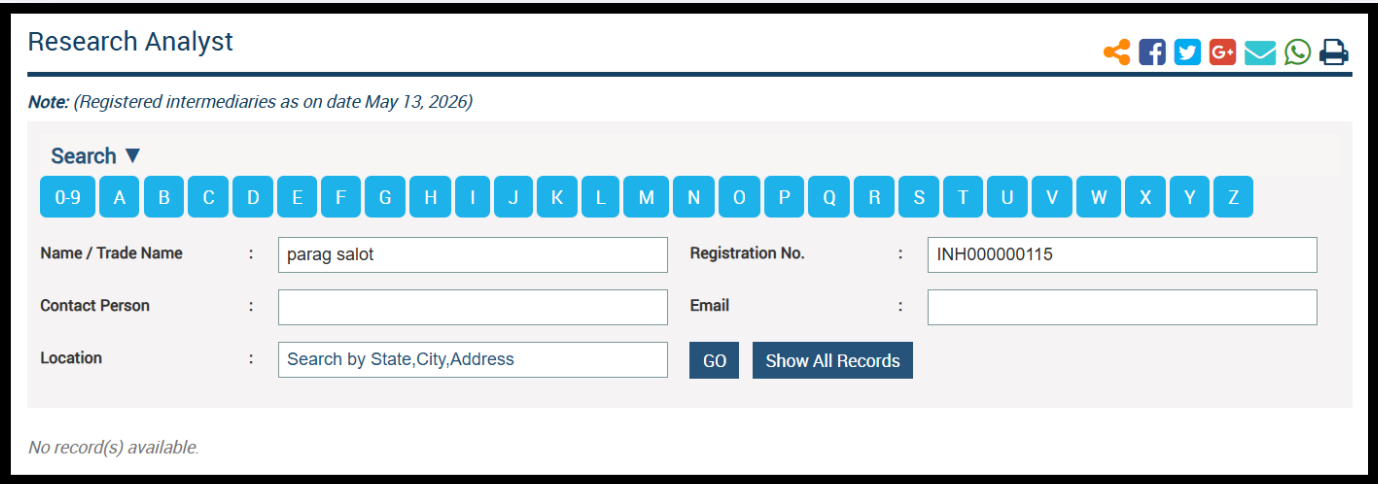 His registration does not appear in the active Research Analyst list that SEBI maintains. That alone should make any investor pause and think carefully before trusting him with money.
Deciding whether you should trust any research analyst requires looking at three things:
- What do the official SEBI records say?
- What regulatory action has been taken against them?
- Were they transparent and compliant in how they conducted their business?
In Parag Salot’s case, SEBI conducted a full inspection and passed not one but two separate regulatory orders against him. Both orders paint a picture that investors need to understand before making any financial decisions.
Parag Salot SEBI Order
SEBI conducted a thematic inspection of Parag Salot research analyst, for the period April 01, 2022, to February 29, 2024. The findings from this inspection led to formal enforcement proceedings and two separate regulatory orders.
Here is a detailed breakdown of both:
Order 1: SEBI Imposes Rs. 17 Lakh Penalty on Parag Salot
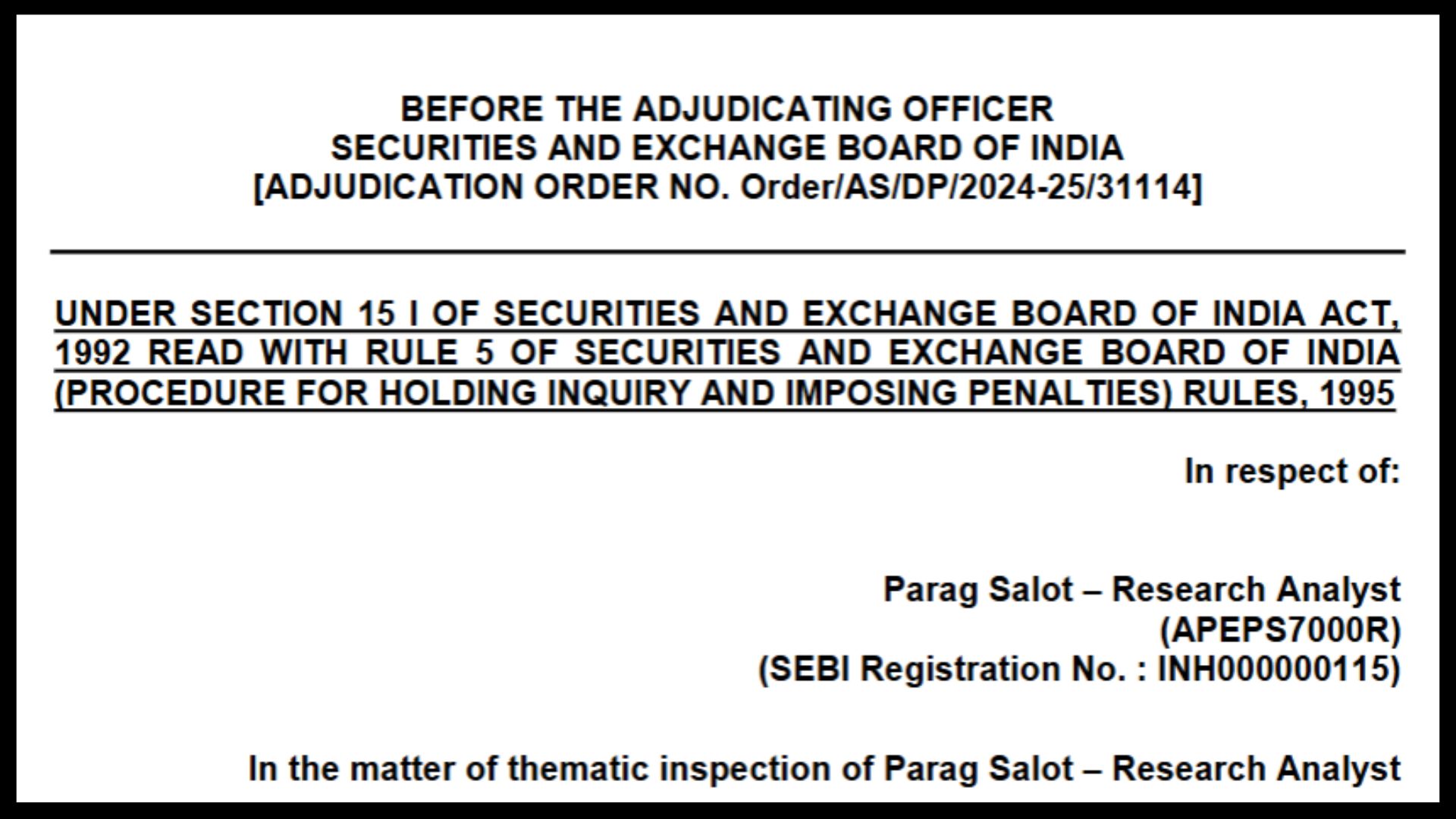
This adjudication order was passed on January 15, 2025. After examining the evidence gathered during the inspection, the Adjudicating Officer found multiple serious violations.
Key Violations by Parag Salot
Penalty Imposed
SEBI imposed a total monetary penalty of Rs. 17,00,000 (Rupees Seventeen Lakh) on Parag Salot under different provisions of the SEBI Act.
Payment was directed within 45 days. The penalty was paid.
Order 2: SEBI Issues Regulatory Censure and Warning on Parag Salot
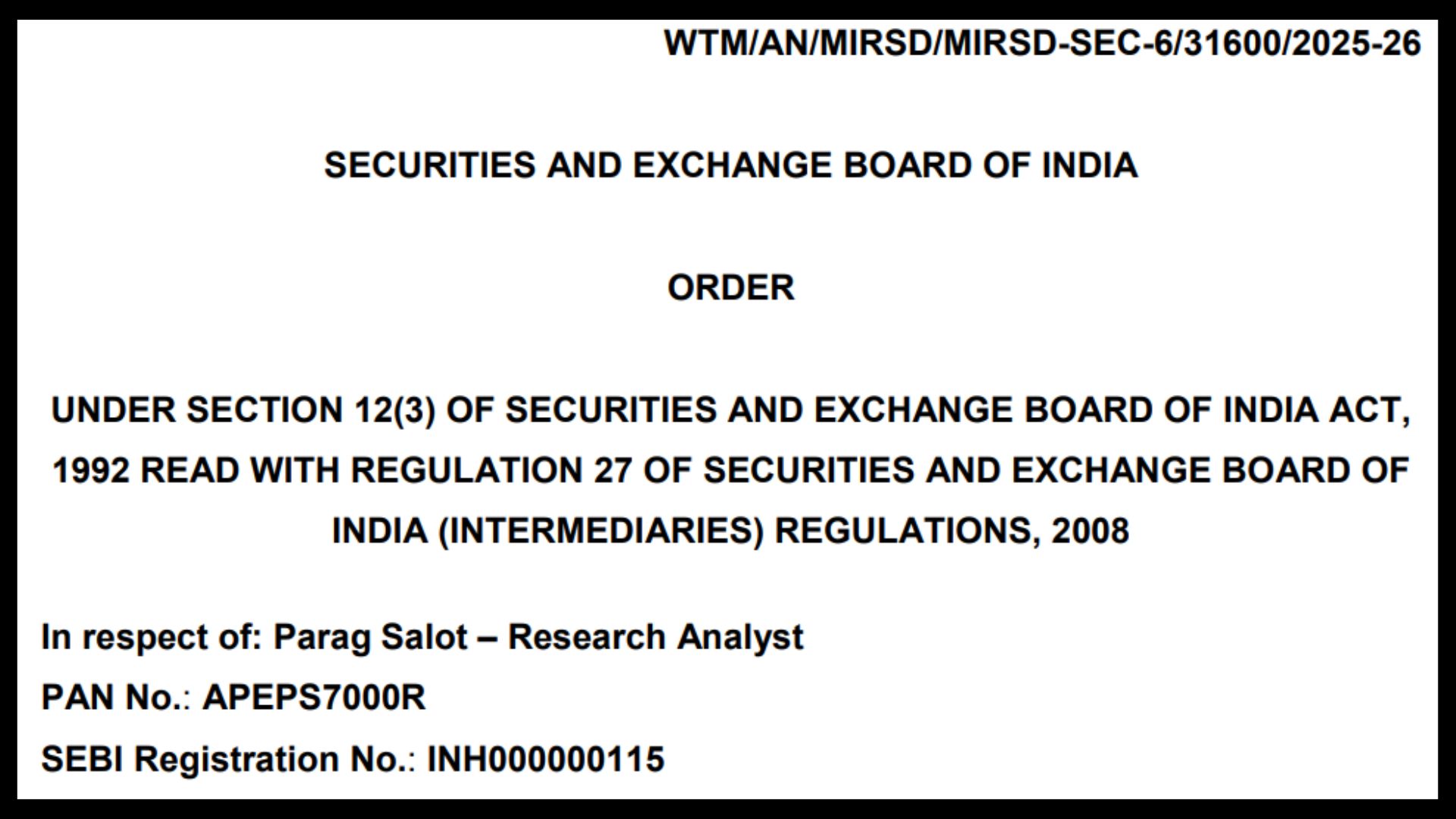
Following the adjudication proceedings, SEBI also ran parallel enquiry proceedings under the SEBI (Intermediaries) Regulations, 2008.
This second order was passed on August 21, 2025, by the Whole Time Member of SEBI.
After examining the Designated Authority’s report and Parag Salot’s detailed submissions, the following violations were upheld:
- Assuring profits to clients through website content and through employee communications.
- Not conducting the mandatory annual compliance audit for FY 2014-15 through FY 2023-24.
- Failing to inform SEBI about the office address change in a timely manner.
- Providing false and incomplete office information to SEBI.
- Not sending the Investor Charter and complaint data to clients, even after the website went inactive.
- Not maintaining records of all email accounts used for RA activities.
- Conducting Research Analyst activities without a valid NISM certification for over five years.
Since the Rs. 17 lakh monetary penalty had already been imposed and paid under the earlier adjudication order, this second order focused on regulatory consequences.
Outcome: SEBI issued a formal regulatory censure against Parag Salot and issued a warning directing him to conduct all future business with greater care and diligence. The order took immediate effect.
What Can Investors Learn From This Case?
The violations found against Parag Salot are not just technical compliance failures. They reflect something deeper, a pattern of conduct where investor perception was managed more carefully than investor interests.
Promising specific rupee profits per trade, calling yourself an Investment Advisor without the required registration, hiding a risk disclaimer in a scrolling ticker while bold profit claims sat on the page as permanent text, these are not coincidences or developer errors.
Here are the key lessons every investor should take away:
- Never rely on a polished website as proof of trustworthiness. Always verify current registration status directly from SEBI’s official portal.
- If a research analyst promises specific profit amounts per trade, treat it as a serious red flag. No registered RA is permitted to do this.
- A SEBI registration number tells you someone is registered. It does not tell you whether their practices, disclosures, and conduct are fully compliant.
- If an entity’s registration no longer appears on SEBI’s active intermediary portal, do not assume it is a technical glitch. Verify directly before trusting.
- Always keep records of your payments, messages, and recommendations. These become critical if a dispute arises later.
- Avoid services that focus more on promised gains than on explaining market risks clearly and honestly.
The most important protection any investor has is their own awareness and the habit of verifying before trusting.
Now, if you have already had a negative experience with Parag Salot or any other research analyst, here is what you can do about it.
How to File a Complaint Against a Research Analyst?
If you believe a research analyst has misled you, made profit assurances, or caused financial harm through improper conduct, you have every right to raise a formal complaint through SEBI’s official channels.
Step 1: Collect All Your Evidence
Start by gathering everything related to your interaction.
This includes payment receipts, WhatsApp or Telegram messages, email communications, screenshots of trading recommendations, promotional material you received, and any call recordings you may have.
The stronger your evidence, the more effective your complaint will be.
Step 2: Verify the Registration Status
Before escalating the matter, check the current registration status of the research analyst on SEBI’s intermediary search portal.
If no records appear, as is the case when searching for Parag Salot today, that information itself becomes important context for your complaint.
Step 3: Raise the Issue Directly to the RA First
Write a formal complaint to the research analyst or their registered grievance officer via email.
Keep a written record of your complaint and their response.
This creates an official trail before you escalate further.
Step 4: File a Complaint with SCORES
SCORES is SEBI’s official investor grievance platform.
You can file a complaint against any SEBI-registered intermediary here and track its status online.
This is the most direct way to bring your grievance to the regulator’s attention.
Step 5: Lodge a Complaint with SMART ODR
If the matter remains unresolved after SCORES, the SMART ODR platform offers a structured online dispute resolution process within the securities market ecosystem for further mediation and conciliation.
Step 6: Stock Market Arbitration
In cases involving significant financial loss, arbitration through NSE or BSE provides a formal resolution mechanism without the delays of court proceedings.
Proper documentation and a clear presentation of evidence are crucial at this stage.
Need Help?
Many investors find the complaint and arbitration process overwhelming, especially when they are unsure which platform applies, how to organise their evidence, or how to present their case effectively.
If you need guidance, register with us. Our team helps investors understand the complaint process, prepare documentation, file on the correct platform, and follow through until the matter is resolved.
Conclusion
The question of whether you can trust Parag Salot does not have a simple yes or no answer anymore. He was a SEBI-registered Research Analyst for nearly a decade.
But the regulatory proceedings brought against him, a Rs. 17 lakh penalty and a formal censure order from SEBI, reveal a sustained pattern of non-compliance that stretched across multiple years and affected multiple areas of investor protection.
From assured profit claims and a falsely labelled Investment Advisor identity, to missing annual audits, an invalid NISM certification for over five years, and incorrect address information on the website, the picture that emerged from SEBI’s inspection was far from the image of a transparent, compliant advisor.
The fact that his registration no longer appears on SEBI’s active intermediary portal today makes the situation even more significant for anyone still considering his services.
Cases like this are a reminder that trust in the financial world should never be based on marketing alone. It must be built on verified facts, clean regulatory records, and a consistent track record of honest conduct.
Before following any market analyst, always verify first.
And if something feels off, check the official records. That habit alone can save you from a great deal of financial and emotional stress.





 Add us as a preferred source on Google »

