

Quick Summary
SEBI’s February 23 2026 enquiry order against Sai Proficient Research Investment Advisory identified five distinct violations: exaggerated accuracy and assured-return claims, payments routed through an unregistered entity, aggressive fee escalation labelled as premium upgrades, missing KYC and risk-profiling records, and unresolved investor complaints on SCORES. SEBI suspended the firm’s registration for one year and separately imposed a ₹19,77,000 monetary penalty.
SEBI Action Against Sai Proficient has gained major attention among retail traders after SEBI investigated the advisory firm’s practices and operations.
Many investors were initially attracted by confident market calls, success-driven branding, and promises of consistent returns.
But as regulatory findings surfaced, concerns started growing rapidly. Let’s find out in this blog what the SEBI action against Sai Proficient is really about.
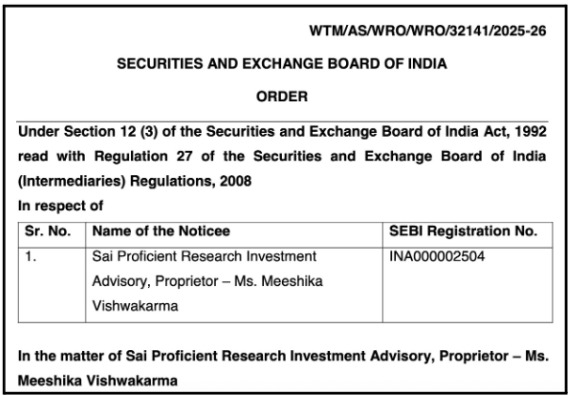
Sai Proficient Research Investment Advisory SEBI Order
According to SEBI’s February 23 2026 enquiry order, the regulator found issues including 85% to 95% accuracy and assured-profit style claims, routing of client payments through an unregistered entity, unresolved investor complaints, missing KYC and risk-profiling records, and misleading promotional practices.
SEBI stated that such practices could create unrealistic expectations for retail investors and violate investment adviser regulations.
Violations by Sai Proficient Research Investment Advisory
The SEBI order discussed several violations that directly impacted investor protection and regulatory transparency.
1. Assured Profit Style Marketing
One of the biggest concerns involved the way advisory services were promoted.
According to the findings, the pattern of misleading investment claims by Sai Proficient included strong promotional language around market success rates and profit potential, including 80% to 95% accuracy-style claims.

Now, realistically, think about how a beginner trader interprets this.
Most people do not read such statements as technical marketing language. They emotionally interpret them as a sign that profits are highly likely if they subscribe.
That is exactly why SEBI considers such communication risky and potentially misleading.
The regulator clearly stated that broad risk disclaimers cannot neutralise aggressive profit-oriented marketing narratives.
2. Payment Collection Through Another Entity
Another major issue involved how client payments were collected.
SEBI found that investor money was routed through a separate entity called Shree Sai Proficient Financial Services, which itself did not hold SEBI registration as an investment adviser.
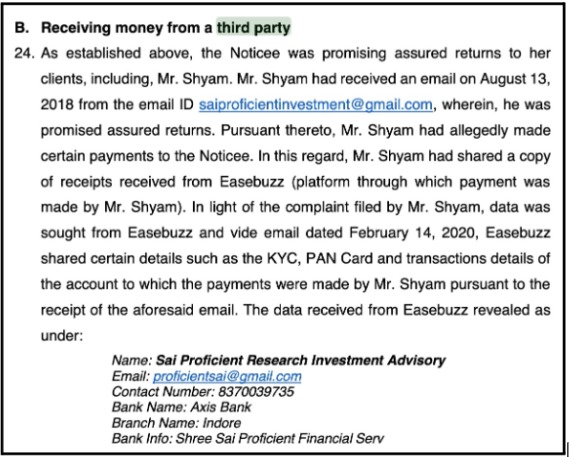
This creates a serious transparency problem.
Because when money flows through unrelated entities, investors may struggle to identify who is officially accountable for the service, compliance obligations, or grievance handling.
According to the order, this structure raised concerns under PFUTP regulations relating to fairness and transparency.
3. Fee Escalation and Upselling Concerns
The order also discussed issues related to advisory fee practices.
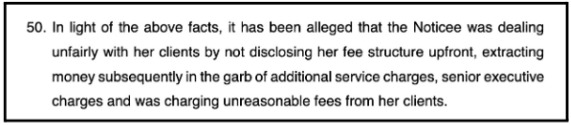
According to SEBI’s findings, some clients were initially onboarded with smaller subscription amounts but later encouraged to purchase expensive upgrades, premium recovery services, or advanced plans.
Psychologically, this is where many traders become vulnerable. Once someone has already suffered losses, they are emotionally more likely to spend additional money hoping to recover faster.
And that creates a dangerous cycle of dependency between traders and advisory ecosystems.
4. Failure in KYC and Risk Profiling Compliance
The investigation also identified failures related to mandatory client documentation.
SEBI observed that proper KYC records, risk profiling data, and suitability assessments were either missing or inadequately maintained.
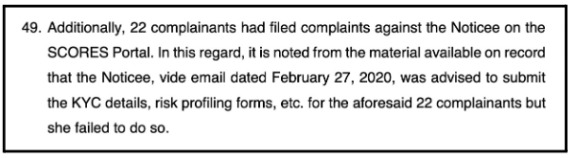
The adviser reportedly cited technical problems and server-related issues for missing records.
However, SEBI rejected those explanations and emphasised that regulated entities are expected to maintain proper compliance systems regardless of operational challenges.
Ultimately, compliance systems exist to protect investors when disputes arise.
5. Investor Complaint Handling Issues
Another important concern involved unresolved investor grievances.
According to the order, several complaints on the SEBI SCORES platform remained unresolved for long periods. This matters because grievance redressal is one of the most important responsibilities of any regulated financial intermediary.
The pattern seen in Sai Proficient complaints reaching SEBI’s SCORES portal was itself a key factor that contributed to the regulatory scrutiny the firm eventually faced.
If investors cannot receive timely responses after facing issues, confidence in the advisory ecosystem itself starts collapsing. That is why SEBI treats complaint-handling failures very seriously.
Penalty on Sai Proficient Research Investment Advisory
After reviewing the violations, SEBI imposed strict regulatory consequences on Sai Proficient and Meeshika Vishwakarma.
The actions included both financial penalties and registration-level restrictions.
| Monetary Penalty | ₹19 lakh imposed |
| Registration Action | One-year suspension |
| Operational Restriction | No onboarding of new clients during suspension |
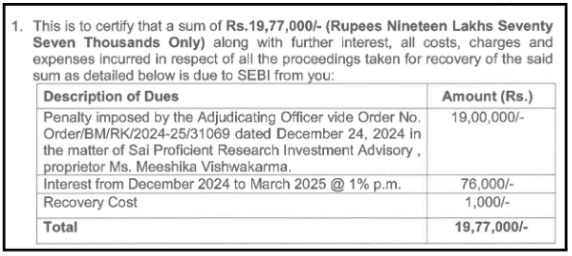
The suspension itself became one of the strongest parts of the SEBI action because it directly restricted future advisory operations.
For many market participants, this case highlighted how regulatory action is increasingly moving beyond small penalties toward stricter operational restrictions.
Did SEBI’s findings match something you personally experienced with this firm?
Our team will help you organise evidence, prepare structured complaints, and understand SEBI SCORES procedures.
What Retail Traders Can Learn From This Case?
The Sai Proficient case offers several important lessons for beginners entering the trading and advisory ecosystem.
1. Marketing Confidence Is Not the Same as Credibility
Many advisory businesses appear highly professional online.
But traders should always remember that social media branding, testimonials, and confident communication do not automatically prove transparency or ethical practices.
2. Never Make Decisions Emotionally After Losses
A trader who is already under financial pressure becomes emotionally vulnerable. That is often when expensive premium recovery plans start sounding attractive.
But emotional decision-making in the stock market usually increases risk even further.
3. Always Verify Where Your Money Is Going
Before making payments to any advisory service, investors should carefully check:
- Who is receiving the money?
- Whether the entity is SEBI-registered.
- Whether invoices and agreements match official registration details.
Small verification steps can prevent much bigger problems later.
4. Complaints and Compliance Matter More Than Marketing
A genuinely professional intermediary focuses heavily on compliance systems, grievance handling, and proper documentation.
Those operational processes matter far more than flashy screenshots or aggressive sales communication.
How to File a Complaint Against an Investment Advisor?
Which authority can actually act on your complaint depends on the entity’s current registration status, not just what it was when you first paid.
Sai Proficient’s registration stands suspended at present, so both scenarios below are worth understanding before you pick a path.
While Dealing With an Actively Registered Entity
Preserve your evidence first. Payment proofs, chats, emails, promotional screenshots, and call recordings become essential once a formal complaint is filed.
Approach the advisory firm directly before escalating, laying out exactly what service was purchased and what went wrong.
A formal grievance gets officially logged through the SEBI SCORES complaint portal once the firm fails to respond satisfactorily.
The SMART ODR portal steps in next, offering structured mediation if SCORES alone doesn’t settle things.
Share market arbitration remains available as the binding, final route for losses that stay unresolved through both earlier stages.
While Dealing With a Suspended or Unregistered Entity
A SCORES filing against a currently suspended registration doesn’t carry the same regulatory pull it would against an active one.
Reporting through the cyber crime portal becomes the stronger option here, with your acknowledgement number acting as your official reference going forward.
Your local police station is obligated to register an FIR under Section 154 CrPC, whether or not a specialised cyber cell exists nearby.
Alerting your bank without delay raises the odds of tracing or freezing any payment that’s still traceable.
A direct written email to SEBI flagging the individual and registration number ensures the case stays visible on record, useful if the same name resurfaces under a future licence application.
Conclusion
The SEBI action against Sai Proficient became an important case study in how regulatory scrutiny is evolving within India’s advisory ecosystem.
According to SEBI’s findings, the matter involved issues related to promotional practices, payment transparency, compliance systems, grievance handling, and investor protection standards.
But beyond regulations, the case teaches one practical lesson every trader should remember: in the stock market, a penny saved is a penny earned.
So, protect your capital and do not trust bold promises, emotional marketing, or aggressive profit narratives.
Because ultimately, disciplined decision-making will always matter more than attractive claims.
Report. Recover. Stay Fraud Free.
Frequently Asked Questions
Five violations: exaggerated accuracy claims, payments routed through an unregistered entity, aggressive fee escalation, missing compliance documentation, and unresolved investor complaints.
A one-year registration suspension plus a separate ₹19,77,000 monetary penalty, with a restriction on onboarding new clients during the suspension period.
That entity was not SEBI-registered as an investment adviser, meaning client money moved through a channel outside the regulated structure investors believed they were dealing with.
Yes, SEBI's order references named client cases involving large fee payments tied to promised profit figures. The full detail is on the Sai Proficient complaints page on this site.





 Add us as a preferred source on Google »

