

Quick Summary
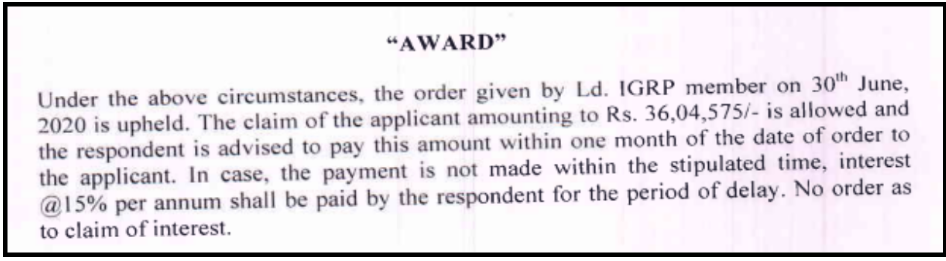
An NSE tribunal directed IIFL Securities to pay a client ₹36,04,575 after the broker squared off his hedged position on a volatile market day, even though he had already wired ₹20 lakh in margin that morning and shared the transfer proof, which the relationship manager had confirmed. The tribunal held that closing the position while ignoring the fund transfer was against natural justice. This page explains where the line sits between a lawful square-off and a wrongful one, and how the client recovered.
Brokers are allowed to square off your position if you fall short on margin. That part is normal; it is in the rules, and it protects everyone.
What is not normal is doing it after you have already paid, or after being assured your position was safe. There is a line between a lawful margin square-off under the RMS policy of stock broker firms and a wrongful one, and IIFL crossed it in more than one reviewed case.
The clearest example is also the largest award in the whole IIFL set, so it is worth walking through in full.
When a Square-Off Crosses the Line
The morning began with a margin call. On a highly volatile day, with the market hitting a lower circuit and halting for around 45 minutes, the client received an SMS at 9:32 asking him to top up his margin. He acted at once and wired ₹20 lakh by instant transfer, then sent the transfer reference to his relationship manager, who confirmed receipt.
Having paid, he reasonably believed his hedged position was safe. It was not. At 10:22, before the transfer was formally credited in the broker’s books at 10:30 and 11:30, the risk team squared off part of his position, booking a loss of over ₹36 lakh. Other hedged positions were left untouched.
His point was simple and powerful. He had done everything a diligent client could do. He had paid on demand, immediately, and proven it. Anyone in his position would have done the same.
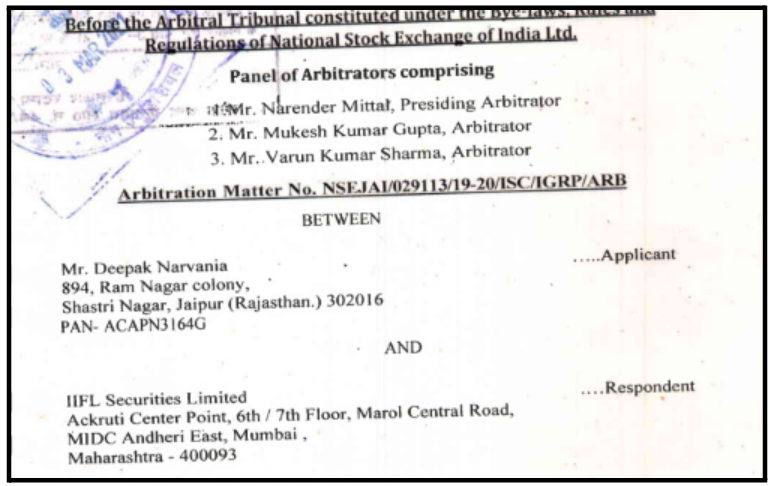
Why the NSE Tribunal Found IIFL Responsible?
The tribunal focused on the sequence of events, and the sequence was damning.
The client had wired the funds and shared the transfer reference before the square-off. The relationship manager had confirmed receiving it. Yet the risk team closed the position without waiting for the credit and without giving weight to the proof of payment already in the broker’s hands.
The tribunal noted that the transfer reference is itself proof of debit from the client’s account, and that had he paid by cheque instead, it would have taken two full days to clear. He had chosen the fastest possible route and still been squared off.
The tribunal’s conclusion was blunt. Closing the position while ignoring the fund transfer the client had made and proven was done in haste and was unjust. It amounted to a denial of natural justice. IIFL was held liable for the loss and directed to pay ₹36,04,575.
A Similar Case with Different Size
The reasoning that won that case also won a second square-off dispute, at a smaller amount but on an even more direct point.
There, a client held a put option he had deliberately bought with a later expiry, giving himself several trading sessions. When a margin shortfall was flagged, he contacted his relationship manager and said clearly that he would provide funds after business hours and did not want his position squared off. The relationship manager assured him she would take care of it. The position was squared off anyway, with no intimation, causing a loss of over ₹4.6 lakh.
The tribunal, and then the appeal panel, held that the broker had squared off despite the client’s clear, expressed instruction and the relationship manager’s assurance. In financial market transactions, the tribunal said, the consent of the client is a mandate that cannot be bypassed without a reasonable opportunity to respond. It awarded ₹4,61,280, and the appeal confirmed it.
The thread across both is consistent. A broker’s right to square off is not unlimited. It cannot override proof of payment already made, and it cannot override a clear instruction backed by the relationship manager’s own assurance. Do either, and the square-off becomes challengeable.
What to Do If Your Position Was Squared Off?
A forced square-off is challengeable when the broker acted after you paid, or against an assurance, or without reasonable time to respond. The case turns on the timeline, so protect it.
Pull these together now:
- Every SMS and email about the margin shortfall, with exact timestamps
- Proof of any funds you transferred, especially the transfer reference number and time
- The timestamp of the square-off itself, from your contract note
- Any message or record of an assurance from your relationship manager
- Your own record of when you paid versus when the position was closed
The comparison that wins it: line up the moment you paid, or were assured, against the moment your position was closed. In the ₹36 lakh case, the client had paid and proven it before the square-off. In the ₹4.6 lakh case, he had a clear assurance. Both gaps are exactly what tribunals have acted on.
Keep the transfer reference. It is proof of debit from your account the instant you send it, and in the biggest win, it was central. If you pay a margin call, save that reference and the time you sent it.
If your complaint has not yet been escalated, our guide on filing a complaint against IIFL Securities sets out the route up to the arbitration stage.
Did IIFL close your position after you had already paid or been assured it was safe?
We map the payment and the assurance against the square-off timestamp, and build the claim on the exact gap tribunals have treated as a denial of natural justice. Register with us to get our support.
Do You Have a Valid Wrongful Square-Off Case?
Here is the honest split, because not every square-off is wrongful.
If the broker gave clear, timely notice, you did not pay in time, and there was no assurance to rely on, the square-off will probably stand even if it hurt. Where you have room is the opposite: you paid and can prove it, or you were assured, and the assurance was broken, or the closure came with no reasonable chance to react.
The amounts vary widely, from ₹4.6 lakh to over ₹36 lakh, because they track the size of the position closed. But the principle is constant, and when the broker acted against your payment or your instruction, the claim is strong.
Conclusion
The ₹36 lakh award drew the line in the clearest terms. A broker can square off for a genuine shortfall, but not after the client has paid the margin and proven it.
The ₹4.6 lakh award drew it from another angle: not after the client gave a clear instruction and the relationship manager assured him it would be honoured.
If your position was closed after you paid, or against an assurance, or with no fair chance to respond, that square-off may be worth challenging.
Report. Recover. Stay Fraud Free.
Frequently Asked Questions
Not without accounting for the payment. In the reviewed case, the client had wired ₹20 lakh and shared the transfer reference, which the relationship manager confirmed, before the broker squared off his position. The tribunal held that ignoring the proven payment was against natural justice and awarded ₹36,04,575.
In one case the broker closed the position after the client had paid and proven it, ignoring the transfer reference already in its hands. In another, it closed the position despite the client's clear instruction not to and the relationship manager's assurance. Both were held to breach the client's consent.
The larger reviewed award was ₹36,04,575 for squaring off after the client paid ₹20 lakh in margin. A separate case awarded ₹4,61,280 for squaring off against the client's instruction and the relationship manager's assurance.
The tribunal treated the transfer reference as proof of debit from the client's account the moment it was sent, faster and more immediate than a cheque, which would take days to clear. Because the client had paid and proven it before the square-off, the broker had no justification for closing the position.





 Add us as a preferred source on Google »

