
Quick Summary
We reviewed the NSE arbitration awards involving Sharekhan Limited from 2021 to 2023, drawn from 21 arbitrations filed over that period. In five awards the tribunal directed Sharekhan to compensate the client, ranging from ₹15,984 to ₹17,11,579, plus one order to replenish shares outright. Most of the wins share a single cause: an authorised person traded in the client’s account without permission, and Sharekhan could not produce the recordings or authorisations that would have proved otherwise. This page sets out the numbers and what separated the winning claims from the rest.
If you have ever stared at your trading statement and felt your stomach drop, you already know that helpless feeling. You are not alone, and your losses are not something you have to accept quietly.
Across dozens of Sharekhan arbitration cases filed between 2021 and 2023, real clients pushed back and actually won their money back.
Read on this blog, because the numbers below might change how you see your own situation.
Why Sharekhan Arbitration Cases And Awards Deserve Your Attention?
Arbitration is not another complaint form that disappears into a support queue. It is a neutral tribunal that hears your dispute and passes an award the broker has to honour.
That distinction matters more than most investors realise until they need it.
Sharekhan runs a large network of authorised persons, the local representatives who deal with clients directly and often place trades for them. That model feels convenient at first, and it is also where nearly every dispute in this set began.
When an authorised person acted beyond what you actually wanted, the loss landed on your account, and the grievance desk rarely fixed it on its own.
So the cases that went all the way to an award deserve your full attention. Let us walk through what they actually paid out.
Sharekhan Arbitration Cases: The Numbers That Matter
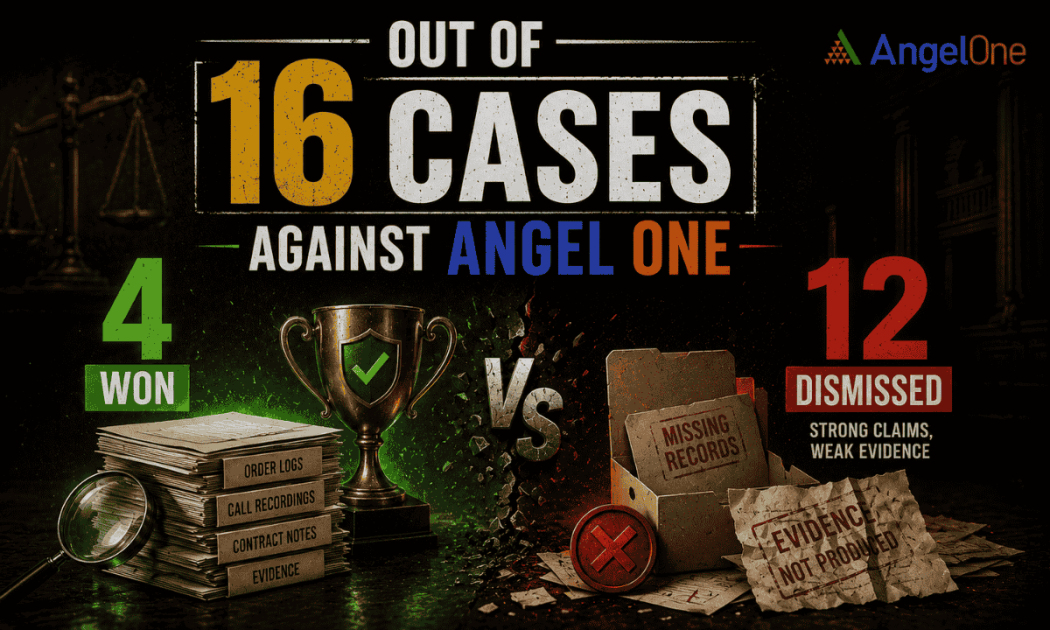
Between 2021 and 2023, 21 arbitration cases were filed. Of those, six reached a final award. In five of those six cases, the tribunal ruled in favour of the investor, while only one award went to the broker.
Here is the shape of the reviewed set, laid out simply for you.
| Awards | Cases |
| Arbitrations filed (2021 to 2023) | 21 |
| Awards granted | 6 |
| Of those, awards to the client | 5 |
| Awards to the broker | 1 |
The reasons investors won may also sound familiar. They included excess charges, unauthorised trades, shares sold without permission, and wrongful square-offs. If your experience is similar to other Sharekhan complaints, the cases below show how such disputes have been decided.
The five client wins, and what each one was about:
| Year | What went wrong | Awarded |
| 2023 | Unauthorised F&O trades by an authorised person | ₹17,11,579 + 9% interest |
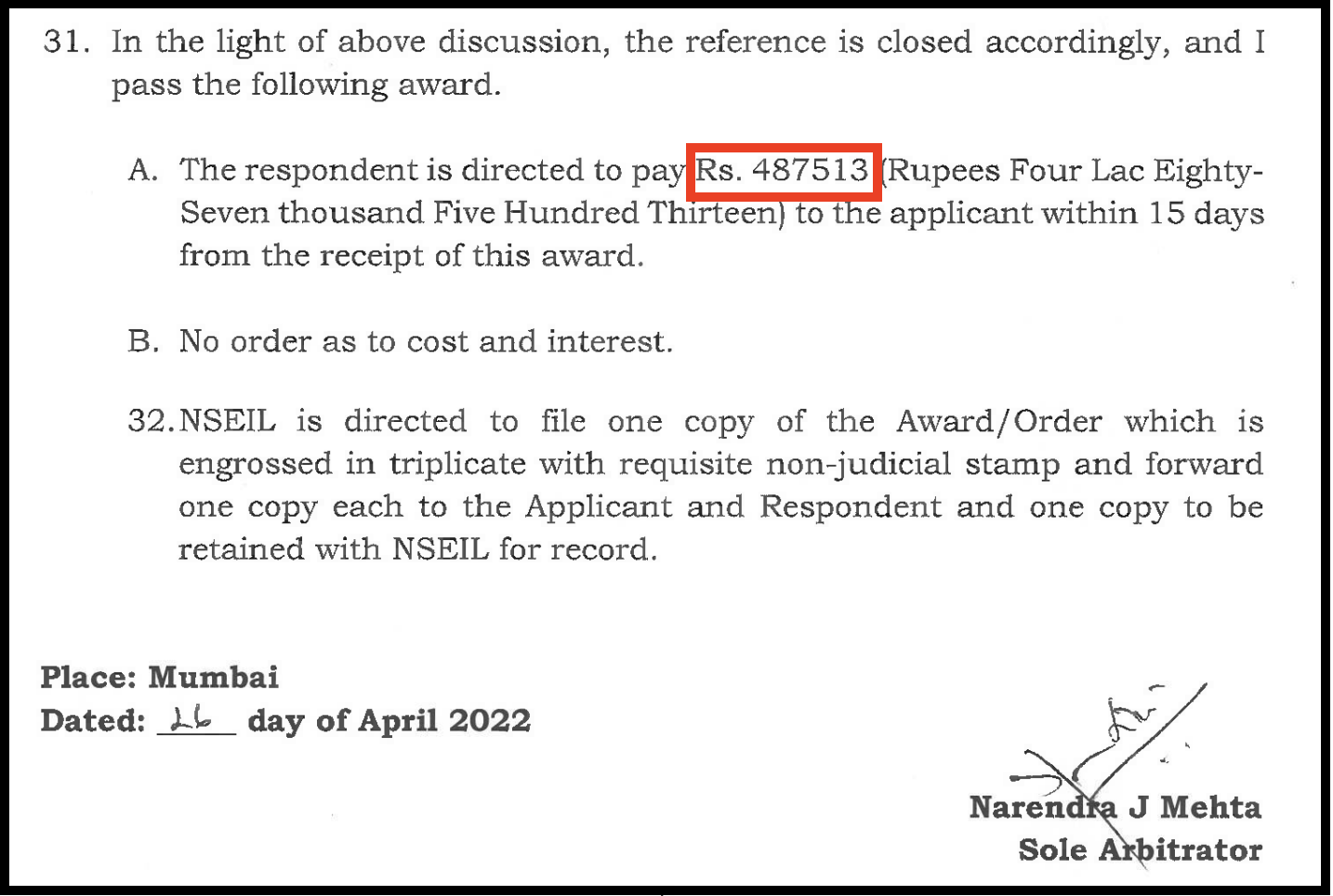
| 2022 | Excess brokerage after a dormant account was reactivated | ₹4,87,513 |
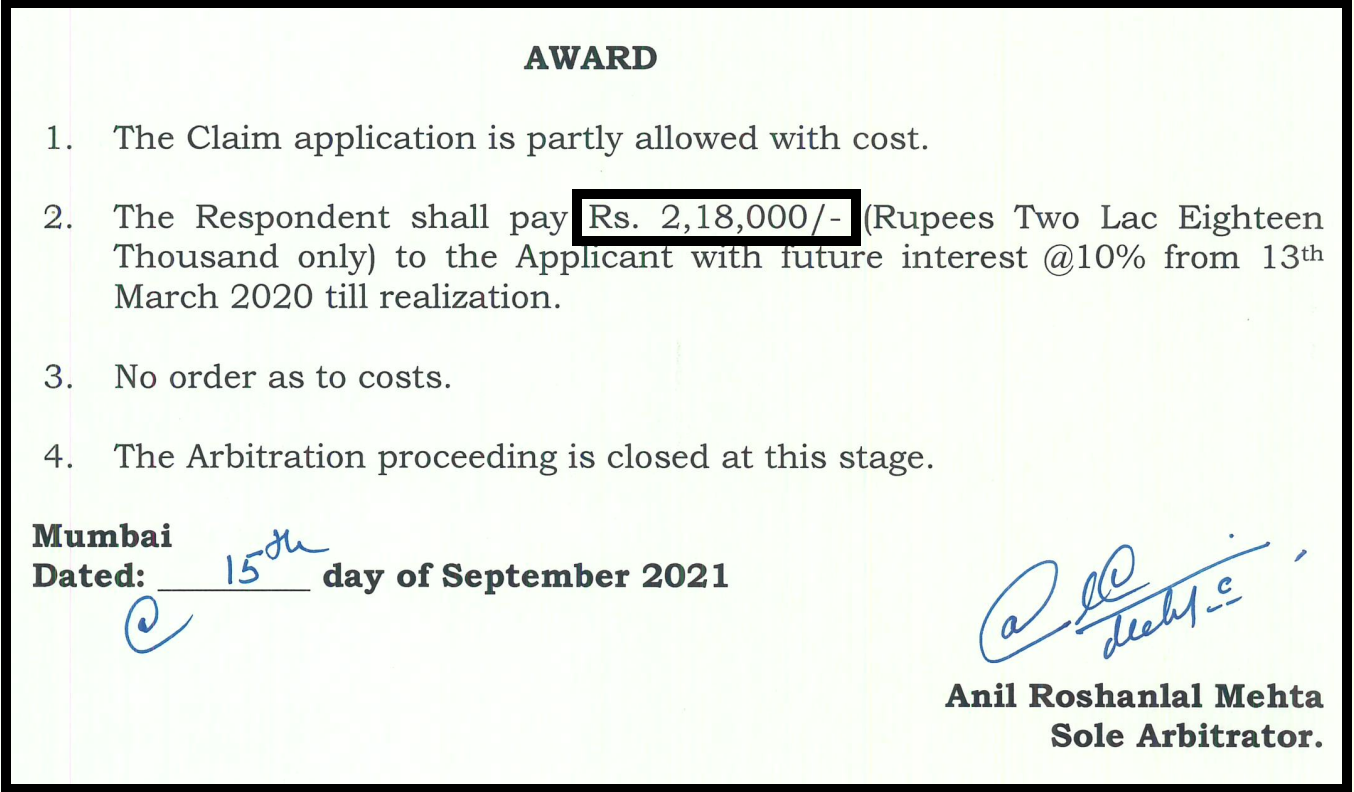
| 2021 | Shares sold by an authorised person without consent | ₹2,18,000 + 10% interest |
| 2021 | Square-off when no dues were outstanding | Shares replenished with corporate benefits |
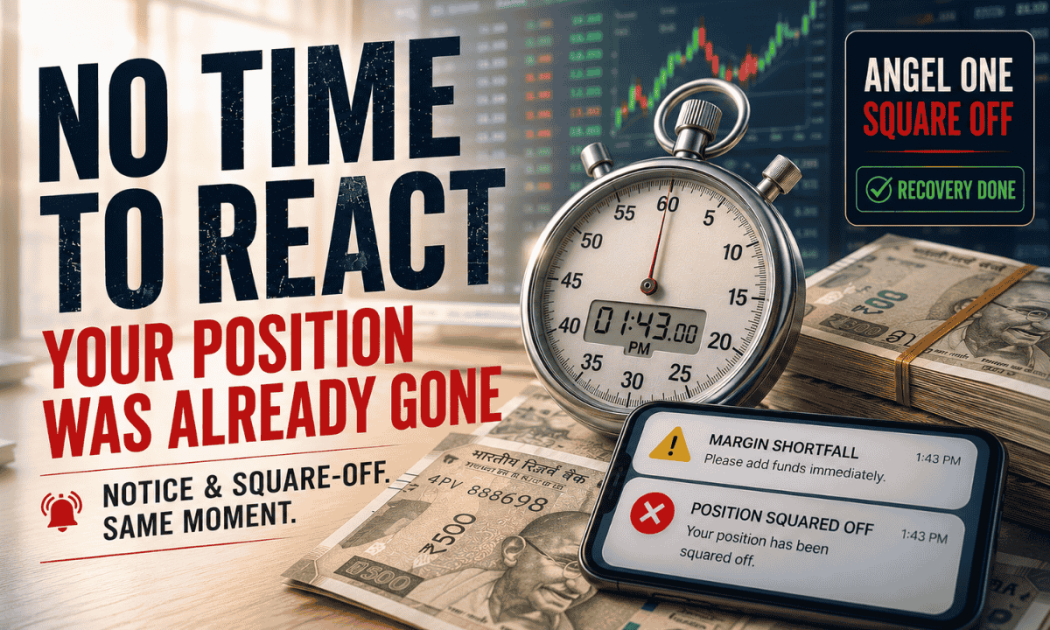
| 2021 | Square-off with same-day notice | ₹15,984 |
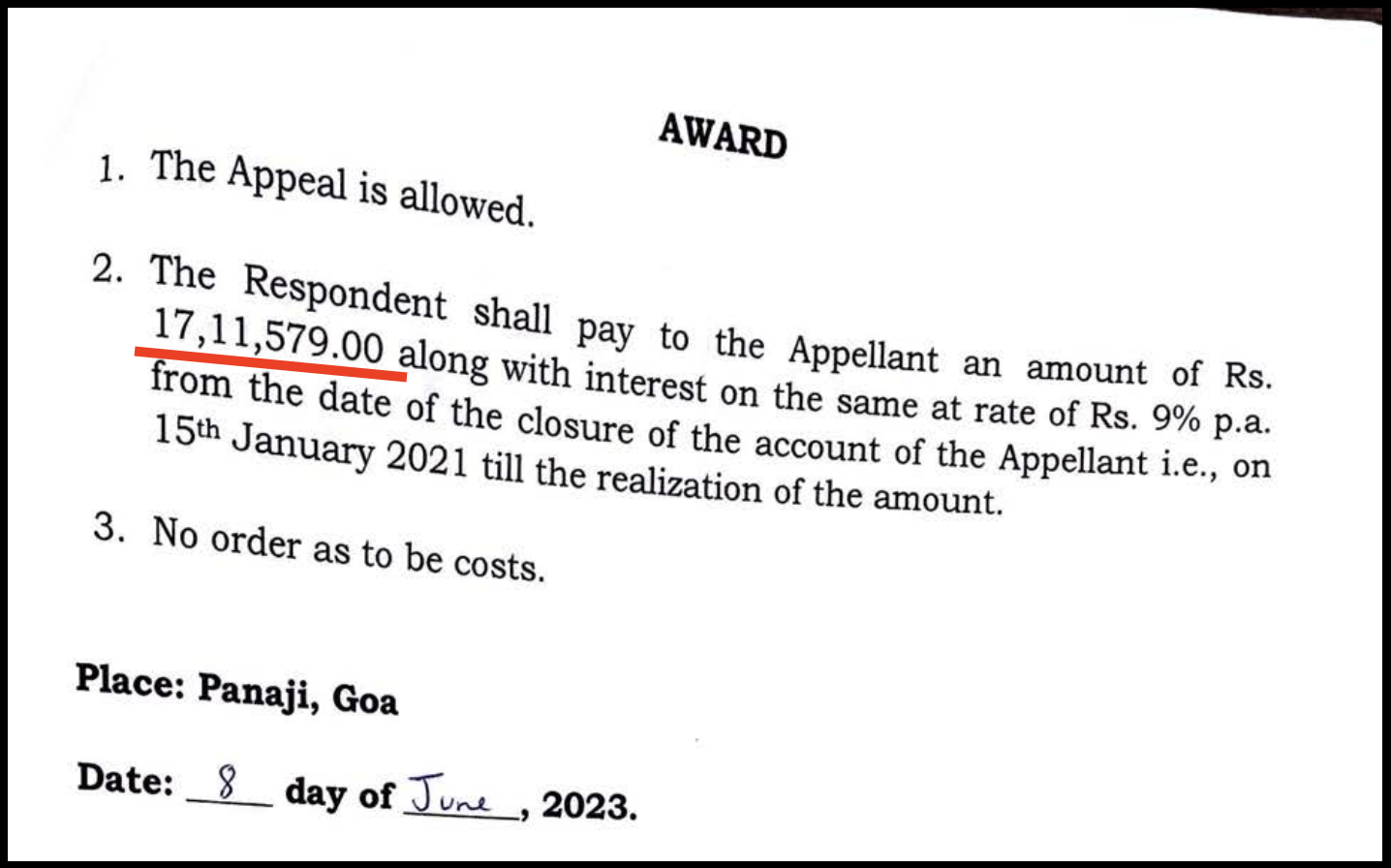
Check out the complete details of the Sharekhan unauthorised trading arbitration case and report yours now.
Five clients recovered, and the largest walked away with over seventeen lakh rupees. The real question worth asking is what those five actually did differently.
What Actually Decides Sharekhan Arbitration Cases?
Read the five wins together, and one thread runs through nearly all of them. Sharekhan could not produce the evidence that would have shown you authorised what happened.
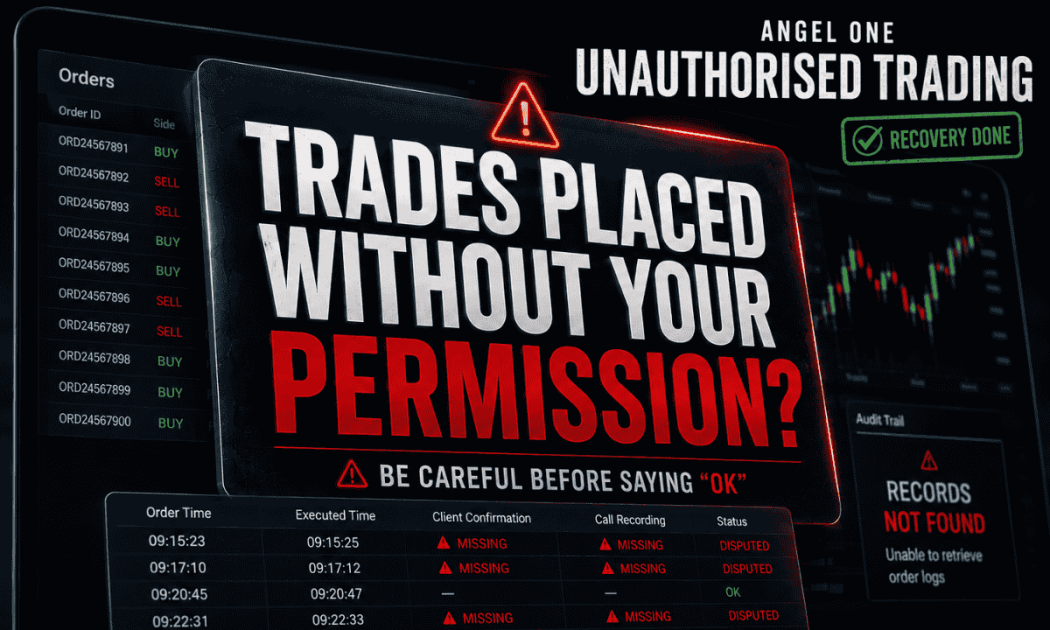
In the biggest win, an authorised person ran hundreds of derivative trades in a senior citizen’s account while she was travelling abroad with her phone switched off. When the tribunal asked for pre-trade authorisation, the broker admitted it had no voice-call recording arrangement and could not produce a single record showing she placed those orders.
In another case, the tribunal found that the transcript submitted by Sharekhan had been edited. The actual recording showed the client repeatedly asking to close her position while the representative kept persuading her not to.
Across these wins, the same pattern appeared:
- No valid proof of your authorisation.
- Missing or unreliable call recordings.
- The broker’s own records failed to support its case.
Claims rarely fail because the grievance is not real. They fail because the grievance is not proved. That gap between having a complaint and proving it is where many investors lose.
Do you think you have a case but don’t know if the evidence is enough?
The right documents can change the outcome.
Register with us for a free consultation today.
When the Brokerage Itself Becomes the Dispute
One win had nothing to do with unauthorised trades at all. It is worth knowing about because a similar situation could affect you too, especially if you are returning to the market after a long break.
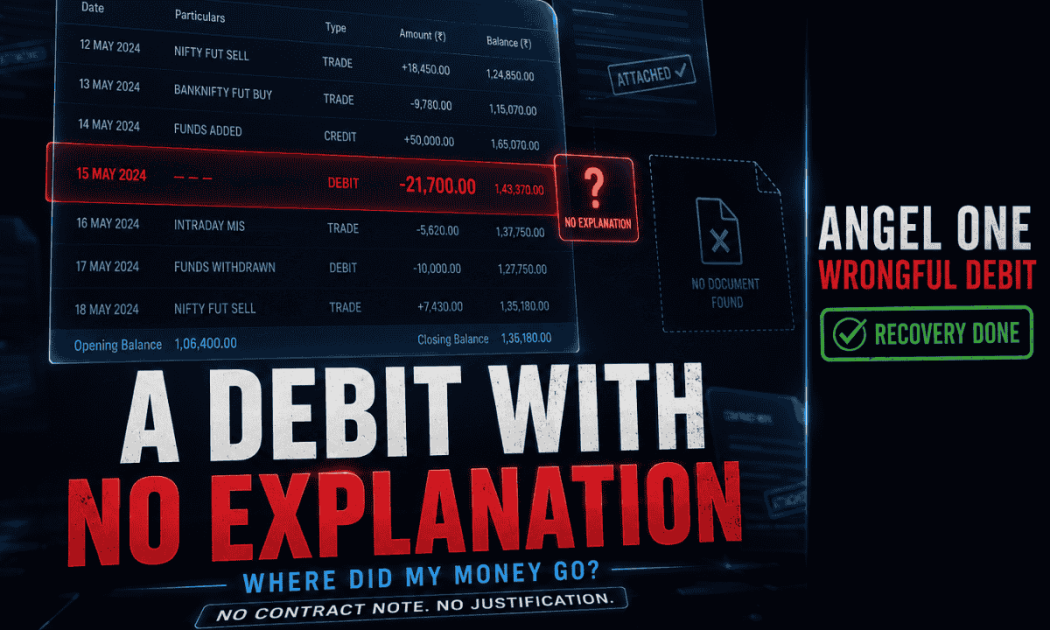
A client had traded through Sharekhan since 2007 under an agreed brokerage tariff. She stopped trading in 2012 and only resumed again in May 2021. She was charged the broker’s default rates rather than her agreed ones, resulting in Sharekhan excess brokerage charges.
By the time she noticed in September, the difference had reached nearly 5 lakh rupees.
The tribunal found that under an NSE circular, dormant accounts need special handling. An account with no trades for twelve months must be flagged as inactive. The client must then go through fresh due diligence and updated documentation. Only after that process is complete should trading resume normally again.
Sharekhan had done none of that required groundwork beforehand. The tribunal also noticed something else worth mentioning here. The broker’s defence contradicted what it had told the grievance committee earlier. Its explanation blaming the pandemic did not fit either. The circular actually predated the pandemic entirely, undermining that argument completely.
The claim was allowed in full, totalling ₹4,87,513 for the client.
Sharekhan has also drawn regulatory attention to the supervision question underlying most of these disputes. Our coverage of the SEBI penalty on Sharekhan sets out a ₹4 lakh order concerning its authorised persons operating from unregistered locations.
How Sharekhan Arbitration Cases Actually Reach a Tribunal?
Arbitration is never the first step you take in this process. It is the stage that follows once your complaint has already failed elsewhere.
If you are wondering “how can I raise my complaint in Sharekhan,” the path usually runs like this for most investors:
- You complain directly to the broker about what happened.
- If that goes nowhere, the exchange grievance cell steps in.
- It refers your case to the Investor Grievance Redressal Committee for conciliation talks.
- Only if that also fails do you move toward filing for arbitration.
- A tribunal then hears the full dispute and passes a binding award.
Do not give up after an early rejection. In one case, the investor lost at the grievance stage and on appeal, but a three-member appellate tribunal later awarded the full claim. The right evidence can change the outcome.
An early rejection is often just the point where your case had not yet been built properly.
Conclusion
Across the awards reviewed, five Sharekhan clients recovered amounts from ₹15,984 to over ₹17 lakh. One of them even had her shares restored outright by the tribunal.
None of those five wins came down to plain luck. They came down to whether the broker could produce the recordings, the authorisations, and the notices it was legally required to hold. It also came down to whether the client built the case properly to demand them.
If you lost money with Sharekhan and your complaint hit a wall, arbitration is the stage where it can still become a real payment. What decides the outcome is how carefully your claim gets put together.
Report. Recover. Stay Fraud Free.
Frequently Asked Questions
In the reviewed set of six awards from 2021 to 2023, tribunals directed Sharekhan to compensate the client in five, with one going to the broker. These awards came from 21 arbitrations filed over the period, and the figures reflect awards published as of this review.
The reviewed wins ranged from ₹15,984 to ₹17,11,579, several with interest of 9 to 10 percent. In one case the tribunal ordered the client's shares to be replenished along with all dividends, splits and bonuses since the wrongful sale, rather than paying a cash amount.
Yes. In the largest reviewed award, the appellate tribunal held the broker vicariously liable for trades its authorised person executed without the client's consent, noting the broker had no control over that representative and had failed to keep the records regulations require.
Yes. In the reviewed case the grievance committee awarded 50 percent, a sole arbitrator then set that aside completely, and the appellate tribunal finally awarded the client her full loss, holding there was no fault on her side to justify splitting it.

 Add us as a preferred source on Google »

