
Quick Summary
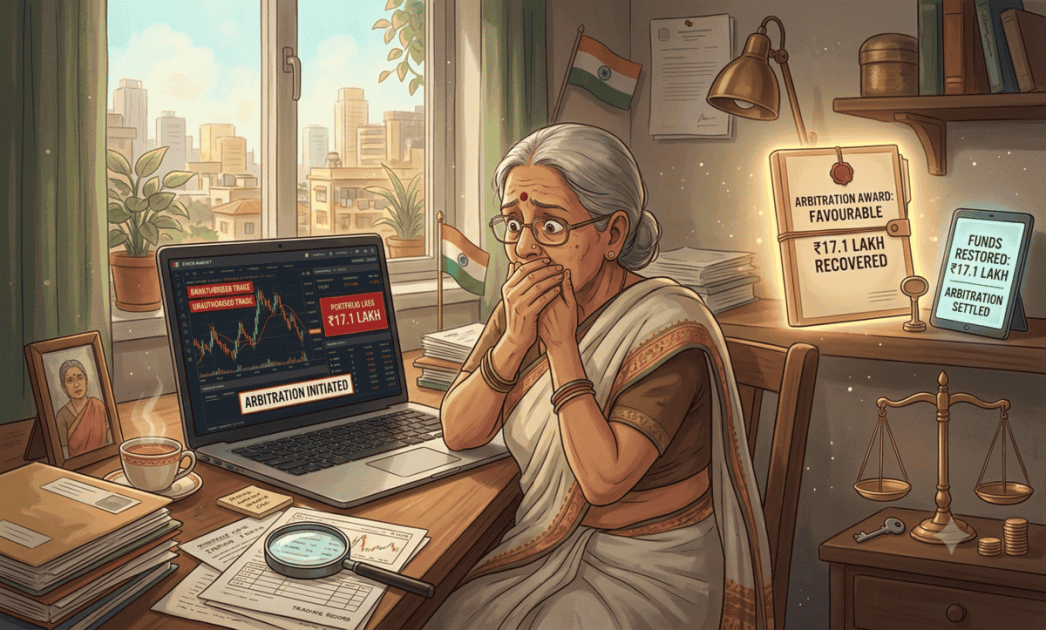
An NSE appellate tribunal directed Sharekhan to pay a senior citizen ₹17,11,579 plus 9% interest after its authorised person ran hundreds of derivative trades in her account, including during three weeks when she was travelling abroad with her phone switched off. The representative had signed a bond admitting the trades were unauthorised. Sharekhan was later found to have no voice recording arrangement at all, and could not produce a single pre-trade authorisation. She had been knocked back twice before she won. This page explains how.
Imagine checking your account and finding trades you never placed, running into lakhs, while you were simply away and unreachable.
That fear sits behind every Sharekhan unauthorised trading arbitration claim we come across. One woman lived through exactly that, fought back twice after losing, and finally recovered her full amount.
Her story shows what actually works.
What Sharekhan Unauthorised Trading Arbitration Actually Involves
Unauthorised trading is simple to describe and brutal to live through. Trades appear in your account that you never placed and never approved.
With Sharekhan, nearly every reviewed dispute of this kind followed the same route. Not a faceless system, but a local representative the client knew and trusted, placing trades that went far beyond anything the client had agreed to. The broker’s defence in each case was that the client had received contract notes and messages afterwards and should have objected sooner.
The tribunals took a different view, and one case shows exactly why.
The Case That Set the Ceiling
One of the key Sharekhan arbitration awards involved a senior citizen who opened an account in September 2019 and dealt through the broker’s authorised person. Over the following months, hundreds of derivative trades ran through her account.
She was not a derivatives trader and did not follow what was happening. She received contract notes and messages but, as she told the tribunal, did not understand what they meant, and the representative assured her they were not relevant to her portfolio.
Between October and November 2019 she travelled abroad, without using her phone or receiving messages. Trades continued in her account throughout that entire stretch.
By March 2020 the portfolio was gone, and she was in debit. Her total loss came to ₹24,16,579.
What happened next is unusual and important: The authorised person signed an indemnity bond admitting the trades were unauthorised, and handed over cheques totalling ₹18 lakh. Six lakh cleared. The rest bounced, and the client had to file a cheque-bouncing case.
Sharekhan itself later terminated that representative for misconduct.
Why Sharekhan Lost This Arbitration?
The reasoning is worth knowing in detail, because it defeats the defence brokers rely on most.
SEBI’s circular of 22 March 2018 requires brokers to keep proof that the client placed the order before executing any trade. When a client disputes a trade, the broker must produce that evidence. Brokers can use post-trade confirmations, contract notes, or messages only in exceptional cases like technical failures. They must also explain why they could not provide proof of the original order.
Sharekhan produced nothing. In the grievance proceedings, it had submitted that it had no arrangement for voice call recording and no pre-trade confirmation for the large number of derivative trades in the account. What it had were contract notes sent after the event.
The appellate tribunal held that this was fatal. The primary duty sits with the trading member to preserve evidence that the client placed the order before it gets executed. Where the broker cannot show that, contract notes sent afterwards do not fill the gap left behind.
On the authorised person, the tribunal was equally direct. The evidence showed the broker had no control over its representative, who was trading in the client’s account without following the circular or the exchange regulations, and the broker was vicariously liable for what she did.
There was one more finding, and it matters for anyone offered a partial settlement. The grievance committee had awarded the client 50 percent of her loss, treating her as equally responsible. The appellate tribunal disagreed, holding there was no fault on her part in the trading that caused the losses.
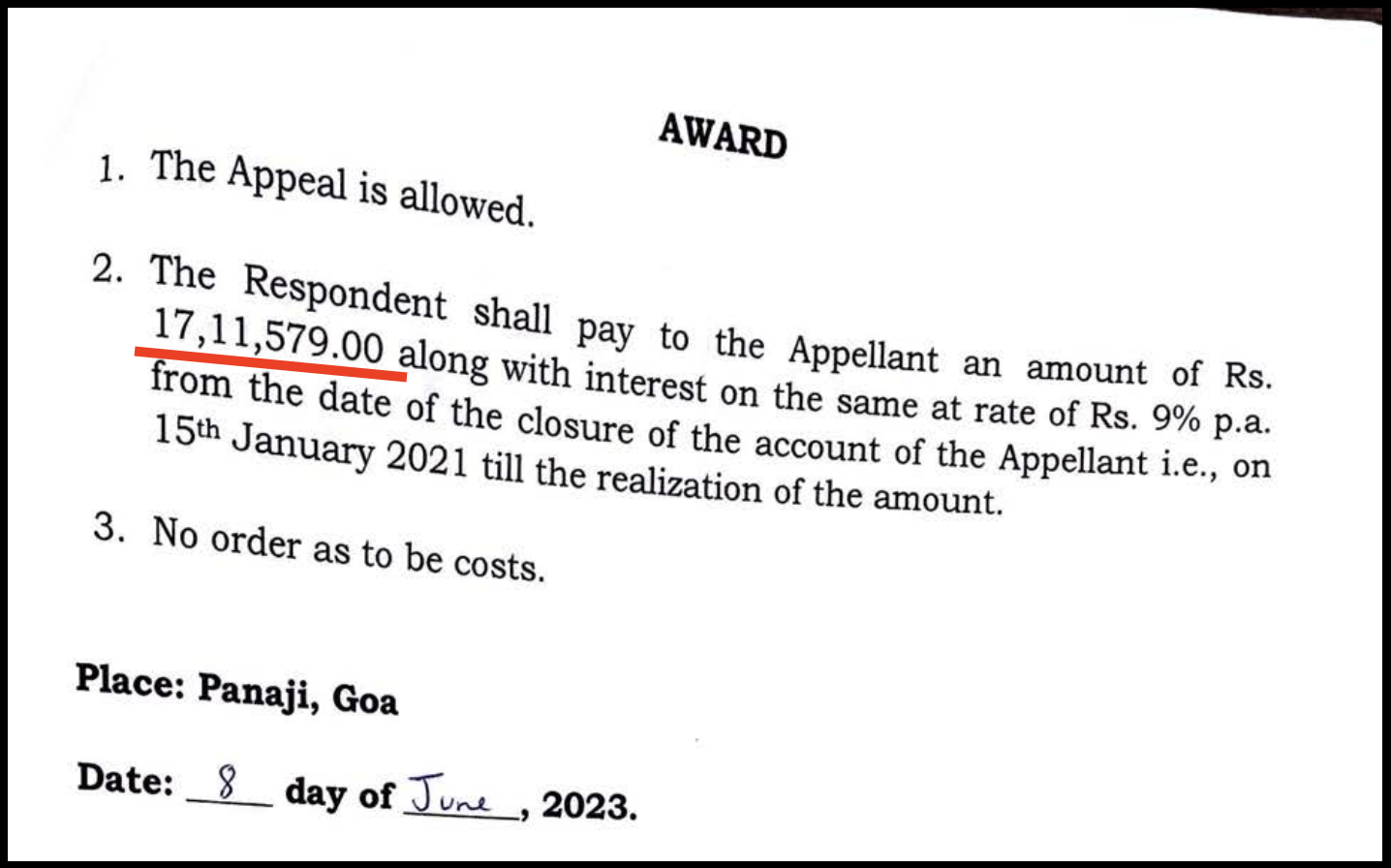
After deducting the ₹6 lakh she had already received, and ₹1,05,000 in payouts, it awarded the balance of ₹17,11,579.
Not every dispute involves unauthorised trading. If your holdings were squared off without a fair opportunity to respond, read our Sharekhan Square Off Arbitration cases.
When the Recording Exists but Says Something Else
A second case shows what happens when the evidence does exist and the broker mischaracterises it.
A client had been asking her representative for two days to close her position. He did not act, and instead sold her shares and closed her position on his own, at prices well below what she expected, eventually liquidating most of her holdings.
Sharekhan’s defence was that its representative had called her about a margin shortfall and warned her that failing to add funds would mean liquidation. It submitted the call recording along with a transcript.
The tribunal listened to the recording itself. It found the transcript did not match. Several parts of the conversation were missing, and the document had been edited before submission.
What the recording actually contained was the client asking repeatedly to close her position, the representative deflecting, and at one point telling her the loss would be recovered.
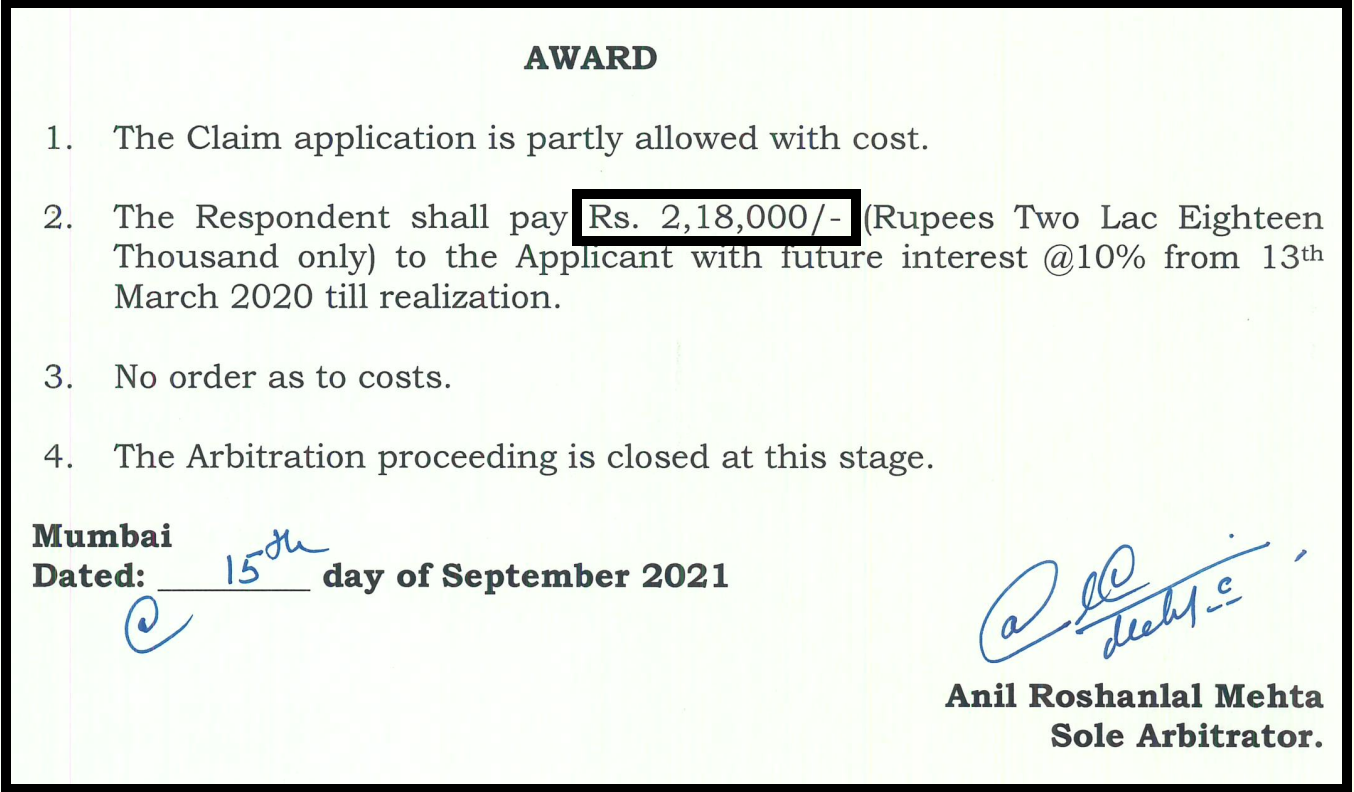
The tribunal also noted she was plainly not well versed in trading, and that a trading member should not allow such a client to trade unsupervised. It held the sale unauthorised and awarded ₹2,18,000 with 10% interest attached.
Two cases, one principle runs through both of them: You win these claims when the broker’s own records are missing, or simply do not survive being examined closely.
Of course, not every account problem involves a representative at all. If your issue is really about app or login failures, our page on Sharekhan login issues covers what to check and record first.
Have You Faced Unauthorised Trading With Sharekhan?
If reading this brought back a memory you would rather forget, pause for a moment. Maybe someone traded in your account while you were travelling. Maybe a call happened that never matched what actually got done. If you have faced a similar issue or have any other Sharekhan complaints, you can also file an arbitration, but a few steps come first.
- Collect your travel records, hospital records, or anything proving you were unreachable.
- Save every WhatsApp message and email exchanged with the representative.
- Raise a complaint in Sharekhan formally and demand the pre-trade authorisation for every disputed trade.
- Escalate to the exchange grievance cell once the broker fails to resolve it properly.
- File for arbitration once conciliation through the grievance committee does not work out.
That single demand for pre-trade authorisation is what exposed the gap in both wins above. Building your case around it gives you a real fighting chance.
Did someone at Sharekhan trade your account without asking you?
We demand the pre-trade authorisations and call recordings, test them against the circular the broker is bound by, and build the claim on the exact failures these tribunals acted on.
Register with us for a free consultation.
Conclusion
The ₹17.1 lakh award establishes the rule plainly: A broker that cannot produce evidence of the client placing an order cannot rely on the paperwork it sent afterwards, and it answers for what its authorised person did.
The ₹2.18 lakh award adds the second half: When the recording exists, it must actually support the broker’s version, and an edited transcript will be caught eventually.
Recovery for unauthorised trading against Sharekhan is real. It comes down to whether the broker can prove you placed the trades, and whether your claim is built to demand that proof.
Report. Recover. Stay Fraud Free.
Frequently Asked Questions
Yes. The appellate tribunal held the broker vicariously liable for its representative's conduct, finding it had no control over her and that she traded without following the SEBI circular and exchange regulations. Liability was not reduced by the fact that the representative had separately paid the client some money.
Not on its own. SEBI's 2018 circular requires evidence that you placed the order before it was executed. Post-trade confirmations such as contract notes may only be relied on in exceptional cases like technical failure, which the broker must justify. In the reviewed case, contract notes alone were held insufficient.
The largest reviewed award was ₹17,11,579 plus 9% interest, being the client's full loss of ₹24,16,579 after deducting ₹6 lakh already received from the representative and ₹1,05,000 in payouts. A separate case awarded ₹2,18,000 with 10% interest.
That can be challenged. In the reviewed case the committee awarded 50 percent on the basis that the client was equally responsible, and the appellate tribunal set that aside, finding no fault on her part and awarding the full amount.


 Add us as a preferred source on Google »

