

Arun N complaints started surfacing after traders came across premium Telegram channels filled with profit screenshots, high accuracy claims, and promises that made success look guaranteed.
At first, everything feels exciting: a few winning trades appear, subscribers share profits, and the analyst sounds highly confident.
But when losses begin, many traders start questioning the promises, screenshots, and claims that once looked convincing.
In this blog, let’s understand the Arun N complaints, the SEBI order connected to him, and the important lessons traders should learn from this case.
Arun N Research Analyst
Many users begin their research with a simple but important question: is Arun N SEBI registered?
Arun N is associated with the Harmonics Traders brand and operates as a SEBI-registered Research Analyst with registration number INH200007353.

He became popular through:
- Telegram trading communities
- Harmonic trading education
- options trading discussions
- market analysis content
- and social media promotions on platforms like X (Twitter)
Most of his promotional ecosystem revolved around Telegram channels, trading strategies, premium subscription plans, and performance-based marketing.
According to the SEBI adjudication order, his operations were inspected for the period between April 2022 and February 2024.
The investigation later identified several compliance failures, misleading promotional practices, and onboarding-related issues connected to his business operations and the Gap-up platform.
Arun N Complaint Data
According to the publicly disclosed complaint data updated on 5th May 2026 for April 2026, the reported complaint status showed:
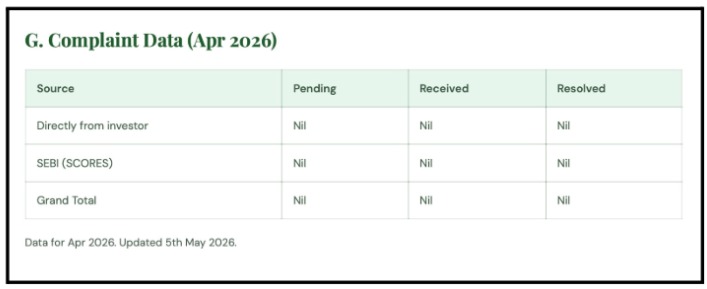
Now, honestly, this is where many retail traders may start questioning the transparency of the disclosed data.
Because Arun N was operating large Telegram channels, paid trading services, and active social media promotions for a long time.
Later, SEBI also passed a detailed order highlighting multiple violations and compliance issues.
So naturally, completely “Nil” complaint data may not appear fully consistent with the scale of operations and the seriousness of the regulatory findings.
For many traders, this raises an important concern: Was the complaint data being disclosed properly and accurately to investors?
Complaint disclosure data is supposed to help retail traders understand the grievance history of a financial service provider before trusting or paying for their services.
Also Read: Whitestone Capital complaints, five steps from a written letter to arbitration.
Arun N SEBI Order
SEBI issued a major adjudication order against Arun N under:
Order No. Order/BM/DS/2024-25/30906
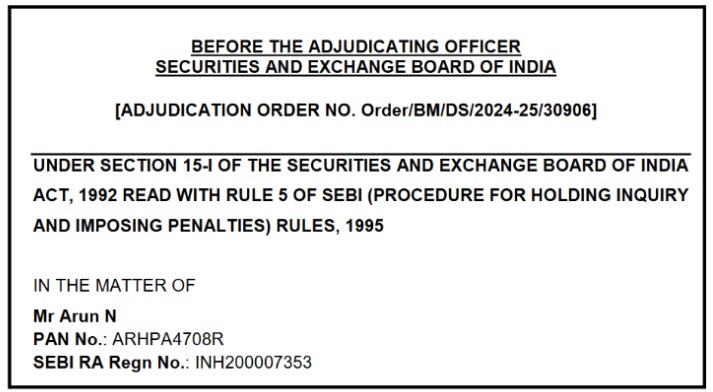
Now, this is important to understand carefully.
SEBI does not randomly issue detailed adjudication orders. This SEBI action against research analyst like Arun N is the strongest official validation that the concerns investors were raising were serious enough for regulatory intervention.
And in this case, the regulator identified multiple issues related to:
- Misleading marketing
- Selective performance claims
- Telegram promotions
- Client onboarding failures
- Compliance lapses through the Gap-up platform
For retail traders searching for Arun N complaints, the SEBI order became the clearest official document explaining what went wrong.
Arun N SEBI Violations
The SEBI order against Arun N highlighted several violations that raised serious concerns from an investor-protection perspective.
Most of these findings reflect the same types of complaints retail traders commonly raise.
1. Misleading 75% Accuracy Claims
One of the biggest concerns in the Arun N case was the 75% accuracy claim shown on the subscription page hosted through the Gap-up platform.

Now, think like a beginner trader for a moment.
If someone sees 75% accuracy while purchasing a premium trading service, what will they naturally assume?
Most retail traders will believe: Most trades are profitable. And that is exactly where the problem started.
According to SEBI, the claim was presented without proper explanation or context, which created unrealistic expectations among subscribers.
A normal investor would reasonably interpret such messaging as a performance-related success claim.
And honestly, this reflects one of the most common complaints in Telegram trading ecosystems: marketing language that sounds much stronger than what is later clarified legally.
2. Free Money and Assured Returns
Another major issue involved the style of promotional communication used on Telegram, X (Twitter), and Harmonics Traders’ promotional content.
The Arun N guaranteed returns narrative was built around phrases SEBI specifically highlighted, such as:
- Free Money For All
- Power of Breakfast
- Power of the WALL AND PI Strategy
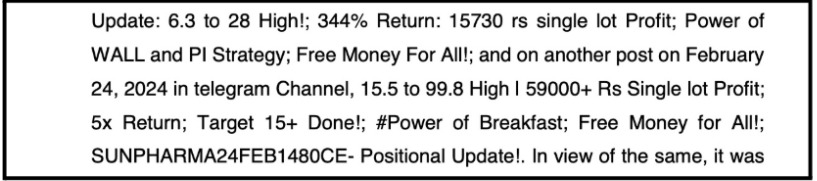
Now, for experienced traders, these may look like aggressive marketing slogans. But for beginners, they create something much more dangerous:
The illusion that profits are easy and frequent.
This is how emotional manipulation slowly works in trading ecosystems.
People struggling with losses see:
- confidence
- excitement
- profit-focused messaging
- and repeated winning narratives
And emotionally, they begin believing they are missing out if they do not join the paid service. That psychological pressure is exactly why regulators take such marketing practices seriously.
3. Selective Profit Screenshots
This is probably one of the biggest red flags in most Telegram trading channels.
According to SEBI’s findings, promotional posts highlighted:
- 344% Return
- 5x Return
- ₹15,730 Single Lot Profit
- ₹59,000+ Single Lot Profit
But where were the losing trades? That’s the question many traders ask only after losing money.
SEBI observed that selectively showing profitable trades while hiding losses creates a misleading image of consistent success.
And honestly, this creates intense fear or missing out.
When beginners constantly see green P&L screenshots and huge profits, they slowly start believing: Everyone is making money except me.
That emotional pressure pushes many traders into paid subscriptions without fully understanding the actual risks involved in options trading.
4. Gaps in Client Onboarding and KYC Verification
This was one of the most serious operational findings in the SEBI order.
According to the investigation, Arun N reportedly had around 390 clients, but proper KYC records were available for only 38 clients.
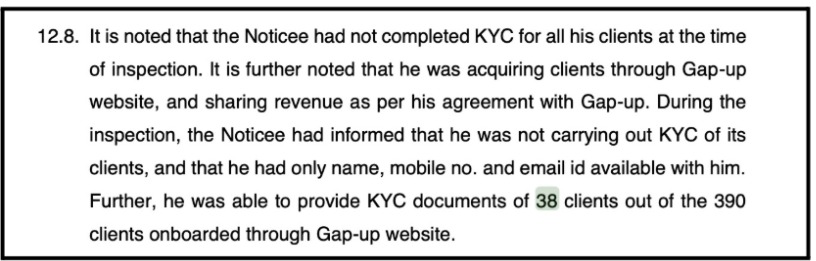
Most onboarding was happening through the third-party Gap-up platform.
Now, many traders ignore KYC-related issues because they sound technical.
But KYC is not just paperwork. It exists for investor protection, accountability, and regulatory transparency. If proper onboarding is not happening, it raises serious concerns about compliance discipline, investor safeguards, and operational responsibility.
SEBI clearly stated that core compliance functions cannot simply be outsourced without proper oversight.
Arun N SEBI Penalty
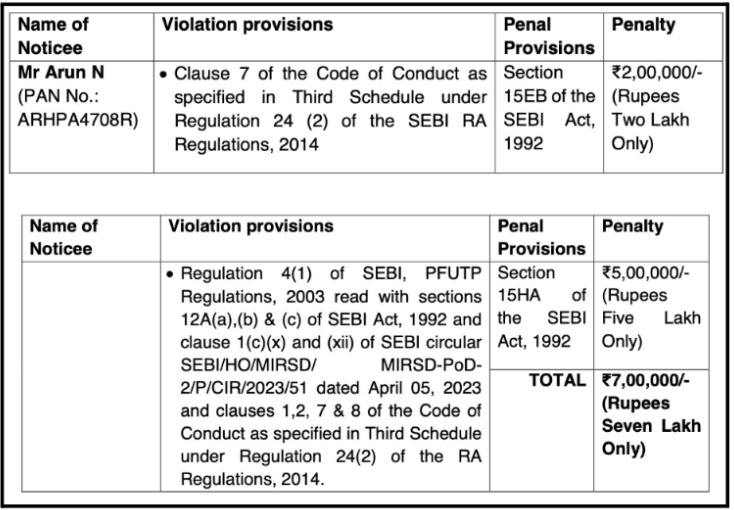
After reviewing the violations, SEBI imposed a total penalty of ₹7 lakh on Arun N.
The penalty was divided into two parts:
- ₹2 lakh penalty for operational and KYC-related compliance failures.
- ₹5 lakh penalty for misleading advertisements and unfair trade practices under PFUTP regulations
How To Report Against a Research Analyst?
If you believe you were misled by trading calls, profit claims, or Telegram promotions, it is important to act methodically instead of emotionally.
Step 1: Secure and Organize Your Evidence
Start by saving everything carefully:
- Telegram chats
- screenshots of trade calls
- payment receipts
- invoices
- promotional messages
- emails and WhatsApp communication
Do not delete anything. Even messages that look unimportant today may become critical evidence later.
Step 2: Formally Contact the Intermediary
Reach out to the research analyst or platform through their official grievance email or support system.
Explain what service you purchased, what claims influenced your decision, and what issue or loss you faced.
Keep your complaint factual, calm, and professional. Plus, avoid emotional or abusive language.
Step 3: File a Complaint with SCORES
If the issue remains unresolved, escalate the matter through the SEBI SCORES portal.
Upload all supporting evidence and clearly explain:
- payment timelines
- communication history
- promotional claims
- and service-related concerns
After filing, regularly track the complaint status and promptly respond if SEBI requests additional clarification or documents.
Step 4: Lodge a Complaint With SMART ODR
If the dispute continues, you may also explore the SMART ODR platform for online dispute resolution.
This mechanism helps investors and regulated entities resolve disputes through a structured digital process supervised by independent authorities.
Step 5: File Stock Market Arbitration
For serious financial disputes, investors may also consider stock market arbitration.
Arbitration allows disputes to be reviewed formally through legal and regulatory procedures, especially when financial losses are substantial, and other resolution mechanisms have failed.
Need Help?
Many traders feel overwhelmed after facing losses from Telegram trading channels or research analyst services.
Most feel embarrassed, and some simply do not know where to start, what evidence matters, or how to structure a proper complaint.
That’s where professional guidance becomes important.
We help you:
- Organize evidence properly.
- Structure clear complaint drafts.
- File complaints through SEBI SCORES.
- Understand SMART ODR and arbitration procedures.
- Navigate the reporting process smoothly.
Sometimes the biggest challenge is not the financial loss itself, but the confusion that comes afterward.
If you need help understanding the next step, register with us now.
Conclusion
The Arun N complaints discussion highlights a much bigger issue in India’s trading industry: the rapid rise of Telegram trading ecosystems built around emotional marketing, profit screenshots, and high-accuracy narratives.
And honestly, many beginners get trapped not because they are careless, but because the marketing feels convincing.
But this case teaches one very important lesson: A SEBI registration number is a license to operate. It is not a guarantee of profits, transparency, or ethical communication.
In the stock market, your first responsibility is not chasing profits. It is protecting your capital.
And that starts by questioning bold claims, verifying information independently, and refusing to blindly trust social media trading hype.





 Add us as a preferred source on Google »

