
Unauthorised trading by Mir Uniserv became the subject of both a SEBI Adjudication Order and an NSE Arbitration Award.
Both proceedings documented specific regulatory violations involving the Kanpur-based Research Analyst firm.
If you subscribed to a Research Analyst’s services and found yourself receiving specific buy/sell instructions over phone calls, this case deserves your attention.
Is Mir Uniserv SEBI Registered?
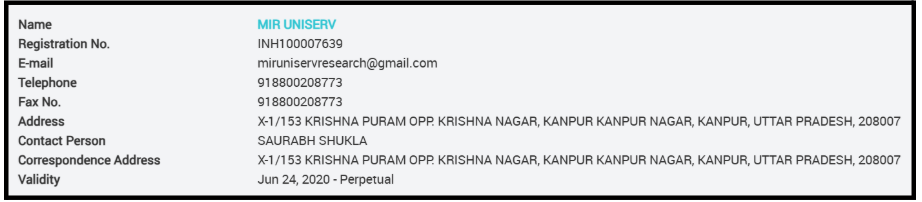
Mir Uniserv is a proprietorship firm run by Mr. Saurabh Shukla, registered with SEBI as a Research Analyst bearing registration number INH100007639.
The firm operated by providing research recommendations to retail clients, primarily through telecallers and third-party marketing associates.
However, both a SEBI inspection and an NSE arbitration proceeding uncovered serious regulatory violations by Mir Uniserv.
The findings particularly focused on unauthorised trading instructions and improper investor-facing conduct.
The first major legal proceeding against Mir Uniserv came through NSE arbitration, where recorded calls and trading conduct were examined in detail.
SEBI Order Against Mir Uniserv
SEBI conducted a formal inspection of Mir Uniserv covering the period from April 1, 2022 to December 31, 2023.
Following the inspection, SEBI’s Adjudicating Officer issued an order on November 29, 2024, after examining inspection findings, the firm’s written replies, and a personal hearing.
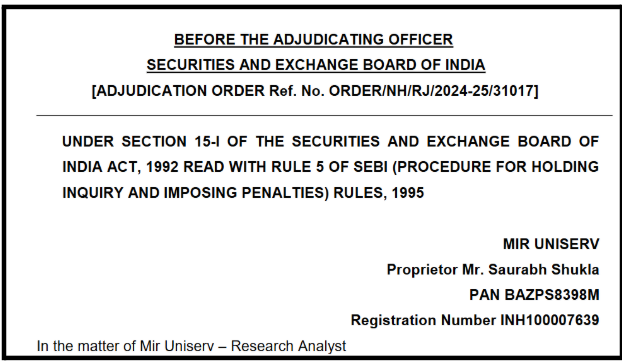
The order identified multiple regulatory violations across four broad categories, several of which directly relate to unauthorized trading by Mir Uniserv linked conduct.
1. Violations by Mir Uniserv Identified in the SEBI Order
SEBI’s Adjudicating Officer examined documentary evidence, SCORES complaint records, and the firm’s own submissions before establishing each violation.
Here are the key findings directly tied to unauthorized trading by research analyst activities:
- Profit Scripts for Telecallers: Mir Uniserv admitted briefing telecallers on “expected profits with pre-defined maximum and minimum losses” before client calls.
- Specific Return Assurances: At least 12 SCORES complaints referenced promises such as “100% profits” and ₹50,000–₹60,000 monthly returns.

- Outsourced Core RA Functions: Telecallers handled onboarding, servicing, and renewal calls under the firm’s RA registration despite SEBI restrictions on outsourcing such functions.
- Massive Third-Party Payments: Mir Uniserv paid ₹3.71 crore to third-party associates out of ₹5 crore total income during the inspection period.
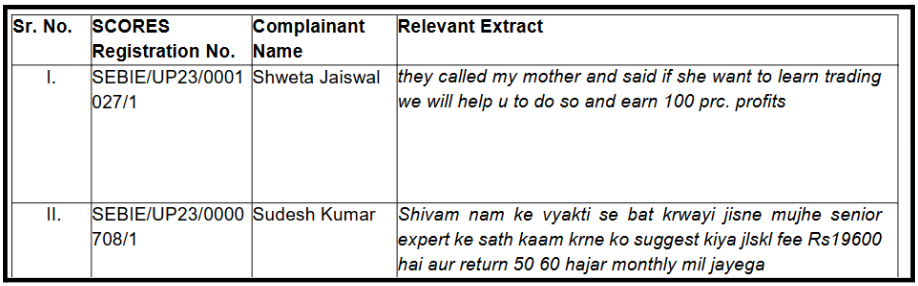
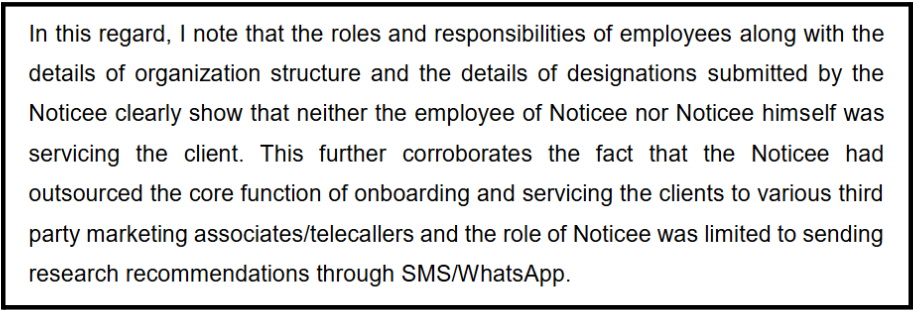
Together, these findings formed a major part of SEBI’s case against Mir Uniserv and raised serious concerns about how the firm operated.
2. Penalty
SEBI imposed a total monetary penalty of ₹10,00,000 (Ten Lakh Rupees) on Mir Uniserv, distributed as follows:
- ₹1,00,000: Under Section 15A(a) for failing to provide information and documents during inspection
- ₹1,00,000: Under Section 15C for delayed grievance redressal and late SCORES registration
- ₹3,00,000: Under Section 15EB for KYC, outsourcing, and RA Regulation violations
- ₹5,00,000: Under Section 15HA for misleading claims and PFUTP violations
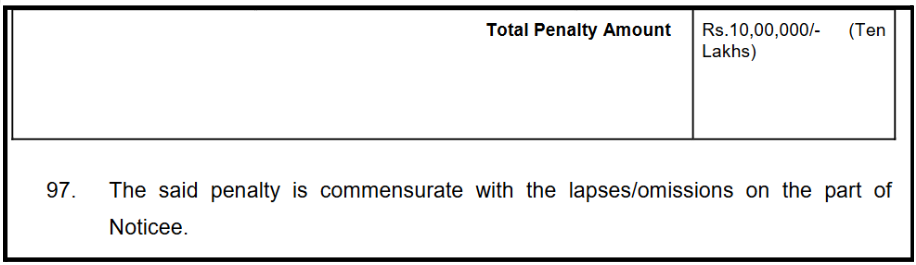
Together, these findings formed the basis of SEBI’s enforcement action against Mir Uniserv.
With both the arbitration award and SEBI order now on record, investors must assess what these findings collectively indicate about the firm.
- Lesson For Investors
A Research Analyst’s legal scope covers general market research recommendations, not personalised buy/sell calls with specific quantities and entry points.
If you find yourself in a situation where my stock advisor traded in my account without my permission, it indicates that the service provider has moved beyond standard advisory boundaries into unauthorized portfolio management.
When a service provider starts dictating real-time trade execution over the phone, they step outside their regulatory license.
Investors must recognise this distinction before acting on such instructions. Document every call, every instruction, and every payment from day one.
The arbitration findings were not the only regulatory concern linked to the firm. SEBI’s own inspection uncovered a much broader pattern of violations.
When To Take Action Against RA?
Two independent legal proceedings, one by SEBI and one through NSE’s arbitration mechanism, have now documented specific violations by Mir Uniserv.
Investors considering or currently using its services need an honest assessment of both what the records say and what remains relevant.
In this regard, investors should keep in mind what can a SEBI registered RA do and can take action if the RA violates these.
Here are what you should know:
- First, SEBI registration does not equal regulatory compliance; always verify whether the advice you receive stays within research recommendations or crosses into execution-level instructions.
- Second, verbal promises of guaranteed profits or loss recovery violate SEBI regulations regardless of what written disclaimers say.
- Third, document every interaction, call recordings, payment receipts, and screenshots from the foundation of any future complaint or arbitration.
Investors who faced similar conduct are not without remedies. SEBI’s grievance and dispute resolution framework provides multiple escalation paths.
How To File A Complaint Against Research Analyst?
If you believe a Research Analyst has given you unauthorised trading instructions or made false profit promises, you have legal options.
Act quickly; limitation periods apply to complaints and arbitration filings.
Step 1: Reach Out to the Research Analyst Formally
Send a written complaint to the Research Analyst through their official communication channel.
State your grievance clearly and reference specific interactions with dates and amounts. Keep a copy of this communication.
This creates a paper trail and gives the firm a formal opportunity to respond before you escalate further.
Step 2: Lodge a Complaint in SCORES
Register your complaint on SEBI’s SCORES platform. Provide all supporting documents, payment receipts, call recordings, trade statements, and written communication.
SEBI tracks complaints against registered intermediaries through SCORES and follows up with the entity. The intermediary must respond within prescribed timelines.
Step 3: File a Complaint in SMART ODR
SEBI’s SMART ODR portal enables investors to initiate online conciliation against registered intermediaries, including Research Analysts.
Conciliation attempts a mutual settlement through a neutral Conciliator.
If it succeeds, you get a binding settlement. If it does not, the Conciliator’s findings can support the next step.
Step 4: Arbitration in Stock Market
If conciliation fails, you can request arbitration through the ODR portal.
A Sole Arbitrator examines all evidence, call recordings, documents, and oral depositions and issues a binding award.
Our team also assisted the investor side in the arbitration proceedings discussed above involving Mir Uniserv’s execution-level trading instructions and investor-facing conduct.
Need Help?
Navigating SCORES, ODR conciliation, and arbitration demands precise documentation and strategic preparation. We help investors at every stage.
What we do:
- Case Assessment: We review your call recordings, payment history, and trade records to evaluate the strength of your claim.
- Documentation Support: We help you organise and present evidence in the format required for SCORES, SMART ODR, and arbitration.
- Conciliation Preparation: We prepare your claim statement, supporting documents, and arguments for the conciliation stage.
- Arbitration Representation: We assist you in preparing your Statement of Claim, rejoinder, written brief, and oral submissions before the Arbitral Tribunal.
- Post-Award Execution: We guide you through the process of enforcing an arbitration award if the respondent fails to pay within the directed timeline.
Register with us if you need structured assistance in preparing, pursuing, or enforcing your investor claim at any stage of the process.
Conclusion
Unauthorised trading by Mir Uniserv, documented through recorded calls, SCORES complaints, SEBI inspection findings, and an arbitration award, tells a clear story.
Representatives gave real-time trade instructions, promised assured profits, pushed investors into loans, and upgraded them to expensive plans using fabricated success stories.
Two separate legal proceedings confirmed these patterns. Investors who faced similar conduct from any Research Analyst have a legal path available.
Act on documented evidence, follow the established escalation steps, and do not let limitation periods expire before you file.