
Quick Summary
SEBI loss recovery is not a promise on this page. It is a record. Across more than 250 documented SEBI-related cases, our team has helped investors recover nearly ₹4 crore. The refunds came from research analysts, investment advisers, brokers, and unregistered firms, won through SCORES complaints, counselling, and arbitration. A retired man recovered ₹28,00,000 after his account was traded without permission. A trader recovered ₹14,37,200 after 795 trades ran through his account in 66 seconds. Below are the real cases, the real arguments, and the real amounts.
Most people who lose money to a stock market scam are told the same thing. The money is gone. You signed the forms. You clicked the buttons.
Nothing can be done.
We have spent the last two years proving that wrong by helping victims in stock market fraud recovery.
The number sits at nearly ₹4 crore recovered across more than 250 SEBI-related cases. Not projected. Not claimed. Documented, in refunds that reached our clients’ bank accounts.
This is not a page of promises. It is a page of what actually happened, and how.
Stock Market Fraud Recovery: What Our Nearly ₹4 Crore Track Record Looks Like?
A big number means little without the cases behind it.
That ₹4 crore did not come from one type of win. It came from five distinct kinds of dispute, the same five that trap most investors, and yours almost certainly fits one of them.
Recognising which one is yours is the first step toward knowing whether your money can come back.
Here is the full range we have recovered against:
- Research analysts who guaranteed profits they could never deliver.
- Investment advisers who charged past the legal fee limit.
- Brokers whose systems failed at the worst possible moment.
- Advisers who quietly handled client accounts they had no right to touch.
- Unregistered firms that took money for a service they were never allowed to sell.
The individual amounts range widely. Many cases recovered between ₹50,000 and ₹2,00,000. Several crossed ₹5,00,000. A handful ran into the tens of lakhs.
What connects them is not the size of the loss.
It is that each client stopped accepting the loss and let us build the case.
The Arbitration Wins Our Team Can Name
Most recoveries come through private settlement, where the firm agrees to refund, and the matter closes quietly.
An arbitral award is a public record. The firm is named, the finding is on paper, and the amount is fixed by a neutral tribunal. These are the cases we can show you in full.
Here is a sample of what our clients won, and the reasoning that won it:
1. ₹28,00,000 Recovered from Motilal Oswal: 100% of the Loss
A retired Hindustan Zinc employee trusted someone he knew to manage his trades. Whenever the man asked for an OTP, he shared it, thinking it was routine.
Those OTPs placed trades he never approved. His registered email had been quietly changed, so every contract note went elsewhere. His app displayed ₹28 lakh in profits that did not exist.
Our team mapped six separate violations to specific SEBI circulars: credential theft, email tampering to destroy the audit trail, a falsified profit display, an assured return promise, and a notarised repayment agreement the accused later denied.
The claim was allowed in full. He recovered every rupee.
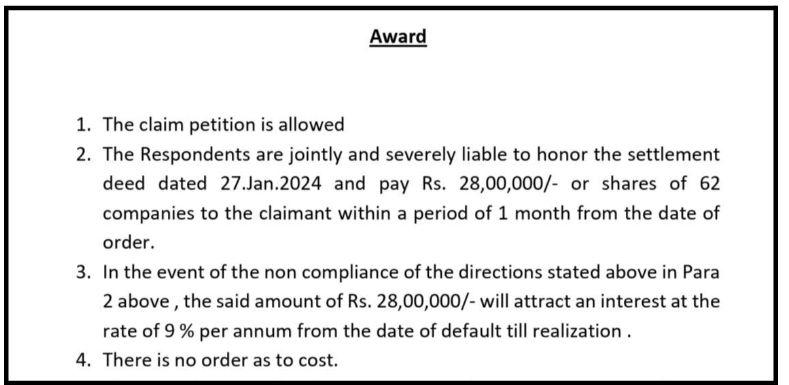
The full case sits in our Motilal Oswal unauthorised trading recovery breakdown.
2. The ₹15.57 Lakh Aurostar Case: How Evidence Beat Disclaimers
He signed up for investment advice expecting professional guidance.
Instead, he was promised assured returns, pushed into a profit-sharing arrangement outside his agreement, and persuaded to take a massive BANKNIFTY options position that wiped out ₹14.10 lakh in a single trade.
Aurostar argued that the investor had accepted the terms, that markets involve inherent risk, and that its advice complied with SEBI regulations.
We looked beyond the disclaimers.
Using call recordings, WhatsApp chats, and the firm’s own documents, we showed that Aurostar had skipped valid risk profiling, recommended trades completely inconsistent with the investor’s risk appetite, demanded payments outside the regulatory fee structure, and made promises that a SEBI-registered investment adviser is simply not allowed to make.
The arbitrator agreed on every major issue.
Aurostar was ordered to pay ₹15.57 lakh, including the trading loss and refund of advisory fees, along with interest and arbitration costs.
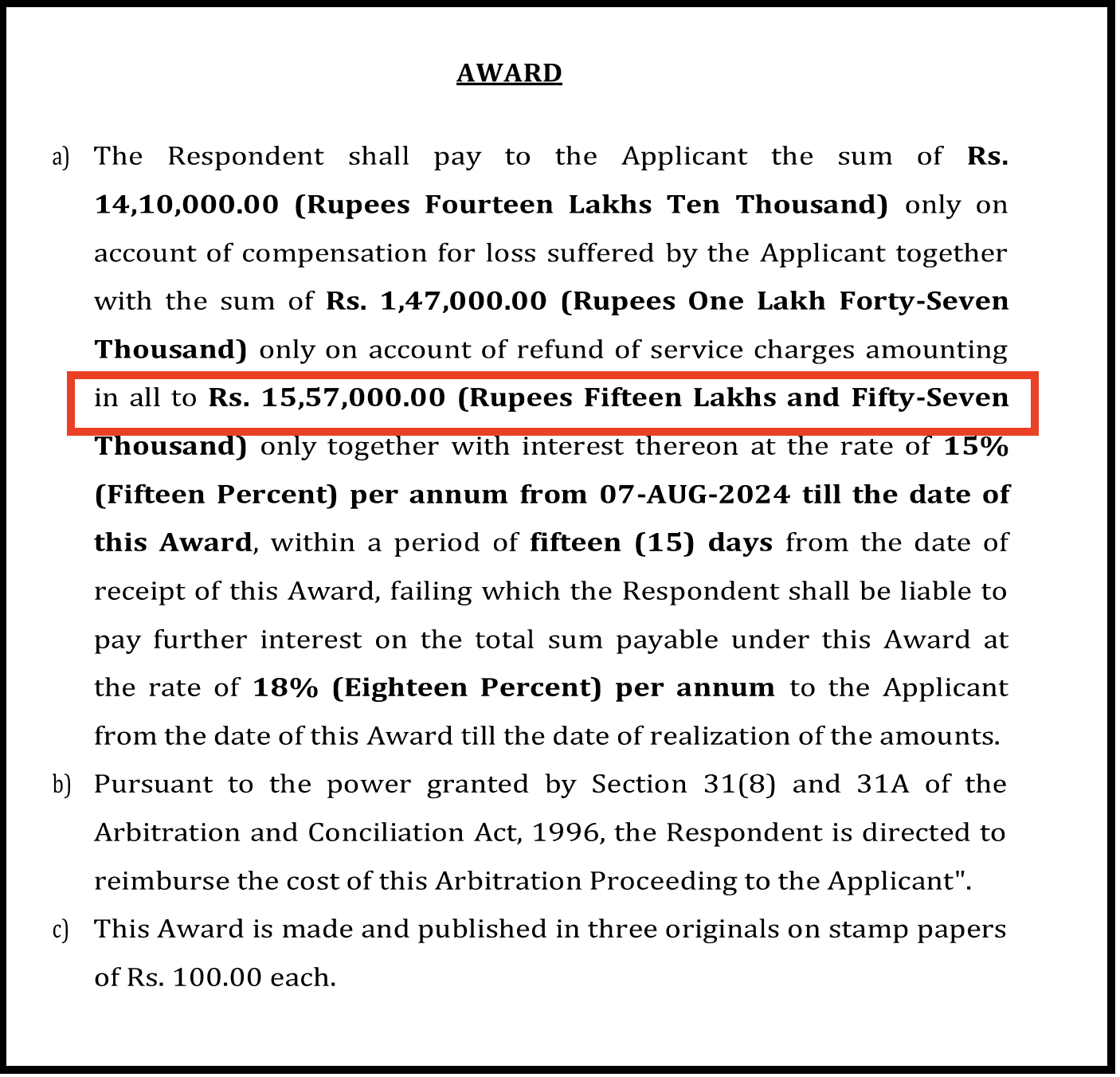
The Aurostar Investment Advisory violations breakdown covers both breaches.
3. Exposing 795 Unauthorised Trades in 66 Seconds: ₹14,37,200 Win Against IIFL Securities
A trader deposited ₹15.20 lakh and never placed a single trade himself. On one afternoon, 795 transactions swept through his account in 66 seconds.
His ₹9.50 lakh credit balance nearly vanished. Brokerage charges crossed ₹9.13 lakh, roughly 63% of his entire loss.
We built the case on the contract notes. No retail investor could monitor, review, or approve 795 trades in a minute.
We also produced recordings where representatives promised returns of 25% to 80% per month, and the Authorised Person himself confirmed the two representatives had been terminated for misconduct.
The Tribunal awarded the entire loss, payable in 15 days.
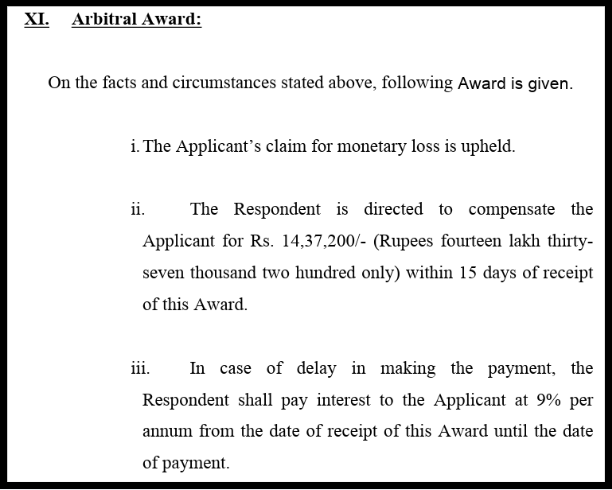
Read the IIFL Securities account handling case in full.
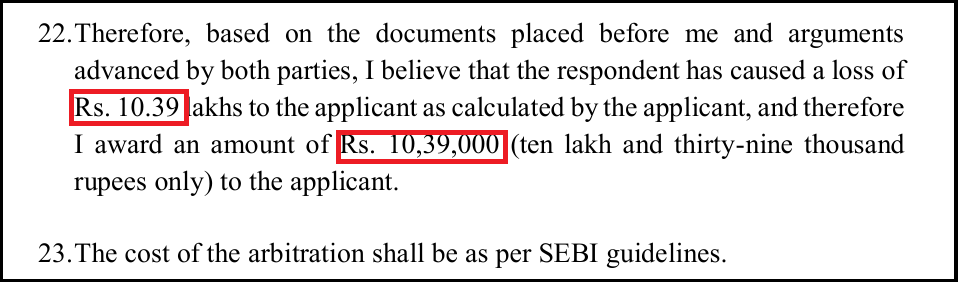
4. Overturning an Automated Square-off: ₹10,39,000 Awarded in Zerodha RMS Dispute
A trader’s positions were squared off by an automated risk management system without meaningful warning.
We argued the system failed the human at the other end of it.
The arbitrator agreed on three points: the RMS did not communicate promptly, more lots were sold than necessary, and no policy document clarified how much time a trader gets before a square-off.
Zerodha’s legal team defended the action on internal thresholds and terms of use.
The arbitrator looked past the letter of the policy to its effect.
Our Zerodha loss recovery breakdown covers the full argument.
5. Nuvama Wealth Tech Glitch: Full Claim of ₹6,61,618 Awarded to Trader
Another trader caught in the same 12 July 2024 exchange disruption. His exit orders failed while the market moved against him.
The broker’s warning message reached clients seven minutes after the damage was done.
We argued that a warning issued after the loss is no warning at all.
The tribunal awarded the entire claim.
The technical detail sits in our loss due to technical glitch guide.
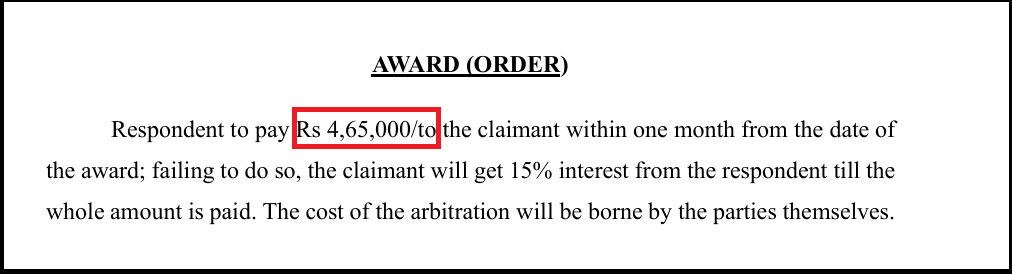
6. NiftyPro Direct Order: ₹4,65,000 Refunded for Illegal Profit-Sharing Agreement
Mr. Ansari could not afford the ₹1,00,000 monthly package. So NiftyPro offered him something else: 30% account handling with profit sharing.
He paid ₹55,000 upfront.
The firm then issued an invoice labelling the payment a “service fee”, hiding the profit-sharing arrangement SEBI prohibits.
Their legal representative arrived at arbitration with website terms, disclaimers, and digital signatures.
We had audio recordings where the profit-sharing terms were discussed openly, plus a SEBI penalty order already on record.
The arbitrator ordered the full ₹4,65,000 returned with interest.
See the profit sharing scam recovery case for the arguments used.
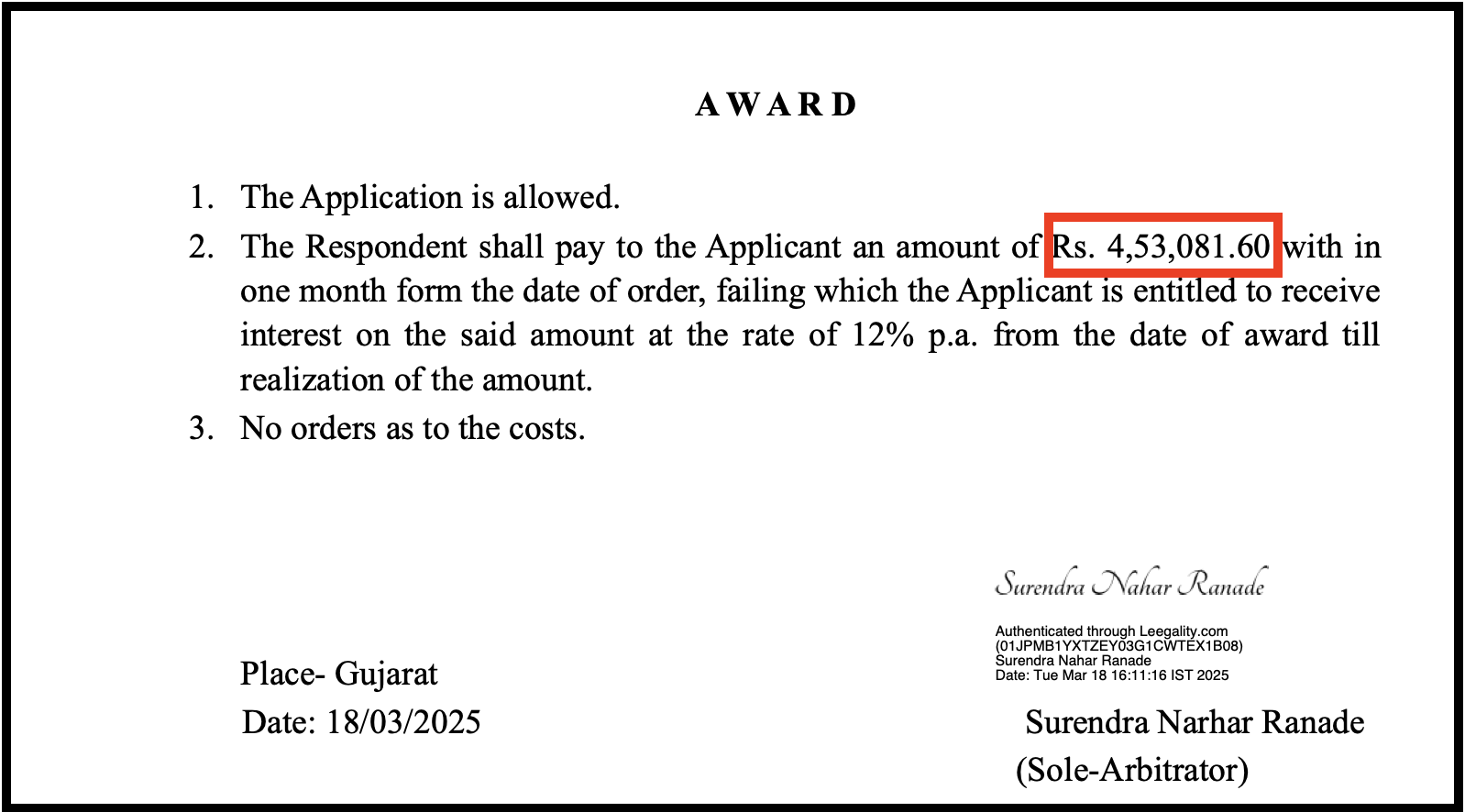
7. 15 Minutes of Order Failure: How We Won ₹4,53,081 Back from Moneylicious Securities
At 11:04 AM his sell order was rejected. He tried again, and again.
By 11:19 AM a ₹6,00,000 profit had collapsed to ₹33,250.
The broker blamed a BSE glitch and produced no proof of it.
We rebuilt the loss from the broker’s own trade log, fixing the ₹94.50 he should have exited at against the ₹53.46 he was forced to take, across 11,040 quantity.
The arbitrator awarded the difference to the paisa.
Our Moneylicious Securities arbitration breakdown walks through the fifteen minutes.
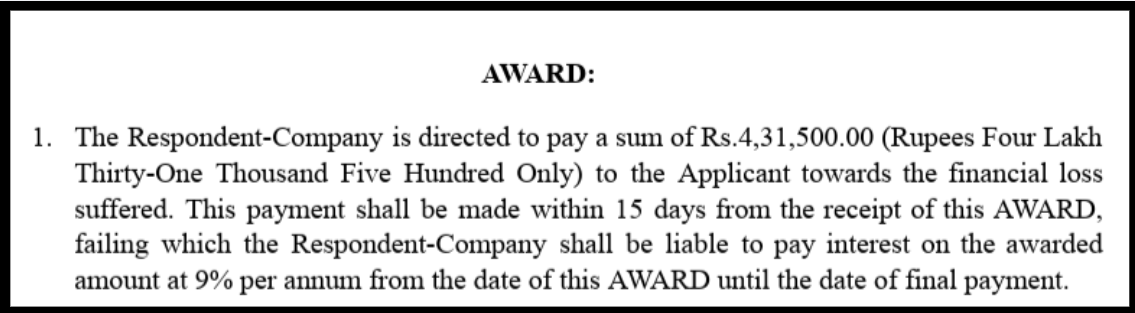
8. ₹4,31,500 Recovered from Stocksence Research
This one matters because the investor first lost on his own.
Mr. Nakul Kumar took his ₹6,00,000 claim to conciliation without help.
The Conciliator held his entire claim inadmissible on 4 November 2025.
Then he came to us.
We audited the case, organised his scattered WhatsApp trails, and found the device the firm had used.
Stocksence charged ₹3,00,000 by splitting it into ₹1,50,000 in advisory fees and ₹1,50,000 in “mentorship fees”. No such category exists under SEBI’s Research Analyst Regulations.
It was a workaround for the ₹1,51,000 annual fee cap.
We restructured his claim to ₹6,38,000 and took it to arbitration.
The arbitrator set the earlier conciliation report aside and awarded ₹4,31,500.
The full reversal is documented in our loss recovery from Stocksence Research case.
9. Audio Recording Proves Misrepresentation: Mir Uniserv Ordered to Refund ₹3,12,000
A retail investor from Rajkot subscribed to Mir Uniserv’s advisory service between January and July 2023 and lost heavily.
Our team organised over 160 call recordings, payment records, trade screenshots, and P&L statements into a single evidence-linked claim.
One recording decided much of it. A representative told the investor: “Aap bolo ki kitna profit aap manoge to main utna profit karwa dun.”
The Tribunal identified this as the most explicit misrepresentation in the entire record.
The award came through CORD ODR on 6 August 2025.
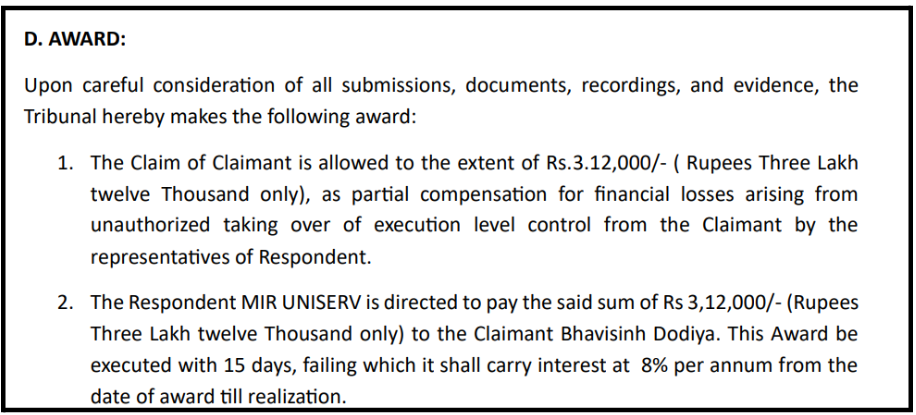
See the Mir Uniserv recovery case for the tribunal’s five findings.
10. When Call Records Beat Fine Print: ₹1,97,000 Returned by Supreme Investrade
The firm arrived with a signed consent form and a page of disclaimers. Our client arrived with a recording.
On it, an employee told her she need not pay any fee until he booked her a ₹1,00,000 profit.
The firm never challenged the recording.
The tribunal held that a disclaimer cannot cover conduct that breaches SEBI rules, and noted SEBI had already fined the firm ₹5,00,000 for similar behaviour.
The full fee came back.
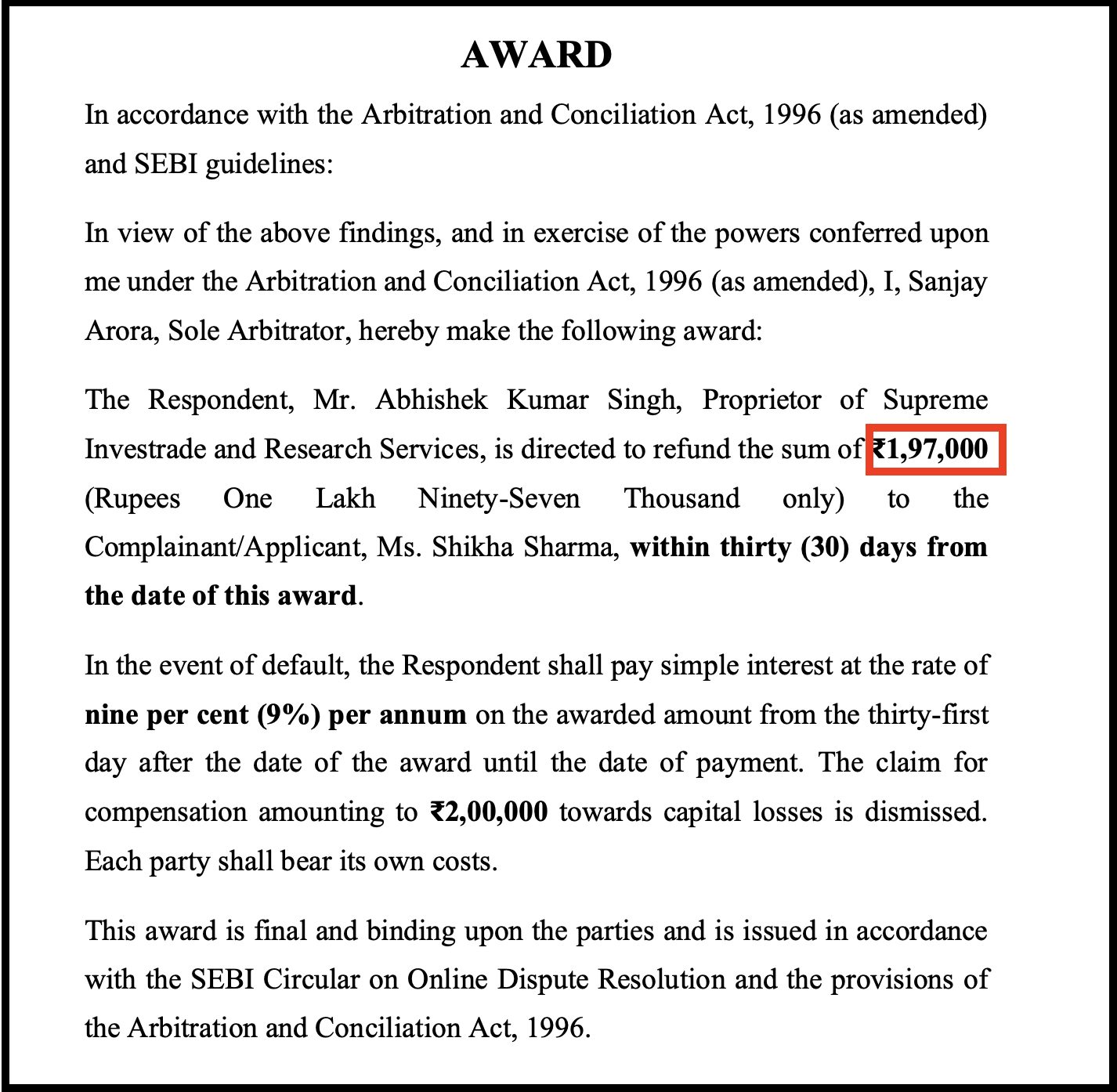
How the recording beat the disclaimer is set out in the full guide: Supreme Investrade refund.
11. Winning ₹1,79,000 from Inspire Algo Research Despite Shared Fault Findings
Our client had kept trading after the losses began. We told him upfront that the arbitrator would weigh that against him.
We also told him he could still recover.
The tribunal found the firm had provided no KYC, no onboarding documents, no invoices, and no welcome kit.
Trading had started on a shared payment link alone.
It split the fault and awarded half the fees plus half the loss.
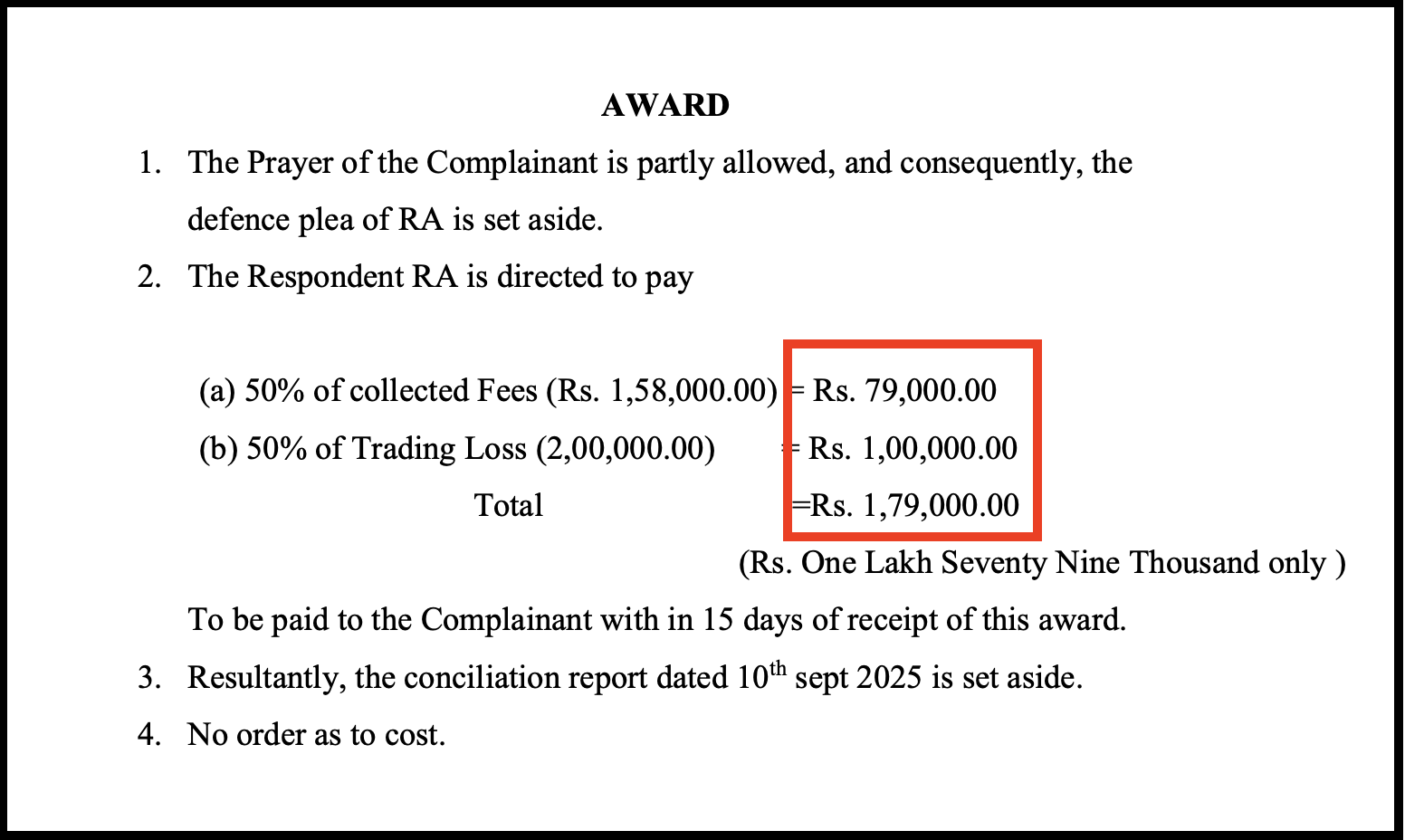
A shared-blame case is still a real recovery, as our Inspire Algo Research recovery breakdown explains.
12. Capital Craft Research Penalised ₹1,20,061 Over Impossible Profit Guarantees
He was promised ₹10,000 a day and ₹2 lakh a month.
Instead, he lost over ₹1 lakh while paying ₹40,000 for research services.
The research analyst claimed they never guaranteed profits. They relied on disclaimers, website terms, and argued that stock market losses are simply market risk.
We didn’t argue against market risk.
We proved that the sales pitch itself violated SEBI’s Research Analyst Regulations.
WhatsApp chats, emails, and trading records showed the client had been induced by promises of assured returns, something a SEBI-registered Research Analyst simply cannot do. The respondent’s own records also established the trading losses suffered by the client.
The arbitrator held that the respondent had failed to act as a Research Analyst in the manner required under SEBI regulations and awarded the investor ₹1,20,061, along with a refund of the arbitration fees.
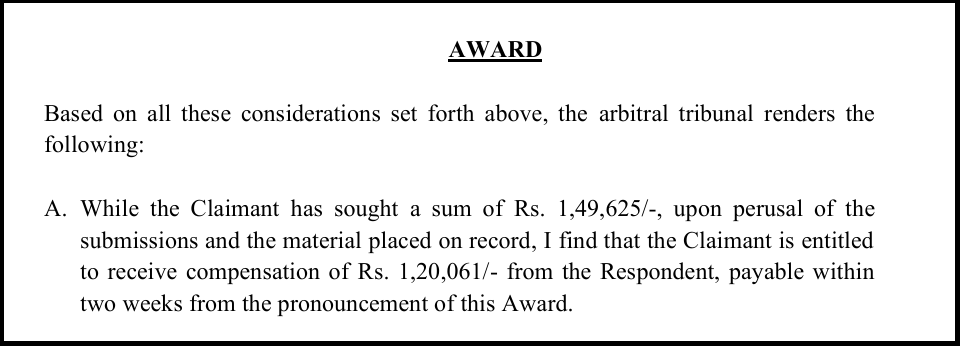
How that impossible promise became an award is detailed in our recovery from Capital Craft Research breakdown.
The Regulatory Findings We Use to Win
These wins are not luck or persuasion.
They rest on specific rules that firms break and hope investors never learn.
Across the cases, the same breaches keep deciding the outcome:
- Guaranteed returns. No research analyst or adviser may promise you a profit. A guarantee of ₹10,000 a day, or an assurance of recovery, is not a sales pitch. It is a documented violation the moment it is made.
- Fees above the SEBI limit. An investment adviser cannot charge an individual client without limit. When the total crosses the ceiling, the excess is a breach, provable by arithmetic rather than argument.
- Unauthorised trade instructions. A research analyst may publish research. It may not tell you the exact stock, quantity, and timing, then manage the position. That is account handling, outside what the registration allows.
- Profit-sharing. A research analyst taking a cut of your profits, often 30% to 50%, runs a fee model SEBI does not permit.
Our page on whether a NISM certificate holder can manage your portfolio explains why a certificate is not a licence to do this.
Broker execution failure. A broker must execute your orders in time. When a system failure blocks your exit, and the broker cannot prove the fault lay elsewhere, the resulting loss is the broker’s to bear.
Each of these is a line in the SEBI rulebook.
Our job is to find which line was crossed in your case, and to prove it with your own records.
How the FraudFree Team Builds a Recovery?
Recovery is not a single filing.
It is a sequence, and each step is where most people give up, and we do not.
Step 1: We Separate What Is Recoverable From What Is Not
The first thing we do is split your loss in two. Fees on one side, trading loss on the other.
Fees are documented and come back far more reliably than market losses.
This is why two clients with similar losses can recover very different amounts, a point we work through in our stock advisory refund breakdown.
Step 2: We Audit Your Evidence Before the Firm Can
We go through your chat logs, call recordings, contract notes, and payment records.
We find the guaranteed-return message, the fee that crossed the limit, the rejected order timestamp, and the request for your OTP.
The evidence is usually already on your phone.
Step 3: We File and Escalate Through the Right Route
A SEBI SCORES complaint opens the registered route.
Where it stalls, the matter moves to SMART ODR for conciliation, and then to arbitration if the firm will not settle.
Our guide on arbitration in the stock market walks through this path in full.
Step 4: Our Team Represents You in Counselling and Arbitration
This is where the recovery is won or lost. We put the arguments, cite the regulations, and hold the firm to the record.
Many matters settle at counselling once the firm sees the case we have built. The rest go to a tribunal, where the findings above do the work.
Lost money to a research analyst, adviser, or broker and been told nothing can be done?
We have recovered nearly ₹4 crore for investors who were told exactly that. We read your evidence, find the breach, and build the case.
Why Investors Wait Too Long Before Coming to Us?
The hardest part of recovery is not the process. It is the belief that stops people from starting.
Most victims carry one of three assumptions, and all three are wrong.
- “It was my own fault, so I have no case.” The Inspire Algo client thought this and still recovered ₹1,79,000. Shared blame lowers the amount. It does not close the door.
- “The amount is too small to bother.” The clients who recovered the highest share of their claim were often the ones with the smallest losses. Small claims settle because fighting them costs the firm more than paying.
- “I signed a disclaimer, so I agreed to everything.” Supreme Investrade relied on exactly this defence and lost. A signature cannot license conduct that breaks SEBI rules.
Every week of delay makes recovery harder.
Chat histories get cleared. Numbers go dead. Firms wind up and vanish.
The evidence that wins your case is strongest today and weaker every week you wait.
Conclusion
Nearly ₹4 crore, more than 250 cases, two years of work. Behind each number is a person who was told the money was gone and chose not to accept it.
The recoveries were not won by luck or by a kind broker having a change of heart. They were won by separating fees from losses, finding the exact rule the firm broke, and proving it with the client’s own records, then holding the firm to that proof in counselling and arbitration.
If you have lost money to a research analyst, an adviser, or a broker, your case is not as hopeless as you have been told. The evidence is likely on your phone, the breach is likely in the SEBI rulebook, and the recovery starts the day you stop accepting the loss.
Report. Recover. Stay Fraud Free.
Frequently Asked Questions
Over ₹4 crore in SEBI-related cases, covering arbitration awards, fee refunds, brokerage recoveries, and settlements. This figure excludes our cyber-fraud recoveries, which are a separate body of work, so the SEBI number stays clean and verifiable.
The arbitration awards are public records with named firms and case numbers, such as the ₹4.53 lakh broker glitch award and the ₹3 lakh advisory award. Each links to a full case study. Private settlements are confidential but form part of the same total.
Not always. Some awards are full, some are partial. One case on this page recovered half after the investor was found partly at fault. Another refunded the fees but not the trading loss. We give you a realistic expectation before you file.
Fee refunds from research analysts and advisers, brokerage and churning recoveries, broker glitch and margin losses, unregistered advisory cases, and account handling disputes. If a SEBI-regulated participant caused your loss, it is worth an assessment.
Preserve your evidence. Payment records, contract notes, chat histories, call recordings, and order logs. Every recovery on this page was built on documents, and they are the one thing you control before you even file.





 Add us as a preferred source on Google »

